
LUMBAR DISC HERNIATION TREATMENT IN MIDDLETOWN, NJ
Middletown Township is a place where rivalry runs deep — just ask anyone who has been to the Thanksgiving football game between Middletown North’s Lions and Middletown South’s Eagles. But there is one opponent that unites residents on both sides of town: lumbar disc herniation. With a population of roughly 67,000 people spread across 41 square miles of suburban coastline, Middletown is home to commuters, student athletes, retirees tending expansive gardens, and weekend kayakers exploring the Navesink River. All of them are at risk for the kind of disc injury that turns an active Jersey Shore lifestyle into a painful ordeal. At Trinity Rehab, we specialize in treating lumbar disc herniation through a progressive, three-phase physical therapy program that gets Middletown residents back to the activities they love — without surgery.
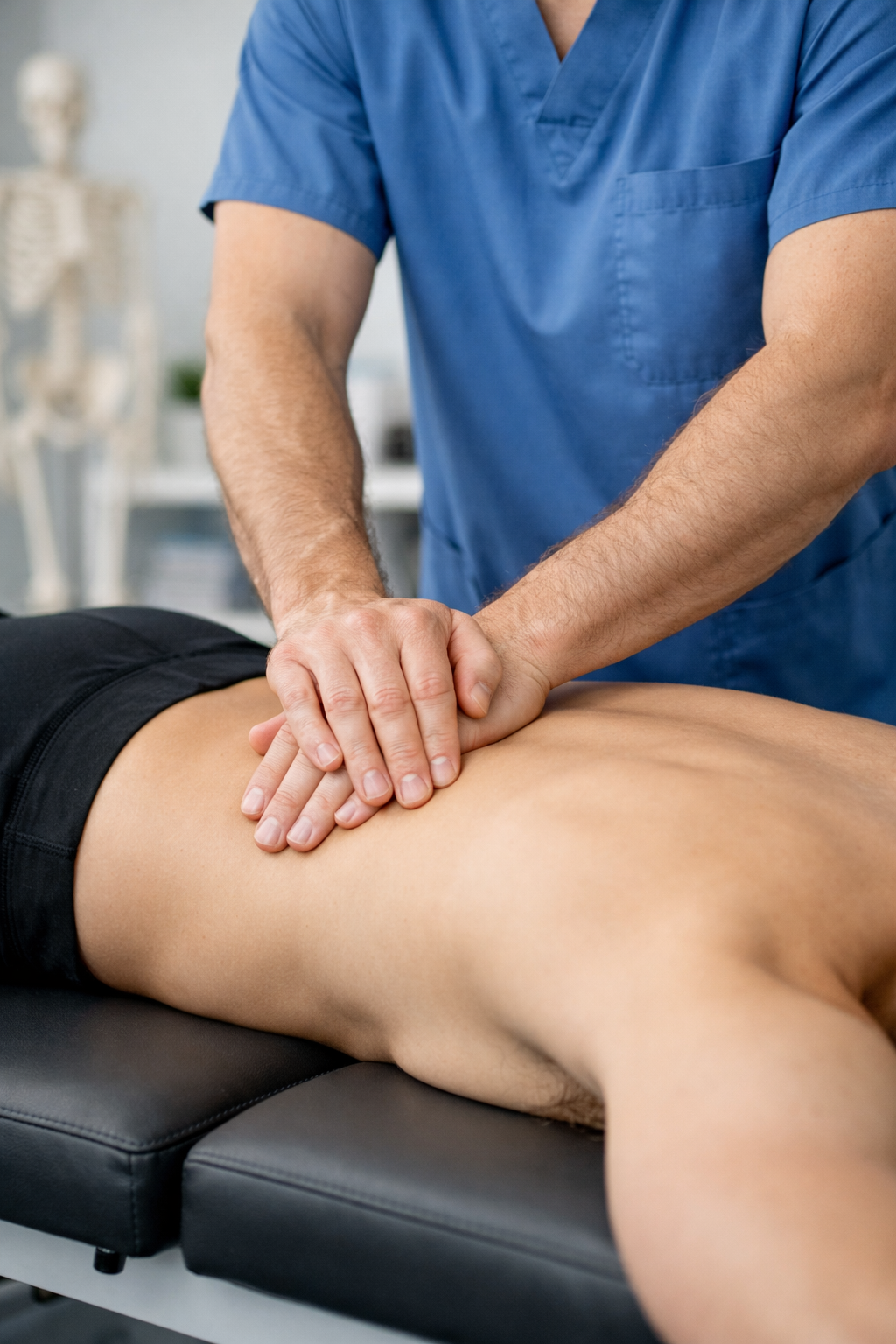
UNDERSTANDING LUMBAR DISC HERNIATION
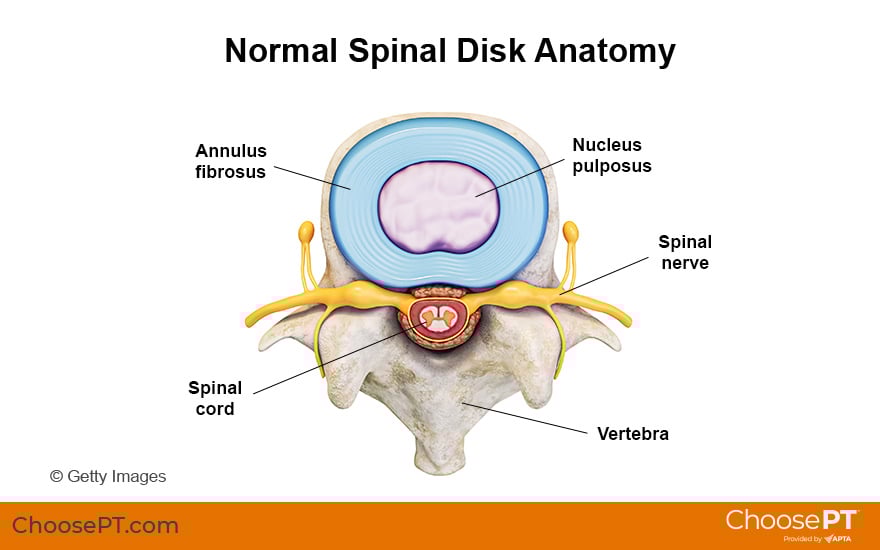
Each level of your lumbar spine is cushioned by a disc that functions as both a shock absorber and a spacer. The disc is composed of a tough, layered outer ring — the annulus fibrosus — and a pressurized, gel-like center — the nucleus pulposus. A herniation occurs when the nucleus pulposus pushes through a defect in the annulus, often contacting or compressing an adjacent nerve root.
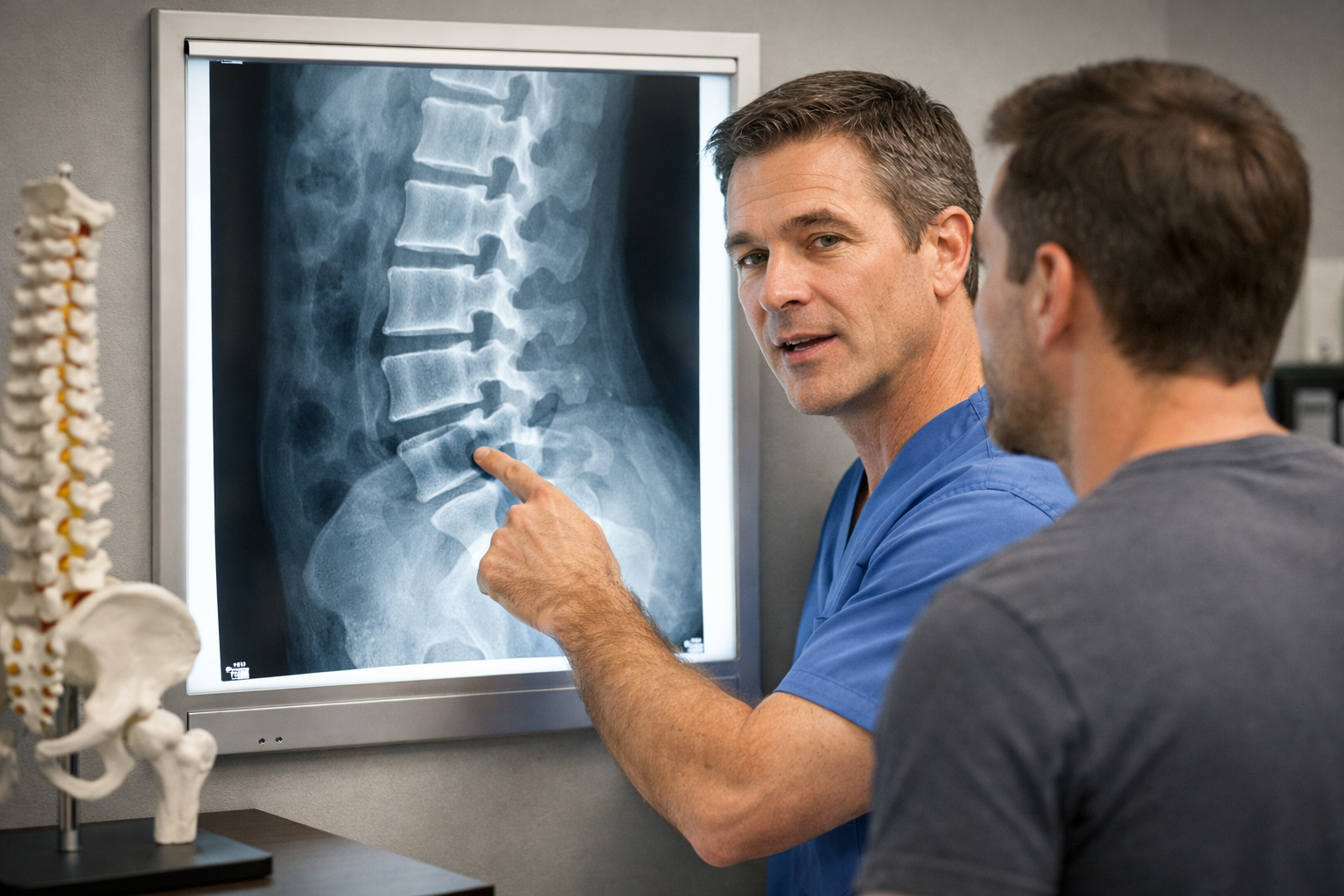
The L4-L5 and L5-S1 levels account for the vast majority of lumbar herniations. When nerve roots at these levels are compressed, you typically develop radiculopathy — the clinical term for the radiating pain, numbness, or weakness that travels down one leg, commonly called sciatica.
According to StatPearls, most lumbar disc herniations respond favorably to conservative treatment, with 80-90 percent of patients improving without surgical intervention (StatPearls, 2024). Trinity Rehab’s structured approach is designed to place you firmly in that majority.
RISK FACTORS SPECIFIC TO MIDDLETOWN
THE NYC BEDROOM COMMUNITY COMMUTE
Middletown’s mean commute time is 37 minutes — and many residents travel significantly longer to reach offices in Manhattan or northern New Jersey. Hours spent sitting in a car or train seat each day create sustained compressive and vibratory forces on the lumbar discs. Over time, this repetitive loading weakens the annulus fibrosus and shifts the risk calculus toward herniation.
TWO HIGH SCHOOLS’ WORTH OF ATHLETES
Between Middletown North and Middletown South, the township produces hundreds of competitive athletes in football, field hockey, soccer, baseball, softball, ice hockey, and more. North’s ice hockey program has captured championships, while South’s football and softball teams have earned sectional titles. Contact sports subject the lumbar spine to axial loading, hyperextension, and high-velocity rotation — all documented risk factors for disc injury in young athletes. A review in Deutsches Ärzteblatt International specifically identifies these biomechanical stresses as contributors to disc herniation (Deutsches Ärzteblatt, 2024).
GOLF, TENNIS, AND RECREATIONAL SPORTS
The Navesink Country Club and community tennis courts throughout the township attract adults who play rotational sports regularly. A golf swing generates compressive forces on the lumbar spine that can exceed eight times body weight. Tennis serves and overhead shots create sudden extension and rotation moments. Repeated over hundreds of swings per week, these forces accelerate disc degeneration.
OUTDOOR ACTIVITIES AND TRAIL HIKING
Middletown’s natural assets — Poricy Park, Deep Cut Gardens, Huber Woods, Tatum Park, Swimming River Park — provide miles of trails for hiking, running, and nature walks. While these activities are excellent for overall health, uneven terrain increases the demand on spinal stabilizers, and a single misstep on a root or rock can create the sudden, asymmetric load that triggers an acute herniation in an already vulnerable disc.
BOATING AND KAYAKING
The Navesink River and proximity to Sandy Hook make boating and kayaking popular pursuits. Paddling involves prolonged seated flexion combined with repetitive trunk rotation — a combination that is particularly stressful for the posterolateral annulus fibrosus.
RECOGNIZING THE WARNING SIGNS
Lumbar disc herniation often develops gradually, with symptoms that worsen over days or weeks:
- Radiating leg pain — sharp, burning, or electric sensations traveling from the low back into the buttock and down one leg
- Numbness or tingling in specific areas of the leg or foot
- Muscle weakness — difficulty with toe-off during walking, trouble climbing stairs, or instability standing on one leg
- Back pain that worsens with prolonged sitting, forward bending, or bearing down
- Morning stiffness that improves with gentle movement
Do not dismiss these symptoms as “just getting older.” Early evaluation leads to faster, more complete recovery. Schedule an appointment at Trinity Rehab to get answers.
TRINITY REHAB’S THREE-PHASE RECOVERY PROGRAM
PHASE 1: PAIN REDUCTION AND NERVE CALMING
In the acute phase, your therapist focuses on bringing your pain under control and reducing nerve irritation:
- McKenzie method assessment: We systematically test your response to repeated movements in different directions to find your directional preference — the movement that centralizes your symptoms. For most disc herniations, this is lumbar extension. Identifying this preference gives you a self-management tool you can use throughout the day, whether you are at your desk, in your car, or walking through Deep Cut Gardens.
- Manual therapy: Skilled joint mobilization restores segmental movement at the affected level, while soft tissue techniques address the protective muscle spasm that locks down the lumbar region after a herniation.
- Neural mobilization: Nerve gliding exercises reduce adhesions and sensitivity around the affected nerve root. These gentle movements help resolve sciatica without placing mechanical stress on the herniation itself.
- Dry needling: For patients with significant paraspinal or piriformis muscle spasm, dry needling provides rapid relief by targeting trigger points that manual techniques alone may not fully resolve.
- EPAT: Shockwave therapy reduces chronic inflammation around the disc and nerve root, promoting tissue healing and pain reduction at the cellular level.

PHASE 2: CORE STABILIZATION AND PROGRESSIVE STRENGTHENING
Once your acute symptoms are controlled, the focus shifts to rebuilding the muscular support system that failed to protect your disc:
- Deep core retraining: Isolated activation of the transversus abdominis, multifidus, pelvic floor, and diaphragm — followed by integration into increasingly challenging exercises that demand automatic co-contraction.
- Posterior chain strengthening: Hip hinge progressions, glute bridges, and deadlift variations rebuild the glutes and hamstrings, reducing the load your lumbar spine must absorb during bending and lifting.
- Spinal mobility work: Thoracic rotation drills and hip mobility exercises redistribute movement through the entire kinetic chain, taking pressure off the overloaded lumbar segments.
- Balance and proprioception training: Single-leg exercises and unstable surface work retrain the neuromuscular control systems that protect your spine during dynamic activities — from navigating a rocky trail at Huber Woods to cutting on the soccer field.
PHASE 3: RETURN TO ACTIVITY AND LONG-TERM PREVENTION
The final phase connects your clinical gains to your life in Middletown:
- Sport-specific programming: We design return-to-sport protocols tailored to your activity — whether that is ice hockey at Middletown North, tennis at the Middletown Tennis Association courts, golf at Navesink Country Club, or recreational softball with Central Jersey Softball. Each protocol includes the rotational, impact, and endurance demands of your specific sport.
- Commute optimization: Sitting strategies, in-car exercises, and postural cues designed for your 37-minute (or longer) daily drive protect your healing disc during the hours you spend behind the wheel.
- Trail and water activity preparation: If Poricy Park hiking or Navesink River kayaking is part of your routine, we ensure your stabilization patterns hold up under the prolonged, varied demands of outdoor recreation.
- Comprehensive home program: Your individualized exercise routine — designed to be completed in 15-20 minutes — becomes your primary prevention tool for the rest of your life.
PREVENTION TIPS FOR MIDDLETOWN RESIDENTS
- Invest in your car setup: A quality lumbar support and proper seat height reduce spinal load during your commute. Adjust mirrors so you are not craning forward.
- Warm up before every practice and game: Five minutes of dynamic preparation protects young athletes and weekend warriors alike.
- Hike with good footwear: The trails at Poricy Park and Tatum Park include uneven terrain. Supportive shoes with good traction reduce the sudden lateral forces that stress lumbar discs.
- Alternate garden tasks: Switch between kneeling, standing, and walking activities every 10-15 minutes to avoid sustained flexion.
- Keep moving through retirement: Middletown’s 17 percent senior population benefits enormously from consistent, moderate activity. Walking the trails at Deep Cut Gardens is one of the best things you can do for your spine.
WHY MIDDLETOWN RESIDENTS CHOOSE TRINITY REHAB
From the north side to the south side, Middletown residents share an expectation of quality. Trinity Rehab meets that expectation with a care model built around you. Every session is one-on-one with a licensed physical therapist. No aides. No group exercises. No rushed appointments. Your therapist knows your injury, your goals, and the specific demands your Middletown lifestyle places on your spine. That personal attention, combined with evidence-based treatment, is why Trinity Rehab consistently delivers outcomes that get our patients back to full, active lives.
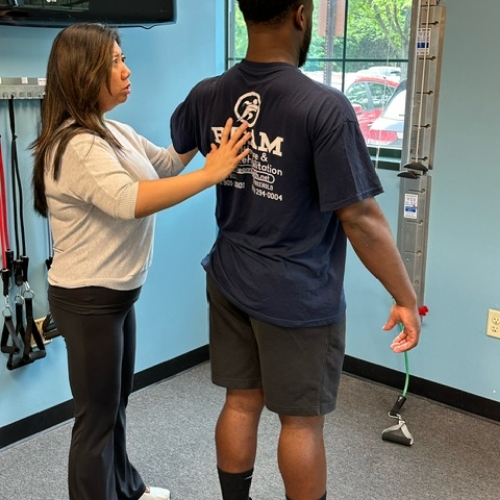
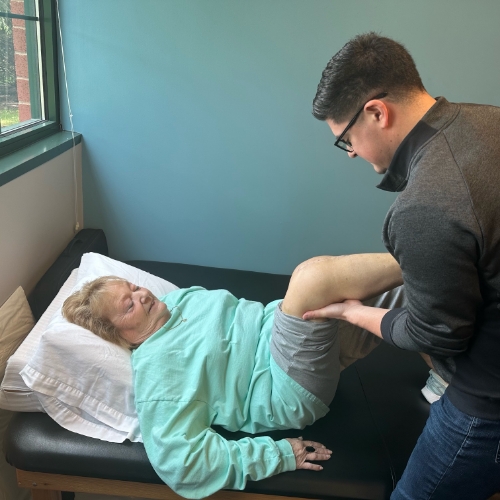
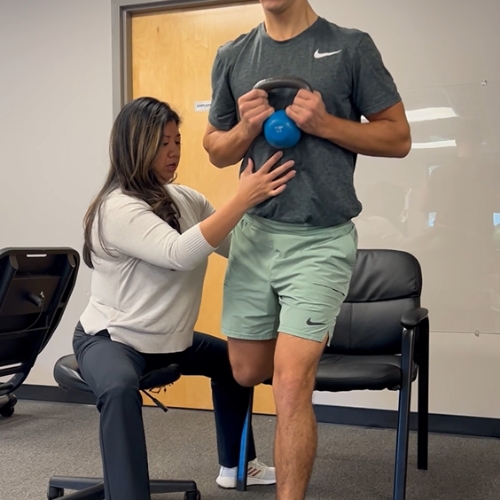
INSIDE OUR MIDDLETOWN CLINIC
RELATED CONDITIONS & TREATMENTS
Lumbar disc herniation is just one of the many conditions we treat at Trinity Rehab Middletown. Explore our full range of conditions we treat or learn more about specific treatment approaches:
Middletown Disc Rehab For Back Pain, Leg Symptoms, And Daily Movement
Lumbar disc symptoms can interrupt sitting, driving, lifting, sleep, work, and exercise. Middletown rehab should connect the diagnosis to the positions and movements that actually trigger your symptoms.
Your therapist may assess lumbar mobility, nerve-related symptoms, hip strength, gait, lifting mechanics, sitting tolerance, and warning signs that require medical care before therapy continues.
Patients with related symptoms may also need sciatica treatment, back pain physical therapy, or the Middletown physical therapy clinic page.
FREQUENTLY ASKED QUESTIONS
Middletown Disc Rehab For Back Pain, Leg Symptoms, And Daily Movement
Lumbar disc symptoms can interrupt sitting, driving, lifting, sleep, work, and exercise. Middletown rehab should connect the diagnosis to the positions and movements that actually trigger your symptoms.
Your therapist may assess lumbar mobility, nerve-related symptoms, hip strength, gait, lifting mechanics, sitting tolerance, and warning signs that require medical care before therapy continues.
Patients with related symptoms may also need sciatica treatment, back pain physical therapy, or the Middletown physical therapy clinic page.
My teenager plays ice hockey and has back pain radiating into the leg — could it be a herniated disc?
How does physical therapy compare to surgery for disc herniation?
Can I still kayak on the Navesink River during treatment?
How often will I need to come in?
Does insurance cover physical therapy for disc herniation?
START YOUR RECOVERY NOW
Do not let a herniated disc keep you on the sidelines. Trinity Rehab’s Middletown clinic provides the personalized, expert physical therapy you need to beat this injury and get back to everything you love about living in Middletown. Schedule your appointment today.
SOURCES
- StatPearls — Lumbar Disc Herniation: https://www.ncbi.nlm.nih.gov/books/NBK560878/
- Deutsches Ärzteblatt International — Lumbar Disc Herniation: https://pmc.ncbi.nlm.nih.gov/articles/PMC11465477/
What Our Patients Say



Sign up for free health tips and tricks