
ROTATOR CUFF INJURY TREATMENT IN SPARTA, NJ
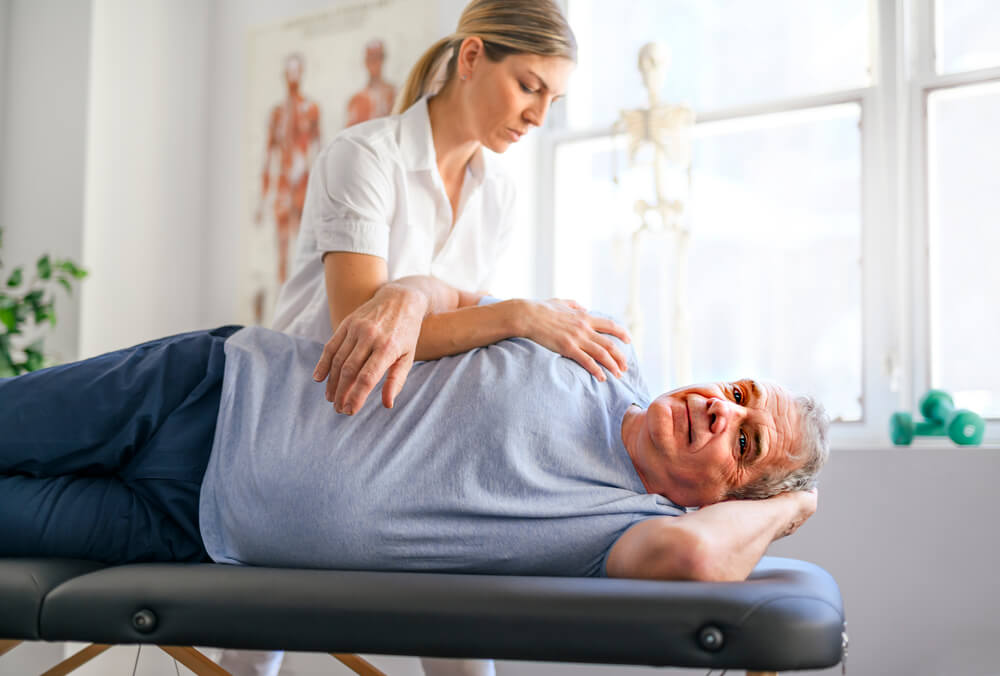
Living Active in Sparta Means Your Shoulders Work Hard
If you live in Sparta, your shoulders rarely get a day off. On summer mornings you might paddle a kayak across Lake Mohawk, then spend the afternoon hauling mulch around the yard before your kid’s Sparta Little League game. In fall, you hike the ridgeline trails at Sparta Mountain Wildlife Management Area, arms swinging over roots and rocks. Winter weekends bring shoveling—lots of it—across 37 square miles of rolling Sussex County Highlands terrain that seems to collect more snow than anywhere else in New Jersey. And if you work at one of the warehouses along Park Lake Road Industrial Park or at the Techflex Inc. headquarters, repetitive overhead lifting and reaching are simply part of the job.
All of that activity depends on healthy, stable shoulders. When a rotator cuff injury develops—whether it comes on gradually or strikes during a single awkward motion—it can sideline you from everything that makes life in Sparta worth living. The good news: most rotator cuff injuries respond well to physical therapy without surgery, and in New Jersey you can start treatment through direct access, no physician referral required.
Understanding Your Rotator Cuff and Why Injuries Matter
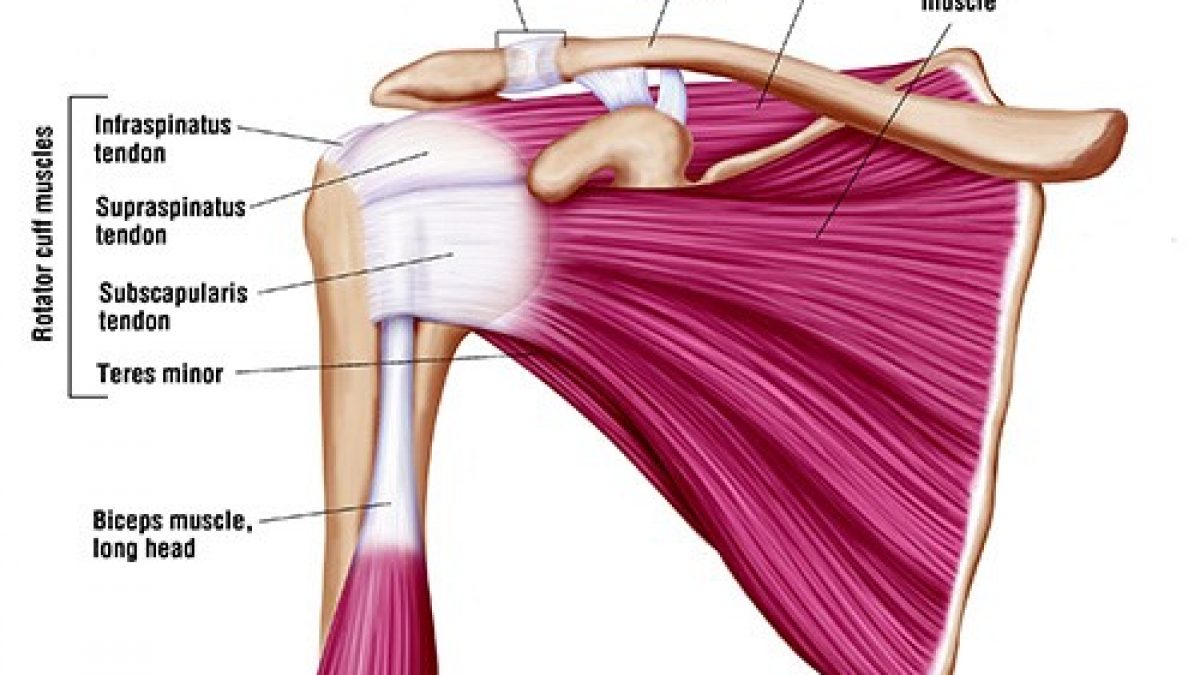
Your rotator cuff is a group of four muscles and their tendons—the supraspinatus, infraspinatus, teres minor, and subscapularis—that stabilize the glenohumeral joint by keeping the ball of your upper arm centered in the shoulder socket every time you raise, rotate, or reach.
Injuries exist on a spectrum. Rotator cuff tendinopathy involves irritated, fraying tendons from repeated stress. Partial-thickness and full-thickness tears occur when tendons actually separate from the bone. Many Sparta residents experience a combination of tendon inflammation and muscular weakness that steadily chips away at range of motion and comfort.
Left untreated, a rotator cuff injury tends to worsen as you compensate with altered movement patterns that strain the neck, upper back, and opposite shoulder. Research consistently shows that structured physical therapy for shoulder pain is the recommended first-line treatment, with outcomes often comparable to surgery for partial tears and tendinopathy.
Common Causes of Rotator Cuff Injuries in Sparta
Every community has its own pattern of shoulder injuries. In Sparta, we see rotator cuff problems tied directly to the local lifestyle:
Lake and Mountain Recreation
Kayaking and paddleboarding on Lake Mohawk, swimming laps with the Lake Mohawk Country Club swim team, and hiking the wooded trails around Camp Sacajawea all place sustained, repetitive demands on the shoulder. A long afternoon paddling the shoreline near the Lake Mohawk Boardwalk can fatigue the supraspinatus and infraspinatus enough to trigger tendinopathy in someone whose tendons are already under stress.
Overhead Sports and Fitness
Sparta High School Spartans athletes compete in more than 20 sports through the NJAC—football, basketball, softball, volleyball, and swimming all involve forceful overhead movements. Tennis players at Lake Mohawk Tennis Club and Sparta Athletic Campus face similar risks, especially with the explosive serving motion in tennis and the quick overhead volleys in pickleball. Golfers at SkyView Golf Club may not think of their sport as “overhead,” but the rapid rotational force of a full swing loads the rotator cuff significantly, particularly on the lead shoulder.
Workplace Demands
Employees at the distribution and flex-space facilities along Park Lake Road Industrial Park regularly lift, stack, and reach overhead for hours at a time—among the leading causes of work-related shoulder injuries. Even desk-bound commuters—Sparta’s median commute is 38 minutes—can develop shoulder impingement from prolonged poor posture behind the wheel.
Age-Related Changes
With a median age in the early-to-mid 40s, many Sparta residents are in the demographic where tendon quality naturally begins to decline. A weekend project at the house or one aggressive round of shoveling can push an already-compromised tendon past its limit.
Symptoms to Watch For
Rotator cuff injuries do not always announce themselves dramatically. Pay attention to these warning signs:
- Dull ache deep in the shoulder, often worse at night or when lying on the affected side
- Pain when reaching overhead—grabbing something from a high shelf, washing your hair, or throwing a ball with your child at Edison Park
- Weakness when lifting objects away from your body or rotating your arm outward
- Catching or clicking sensations during shoulder movement
- Stiffness and reduced range of motion, especially first thing in the morning
- Sharp pain during specific movements like serving in tennis, pulling a kayak paddle, or lifting boxes at work
- rotator cuff recovery guide
If any of these symptoms have persisted for more than a week or two, it is time to have your shoulder evaluated. The earlier treatment begins, the shorter and simpler your recovery tends to be.
Our Phase-Based Treatment Approach
At Trinity Rehab in Sparta, we use a structured, three-phase rehabilitation program for rotator cuff injuries. Every plan is built around your specific diagnosis, your daily demands, and the activities you need to get back to—whether that is competitive softball at Sparta High School or carrying inventory at Techflex. Treatment sessions are one-on-one with your therapist, so the program adapts in real time as you progress.
Most rotator cuff rehabilitation programs run 6 to 12 weeks at two to three sessions per week, depending on the severity of the injury.
Phase 1: Pain Reduction and Protection (Weeks 1-3)
The first priority is calming the inflammatory response and restoring basic, pain-free movement. During this phase, your therapist may use:
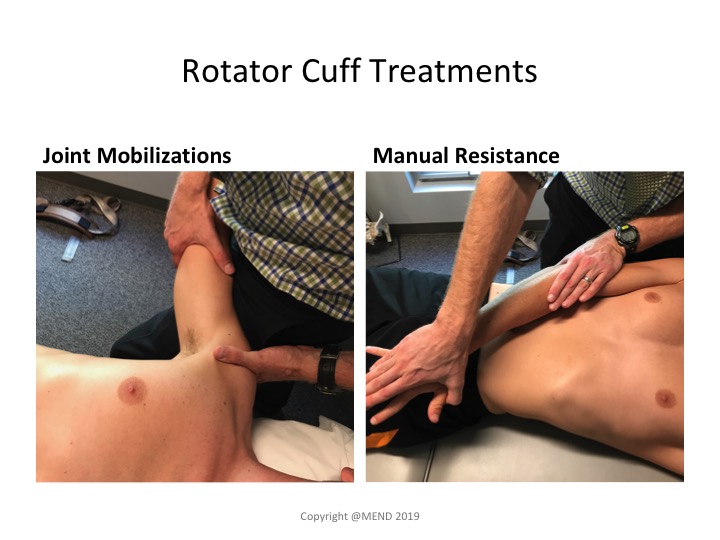
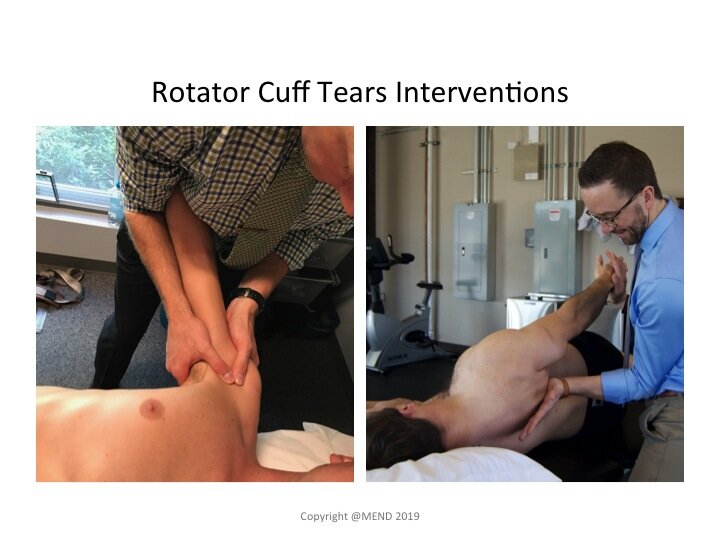
- Manual therapy — Hands-on joint mobilizations and soft-tissue techniques to improve glenohumeral joint mobility, reduce muscle guarding, and decrease pain.
- Dry needling — Thin, sterile needles target myofascial trigger points in the infraspinatus, upper trapezius, and surrounding muscles, reducing tension and providing rapid pain relief.
- EPAT/shockwave therapy — Acoustic pressure waves stimulate blood flow and accelerate healing in damaged tendon tissue. EPAT is particularly effective for chronic rotator cuff tendinopathy that has not responded to rest alone.
- Gentle range-of-motion exercises — Pendulum swings, assisted shoulder flexion, and passive stretching restore movement without overloading healing tissue.
- Activity modification guidance — We help you identify which daily tasks to adjust temporarily and how to position your shoulder for pain-free sleep.
By the end of Phase 1, most patients experience a meaningful reduction in resting pain and can move the shoulder through a functional range with minimal discomfort.
Phase 2: Strengthening and Stability (Weeks 3-8)
Once pain is under control and baseline range of motion is restored, we shift focus to rebuilding the strength and coordination your shoulder needs. This is the core of rotator cuff rehabilitation.
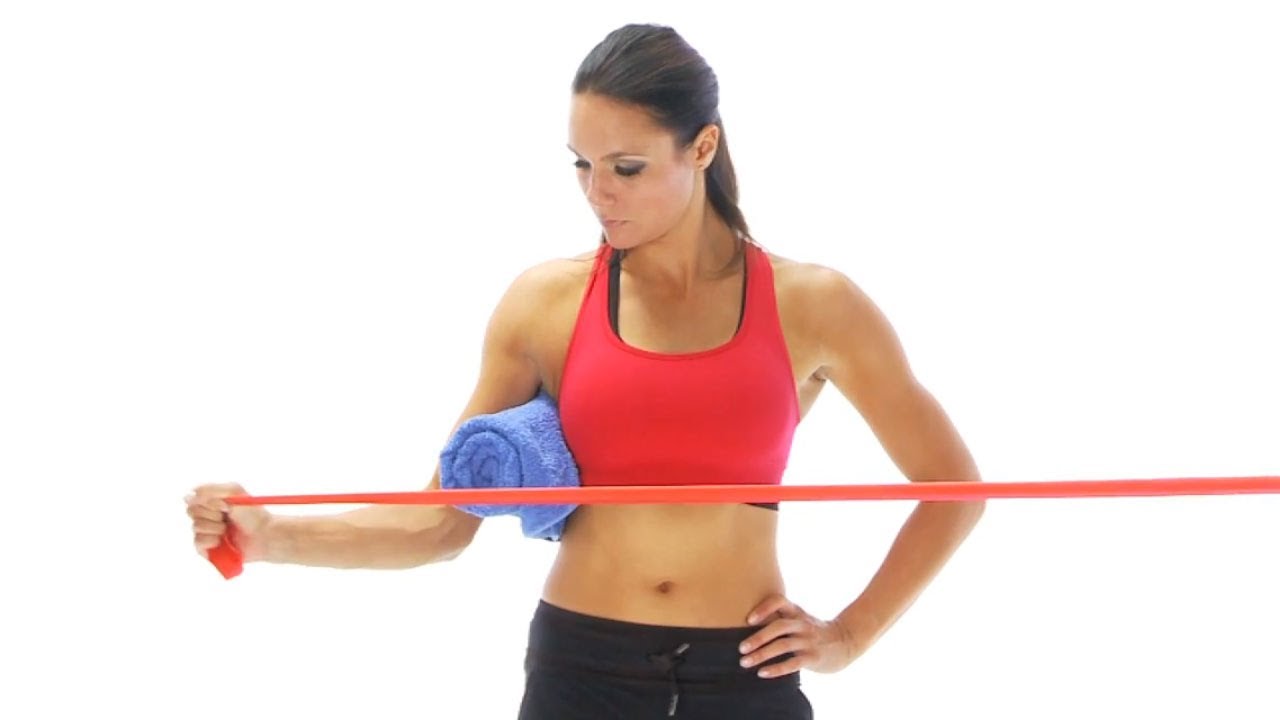
- Eccentric loading exercises — Eccentric loading—slowly lowering a weight rather than lifting it—has strong research support for tendon healing. Exercises like eccentric external rotation and slow-lowering dumbbell raises target the supraspinatus and infraspinatus precisely.
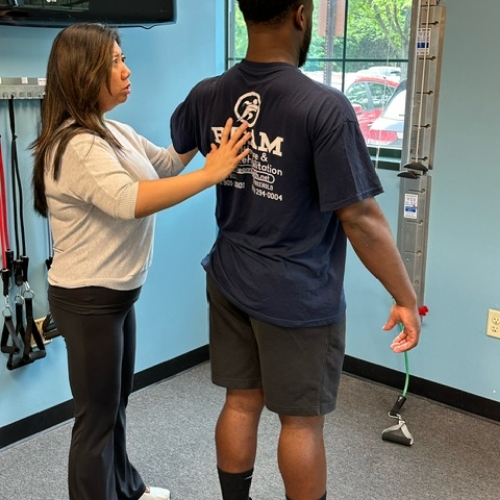
- Scapular stabilization training — Your shoulder blade is the foundation of every arm movement. Weakness in the lower trapezius and serratus anterior forces the rotator cuff to overwork. Wall slides, prone Y-raises, and banded rows restore scapular stabilization so the entire shoulder complex moves efficiently.
- Progressive resistance training — As tendon tolerance improves, we systematically increase load and complexity, progressing from light resistance bands to functional movements that mirror your real-world demands.
- Continued manual therapy and dry needling — These techniques remain part of the program as needed to manage residual tightness between strengthening sessions.
Phase 2 is where patients often feel a turning point. Daily tasks become easier, sleep improves, and confidence in the shoulder returns.
Phase 3: Return to Activity (Weeks 8-12+)
The final phase bridges the gap between clinical strength and the specific demands of your life in Sparta. Your therapist designs sport-specific or task-specific progressions based on your goals:
- For lake and mountain recreation — Simulated paddling mechanics, overhead reaching drills, and hiking-pole exercises rebuild endurance for long days on the water at Tomahawk Lake or on the trails around Sparta Mountain WMA.
- For overhead sports — Throwing progressions for Sparta Little League parents and athletes, serving drills for tennis and pickleball players, and swing analysis for golfers at SkyView ensure you return to competition with a shoulder that is stronger than it was before injury.
- For workplace demands — Lifting simulations, sustained overhead-reach endurance training, and ergonomic coaching prepare warehouse and industrial workers for a safe return to full duty.
- For youth and adult athletes — Sport-specific power and plyometric exercises rebuild the explosive capacity required for competitive play, with careful monitoring to avoid re-injury.
You will also receive a customized home exercise program to continue independently after discharge, keeping your shoulder strong for the long term.
Prevention Tips for Sparta Residents
Once your rotator cuff has healed—or to avoid injury in the first place—these habits make a real difference:
- Warm up before activity. Five minutes of arm circles, band pull-aparts, and shoulder stretches before paddling Lake Mohawk, teeing off at SkyView, or starting a shift at the warehouse primes the rotator cuff for work.
- Strengthen year-round. A simple routine of external rotation with a band, scapular rows, and prone Ys three times per week maintains the baseline strength your rotator cuff needs.
- Vary your training. Cross-train between activities. If you play tennis at Lake Mohawk Tennis Club twice a week, balance that with swimming or hiking to distribute stress across different movement patterns.
- Respect fatigue. When your shoulder feels heavy or achy during yard work, paddling, or overhead lifting, stop and rest. Pushing through fatigue is one of the fastest routes to tendon breakdown.
- Optimize your workspace. If you commute from Sparta to an office or work at a local facility, position your monitor at eye level, keep your mouse close to your body, and take movement breaks every 30 to 45 minutes.
- Address problems early. Minor shoulder discomfort that lasts more than a few days deserves professional attention. A single evaluation can identify risk factors and prevent a small issue from becoming a significant tear.
Why Sparta Residents Choose Trinity Rehab
Trinity Rehab provides Sparta and the surrounding Sussex County Highlands communities with accessible, evidence-based rotator cuff treatment. Here is what sets our approach apart:
- One-on-one care, every session. You work directly with your physical therapist for the full duration of every visit—no hand-offs to aides or technicians.
- Direct access in New Jersey. You do not need a physician referral to begin treatment. If your shoulder is hurting, you can schedule an appointment and start the evaluation process right away.
- Advanced treatment options. Our clinic offers manual therapy, dry needling, and EPAT/shockwave therapy under one roof, so you get comprehensive care without being referred elsewhere.
- Local understanding. We know that Sparta residents are active people—paddlers, hikers, golfers, tennis players, youth sports coaches, and hardworking professionals. Your treatment plan reflects the specific demands of your life, not a generic protocol.
Inside Our Sparta Clinic
Frequently Asked Questions
Where can I get rotator cuff treatment in Sparta, NJ?
How long does rotator cuff rehabilitation take?
Can I avoid surgery for a rotator cuff tear?
Will I be able to return to sports after a rotator cuff injury?
Does insurance cover rotator cuff physical therapy?
Take the First Step Toward Recovery
Shoulder pain should not keep you off Lake Mohawk, away from the Sparta Mountain trails, or struggling through your workday. If a rotator cuff injury is limiting your life in Sparta, our phase-based treatment approach can help you move from pain relief to full strength and back to the activities you love.
Schedule your appointment at Trinity Rehab today and start your recovery with a team that understands what it means to live actively in Sparta, NJ.
Start Your Recovery in Sparta Today
Don’t let shoulder pain hold you back. Schedule your evaluation at Trinity Rehab in Sparta and take the first step toward a stronger, pain-free shoulder.
Related Conditions & Treatments
Rotator cuff injuries are just one of the many conditions we treat at Trinity Rehab Sparta. Explore our full range of conditions we treat or learn more about specific treatment approaches:
What Our Patients Say



Sign up for free health tips and tricks