

ACL TREATMENT PHYSICAL THERAPY IN SOMERSET, NJ
WHERE CHAMPIONSHIP ATHLETES AND A GLOBAL WORKFORCE FIND ACL RECOVERY
Somerset is one of the most culturally diverse communities in New Jersey. Within Franklin Township, families from dozens of countries share neighborhoods, workplaces, and sidelines — and that diversity shows up on every playing field. The Franklin High School Warriors girls basketball program has built a dynasty with multiple state championships, powered by athletes who represent cultures from around the world. Off the courts and fields, Somerset anchors a thriving pharmaceutical corridor where companies like Catalent and Legend Biotech employ thousands of residents in demanding, physically active roles.
Whether you are a Warriors athlete driving to the basket, a pharma production worker navigating a fast-paced manufacturing floor, or a weekend runner on the trails at Colonial Park, an anterior cruciate ligament injury can derail the activities that define daily life. ACL treatment physical therapy at Trinity Rehab in Somerset gives you a clear, evidence-based path back — without guesswork and without unnecessary delay.
—
UNDERSTANDING ACL INJURIES
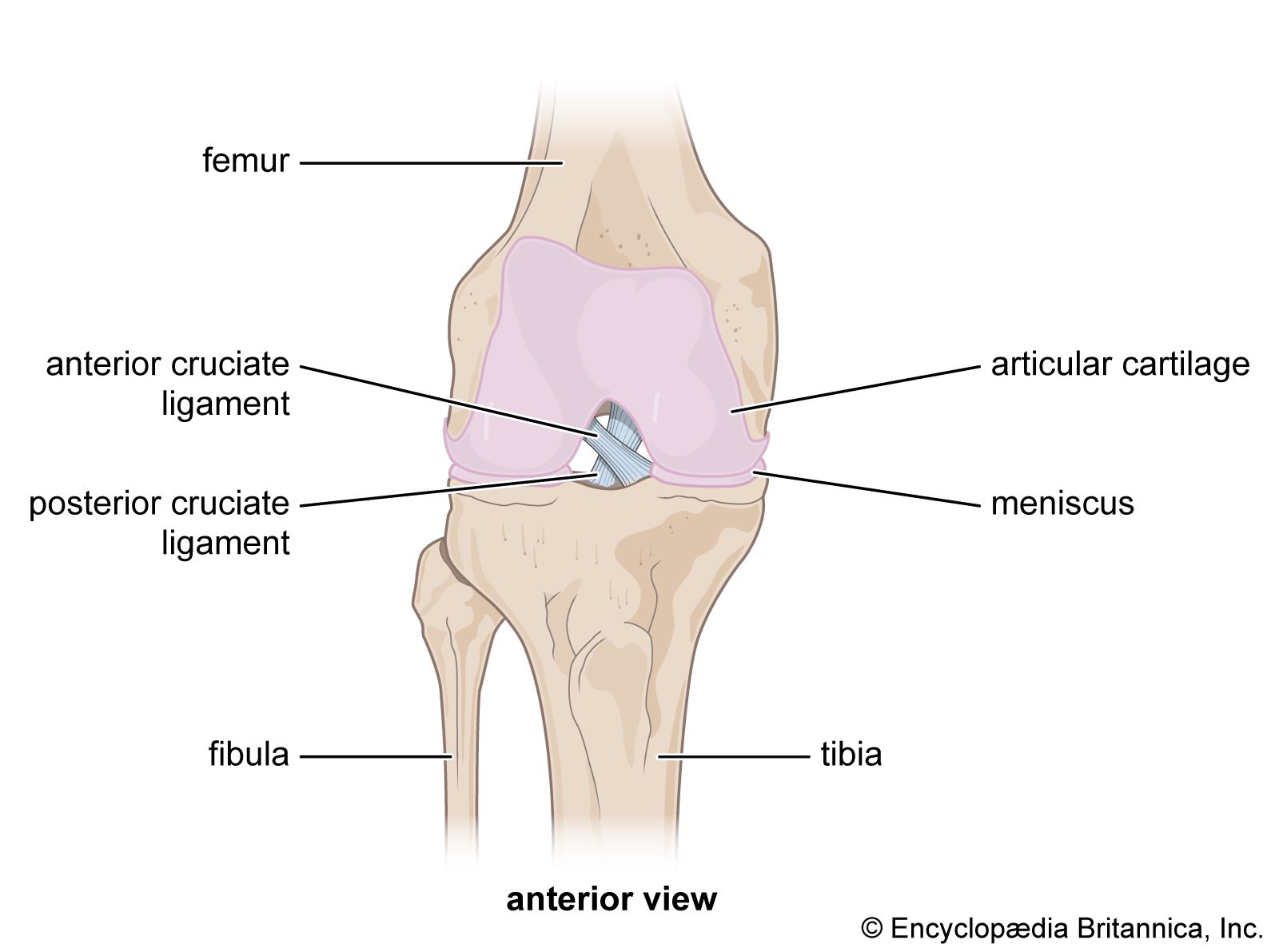
The anterior cruciate ligament is a tough band of tissue that crosses through the center of your knee joint, connecting the thighbone to the shinbone. Its primary job is to prevent the tibia from sliding forward and to control rotational forces during cutting, pivoting, and landing. When the ACL tears — partially or completely — the knee loses a critical source of knee stability.
With roughly 200,000 ACL injuries occurring each year in the United States, an ACL tear is among the most common and most consequential ligament injuries in orthopedic medicine — affecting people of all ages and activity levels.
—
WHY RECOVERY MATTERS
An untreated or poorly rehabilitated ACL injury does more than sideline you for a season. Without proper rehabilitation, the knee joint is vulnerable to repeated episodes of instability, cartilage damage, meniscus tears, and early-onset arthritis. Over time, compensatory movement patterns can produce hip and knee pain that spreads well beyond the original injury.
Structured physical therapy restores knee function, rebuilds muscle strength, and retrains the neuromuscular control that protects the joint during high-demand activities. Whether or not you pursue ACL surgery, rehabilitation is not optional — it is the foundation of every successful outcome.
—
COMMON CAUSES OF ACL INJURIES IN SOMERSET
Somerset’s active population encounters ACL injury risk in settings that reflect the community’s character.
Athletic competition. Franklin High School fields competitive teams in basketball, football, soccer, lacrosse, track and field, wrestling, and tennis. A Warriors girls basketball player going up for a contested layup during a state championship game can land awkwardly on a single leg, and the sudden deceleration and rotation are a textbook mechanism for an ACL tear. Younger athletes in Franklin Township Youth Soccer and FTRS leagues face similar risk when they plant a foot and twist sharply to change direction during a game — the forces generated can exceed what the developing ligament can withstand.
Workplace incidents. Somerset’s pharmaceutical corridor — anchored by Catalent’s corporate headquarters, Legend Biotech, and Somerset Pharma — employs residents in manufacturing, packaging, and distribution roles that involve standing, walking on hard surfaces, and moving around heavy equipment. A Catalent production worker who trips over floor-mounted machinery or catches a foot on a pallet can suffer a sudden twisting force to the knee that results in an anterior cruciate ligament injury. These work injuries are more common than many people realize in industrial settings.
Recreational activity. Colonial Park draws residents to its extensive trail system, fitness parcourse stations, soccer fields, and gardens throughout the year. A trail runner using the fitness parcourse who slips on a wet surface or lands unevenly stepping off an exercise station can hyperextend or twist the knee under load. Golfers at Spooky Brook and Neshanic Valley, tennis players at county tennis centers, and field hockey athletes through FTRS all place rotational stress on the knee that can compromise the ACL.
—
RECOGNIZING SYMPTOMS
ACL injuries often announce themselves unmistakably, but not always. Common signs include:
- A loud pop or snapping sensation at the moment of injury
- Rapid swelling within the first few hours
- Severe pain that may subside partially, creating a false sense of reassurance
- A feeling that the knee is “giving way” or buckling during weight-bearing
- Loss of full range of motion, especially difficulty straightening the knee completely
- Tenderness along the joint line
Some people can still walk after an ACL tear, which leads them to assume the injury is minor. If you experience any combination of these symptoms — on a court at Franklin High School, on a production floor, or on a trail at Colonial Park — seek evaluation promptly. Early assessment by a physical therapist determines the severity and sets the timeline for recovery.
—
HOW PHYSICAL THERAPY HELPS AFTER AN ACL INJURY
At Trinity Rehab in Somerset, your physical therapy program is designed around the specific demands you need to meet — whether that means returning to varsity competition, getting back to a physically demanding job, or resuming recreational activities without pain or instability. Your physical therapist builds a progressive plan that addresses each phase of healing.
Manual Therapy
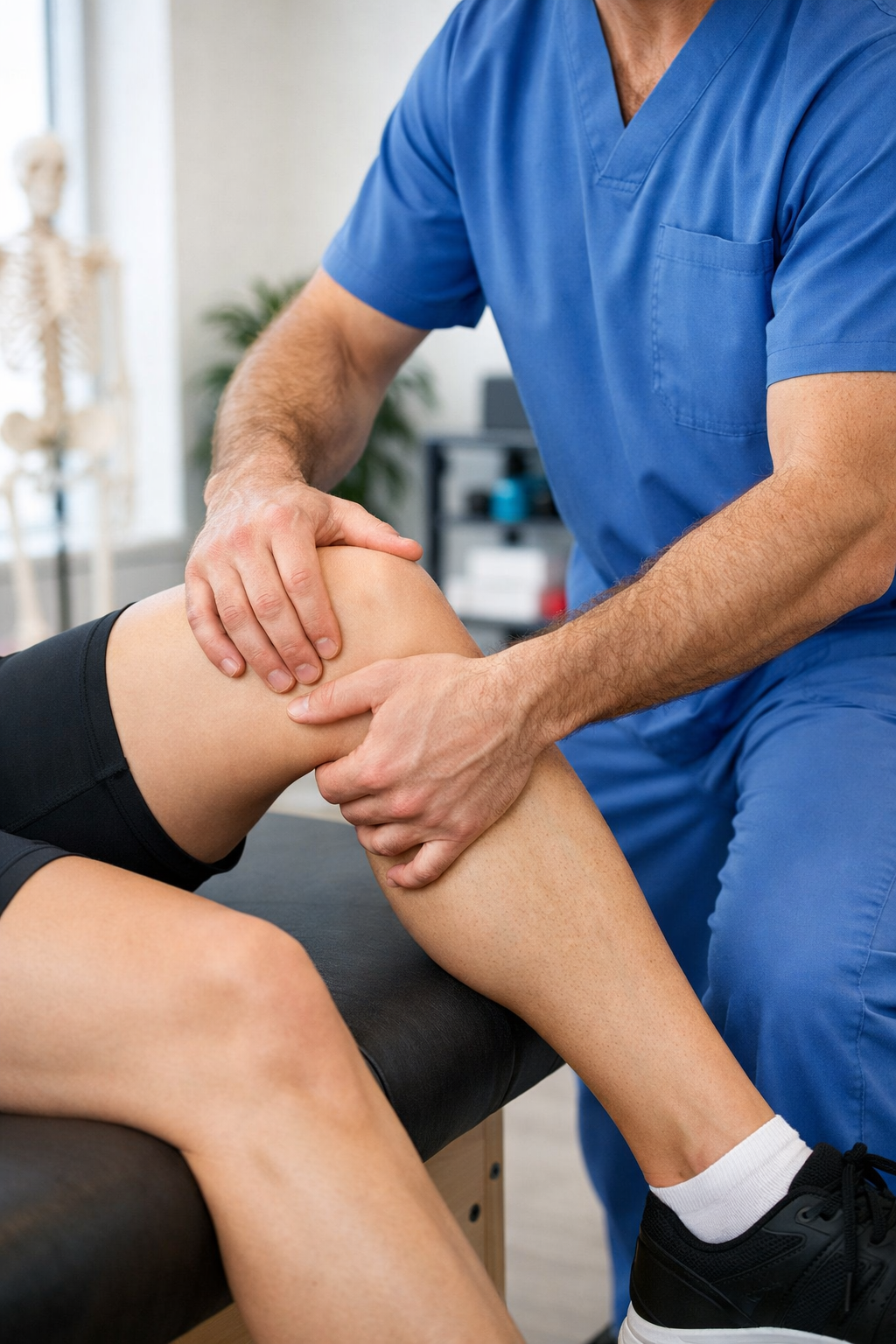
Manual therapy uses hands-on techniques — including joint mobilization, soft tissue mobilization, and targeted stretching — to restore knee motion, reduce stiffness, and decrease pain in the early stages of recovery. For a Franklin Township Youth Soccer player recovering from ACL reconstruction, manual therapy helps regain the flexion and extension needed before strengthening can progress safely.
Progressive Strengthening
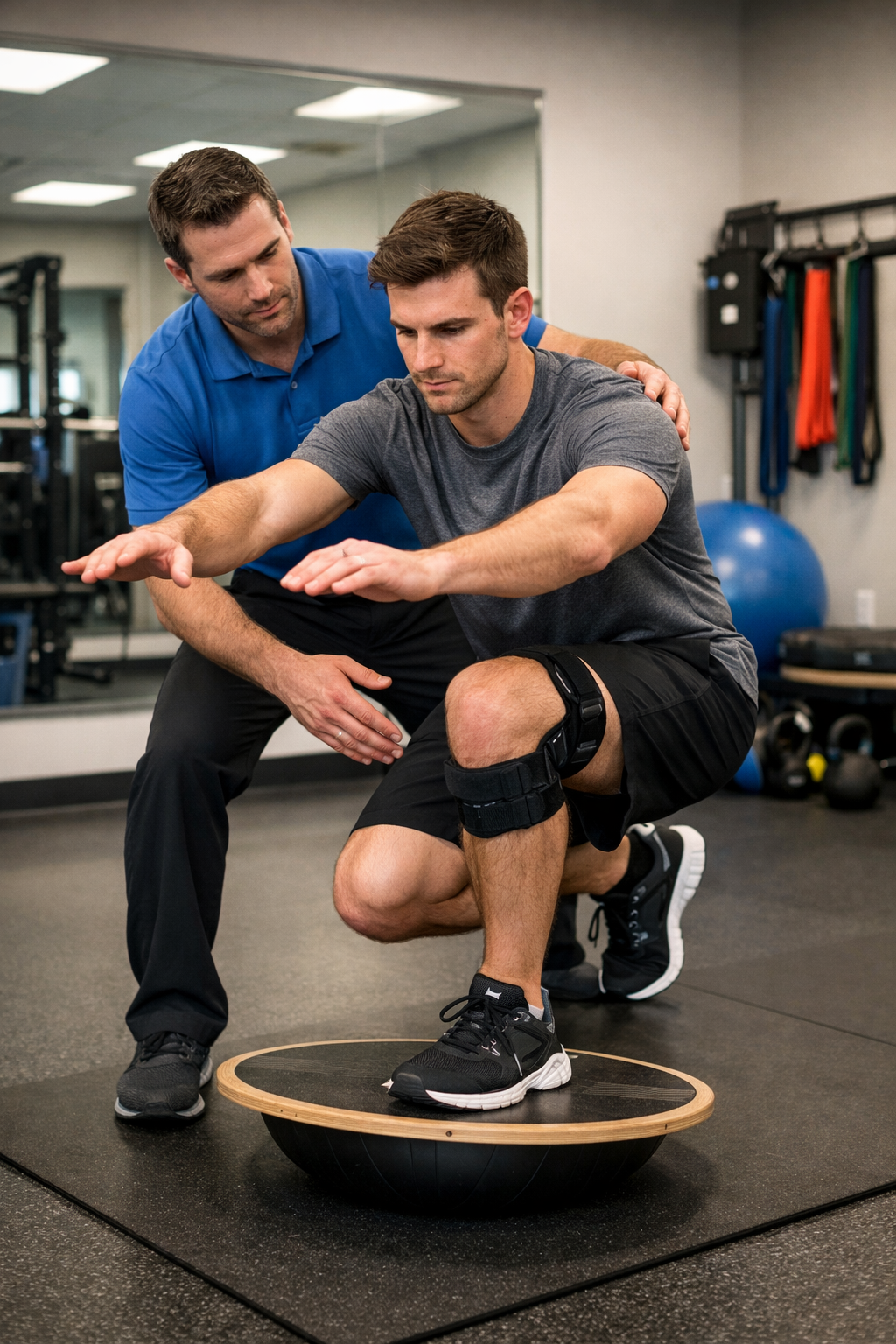
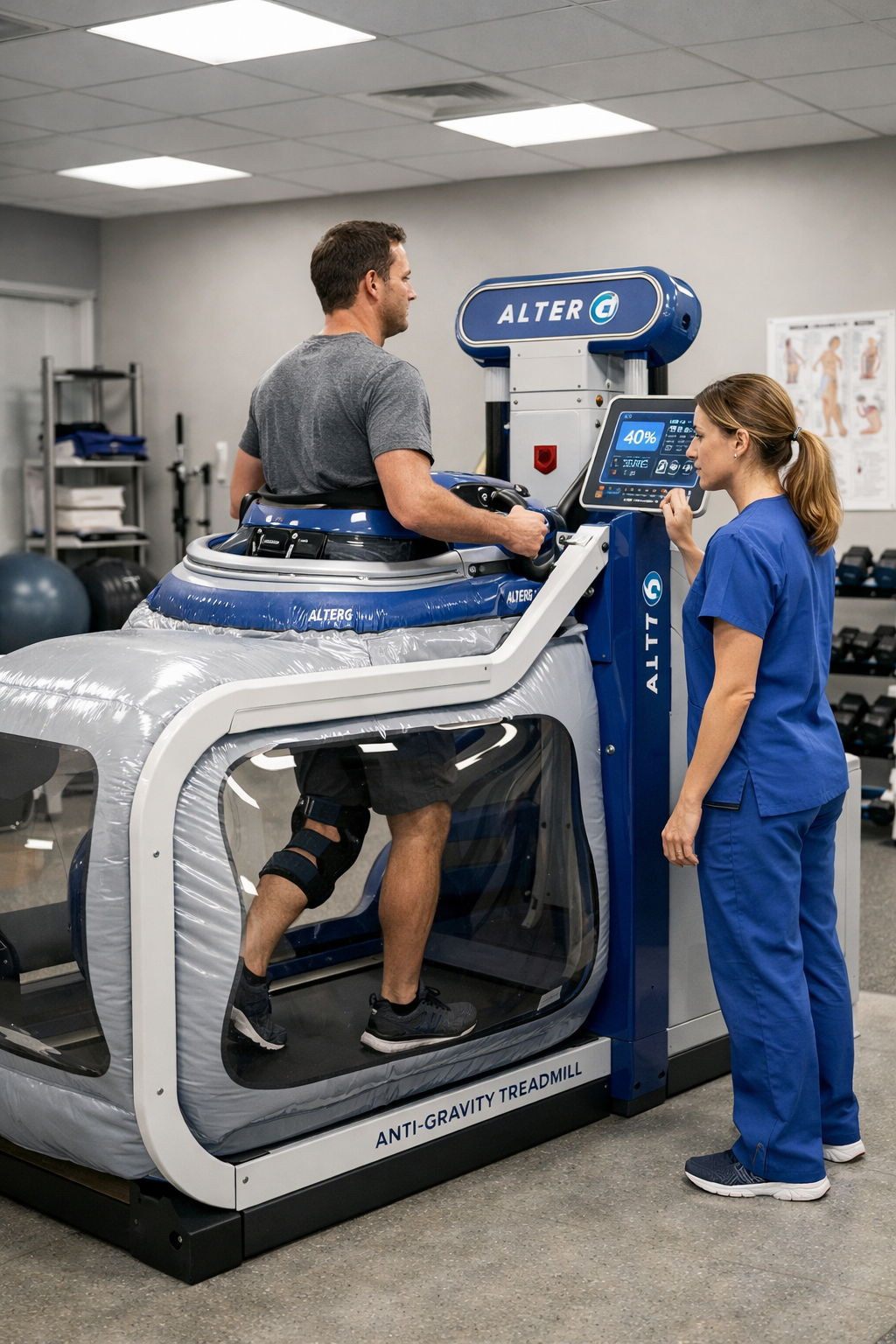
Rebuilding muscle strength is the backbone of ACL rehabilitation. Early-phase exercises target the quadriceps, which often shut down rapidly after injury or surgery. As healing progresses, the program incorporates hamstring curls and other exercises that develop hamstring strength, glute activation drills, and functional movements that restore balanced force production across the entire lower extremity. Strengthening exercises are dosed and progressed based on objective benchmarks, not arbitrary timelines.
EPAT / Shockwave Therapy
EPAT (Extracorporeal Pulse Activation Technology), also known as shockwave therapy, delivers acoustic pressure waves to targeted tissue. This modality stimulates blood flow and cellular repair processes, helping to reduce persistent patellar tendon pain and soft tissue inflammation that sometimes accompany ACL recovery. It is particularly useful when healing plateaus during the middle phases of rehabilitation.
Dry Needling
Dry needling involves the insertion of thin monofilament needles into myofascial trigger points — tight, painful knots within muscle tissue. After an ACL injury, compensatory patterns frequently produce trigger points in the quadriceps, hamstrings, calf, and hip musculature. Dry needling can release these restrictions, improve local circulation, and reduce the guarding that limits knee motion and functional progress.
Blood Flow Restriction (BFR) Training
Blood flow restriction training uses a specialized cuff to partially occlude venous blood flow during low-load exercise, creating a metabolic environment that promotes muscle strength and hypertrophy at loads far lower than traditional training requires. For post-surgical ACL patients who cannot yet tolerate heavy resistance — such as a Warriors basketball player in the early weeks after anterior cruciate ligament reconstruction — BFR training accelerates quadriceps recovery without overloading the healing graft.
Neuromuscular Electrical Stimulation (NMES)
Neuromuscular electrical stimulation delivers controlled electrical impulses to the quadriceps through surface electrodes. NMES is especially valuable immediately after ACL surgery, when voluntary quadriceps activation is inhibited by pain and swelling, helping prevent the rapid atrophy that undermines early rehabilitation outcomes.
Sport-Specific Rehabilitation
The final phase of ACL rehab bridges the gap between clinical strength and real-world performance. For athletes in Somerset, this means replicating the demands of their specific sport. A Franklin Warriors basketball player practices cutting, pivoting, and vertical jumping. A FTRS soccer player drills acceleration, deceleration, and direction changes on turf. This phase integrates balance exercises, proprioception drills, and plyometric training to ensure the knee is prepared for competition-level forces. Return to sport decisions are guided by objective testing — not by the calendar alone.
—
NON-SURGICAL VS. SURGICAL PATHWAYS
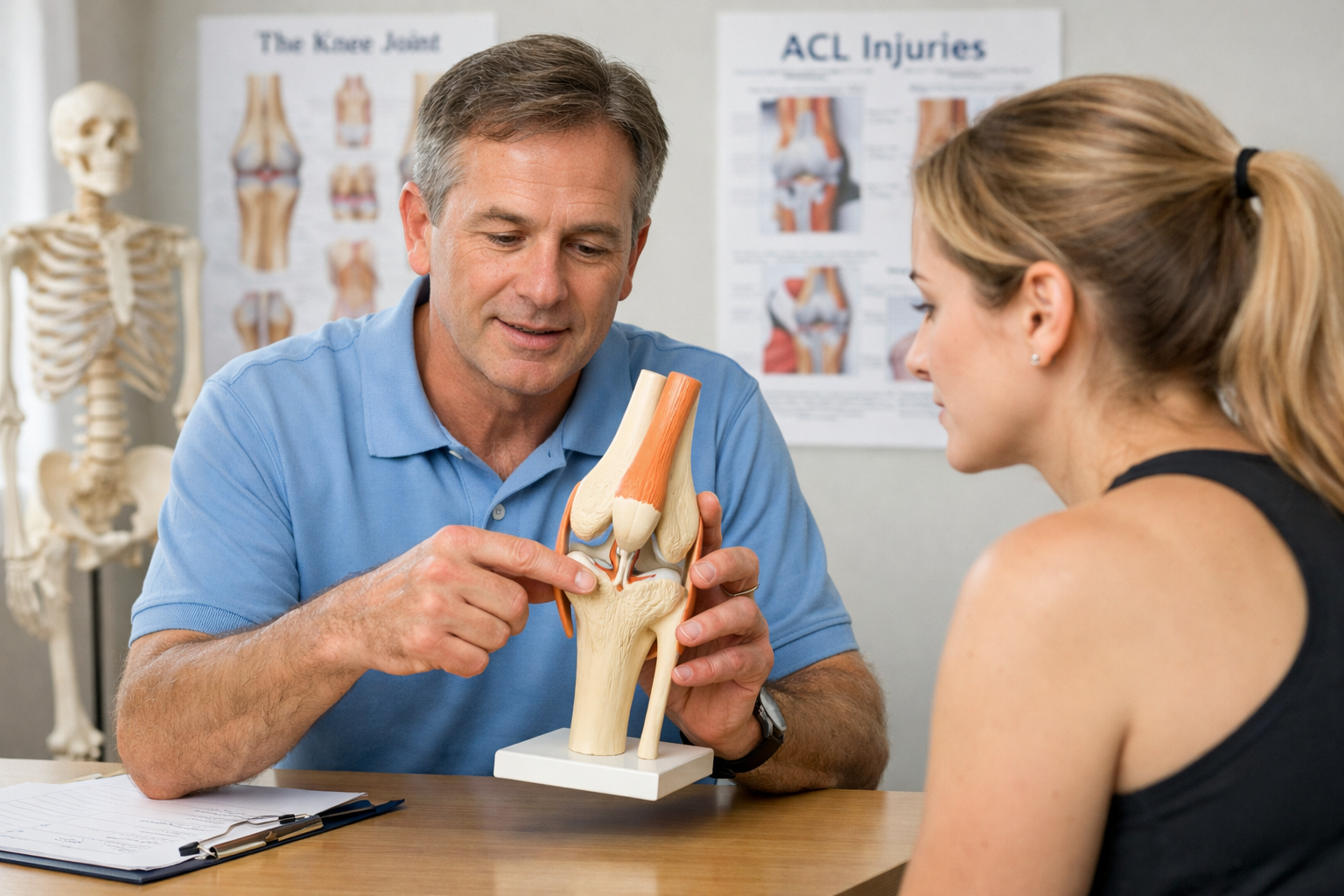
Not every ACL tear requires surgery. The decision depends on the degree of the tear, associated injuries (such as meniscus damage), your activity level, age, and goals.
Non-surgical (conservative) management can be effective for patients with partial tears or lower activity demands. A Catalent manufacturing worker whose primary goal is returning to a physically active but linear job may recover full knee stability through a rehabilitation program that emphasizes strengthening exercises, proprioception training, and functional progression — without undergoing ACL reconstruction.
Surgical management — typically ACL reconstruction using a graft — is generally recommended for active individuals who plan to return to high-demand sports or who experience persistent instability despite rehabilitation. After ACL surgery, prehabilitation (pre-surgical physical therapy) and post-operative rehabilitation are both essential. Patients who enter surgery with better range of motion and muscle strength consistently achieve faster recoveries.
Regardless of the pathway, physical therapy is the constant. Your physical therapist at Trinity Rehab coordinates with your surgeon to ensure every phase of care aligns with your healing timeline.
—
RETURN TO SPORT
Returning to competitive athletics after an ACL injury is a process, not a single moment. At Trinity Rehab, return to sport clearance is based on meeting objective criteria:
- Symmetrical strength: Quadriceps and hamstring strength on the injured side within 90% of the uninvolved leg
- Functional performance: Single-leg hop tests, Y-balance tests, and sport-specific agility drills that match or exceed baseline values
- Movement quality: Proper landing mechanics, absence of dynamic knee valgus, and confident deceleration patterns
- Psychological readiness: Confidence in the knee during unpredictable, high-speed scenarios
For a Franklin High School athlete aiming to return to varsity basketball, soccer, or lacrosse, this protocol ensures the knee can handle competition demands — not just the controlled environment of a clinic. The goal is to return at full capacity with reduced re-injury risk.
—
INJURY PREVENTION
An ACL injury is not purely a matter of bad luck. Research has identified modifiable risk factors, and targeted prevention programs can reduce ACL injury rates by 50% or more — particularly among female athletes. Effective programs include:
- Neuromuscular training: Teaching athletes to land with proper knee alignment, absorb force through the hips, and activate the hamstrings during deceleration
- Plyometric training: Progressive jump-landing drills that develop eccentric control and reactive strength
- Balance and proprioception work: Single-leg stability exercises that sharpen the body’s ability to detect and correct dangerous joint positions in real time
- Hamstring and hip strengthening: Addressing the posterior chain weakness that is strongly associated with ACL injury risk, especially in female athletes
Somerset’s youth sports organizations — Franklin Township Little League, FTRS, Franklin Township Youth Soccer, and the Somerset Hills YMCA — can integrate these programs into preseason and in-season training. Coaches and parents who prioritize injury prevention invest in the long-term health of every athlete.
—
WHY CHOOSE TRINITY REHAB IN SOMERSET
Trinity Rehab’s Somerset clinic, located at 84 Veronica Ave, Somerset, NJ 08873, serves the Franklin Township community with a focus on individualized, outcomes-driven care. Here is what sets us apart:
- One-on-one treatment sessions: Every visit is spent with a licensed physical therapist — not handed off to an aide or technician
- Advanced treatment options: Access to manual therapy, dry needling, EPAT/shockwave therapy, blood flow restriction training, neuromuscular electrical stimulation, and sport-specific rehab protocols under one roof
- Community connection: We treat the Warriors athletes, the pharmaceutical corridor workers, and the Colonial Park trail runners who make Somerset one of the most vibrant and diverse communities in central New Jersey
- Coordination with surgeons and physicians: Seamless communication with orthopedic providers at RWJ University Hospital Somerset and throughout the region ensures your ACL recovery stays on track from day one
- Flexible scheduling: We understand that Catalent shift workers, SHI International professionals, and busy families need appointment times that fit real life
We treat the full spectrum of physical therapy conditions — from ACL injuries and sports injuries to workplace injuries and chronic joint pain — and we are committed to helping every Somerset resident move without limitation.
—
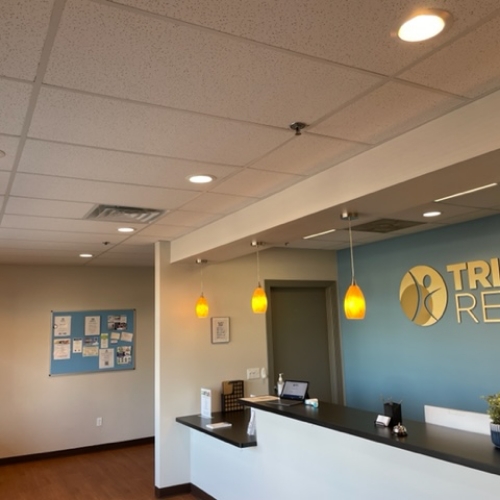
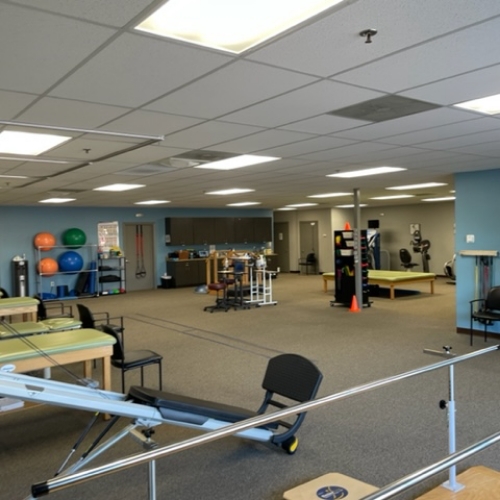
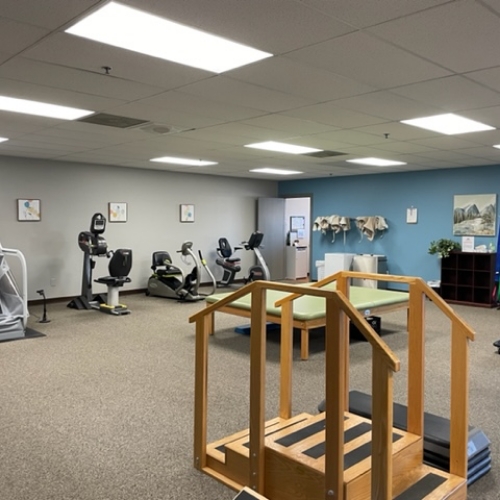
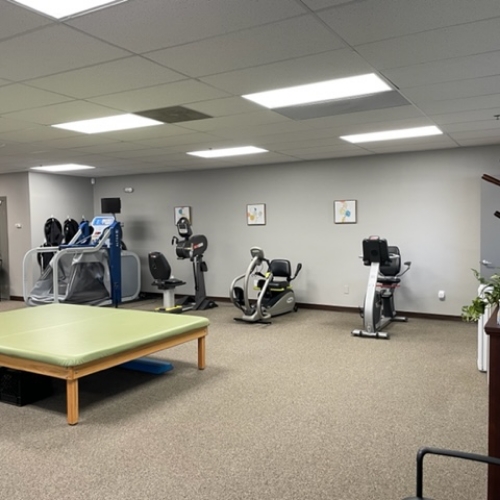
Inside Our Somerset Clinic
RELATED CONDITIONS & TREATMENTS
ACL injuries are just one of the many conditions we treat at Trinity Rehab Somerset. Explore our full range of conditions we treat or learn more about specific treatment approaches:
Somerset ACL Rehab For Strength, Stability, And Return To Activity
ACL rehab in Somerset should connect the healing stage to real movement goals: walking normally, using stairs, rebuilding quad strength, returning to running, and feeling ready for sport or exercise again.
Your therapist may assess swelling, range of motion, quad activation, hip strength, balance, gait, and return-to-sport readiness. The plan should match your surgical or non-surgical timeline and avoid skipping phases.
Related Somerset options include knee pain physical therapy, meniscus tear rehab, and the main Somerset physical therapy clinic page.
FREQUENTLY ASKED QUESTIONS
Somerset ACL Rehab For Strength, Stability, And Return To Activity
ACL rehab in Somerset should connect the healing stage to real movement goals: walking normally, using stairs, rebuilding quad strength, returning to running, and feeling ready for sport or exercise again.
Your therapist may assess swelling, range of motion, quad activation, hip strength, balance, gait, and return-to-sport readiness. The plan should match your surgical or non-surgical timeline and avoid skipping phases.
Related Somerset options include knee pain physical therapy, meniscus tear rehab, and the main Somerset physical therapy clinic page.
How long does ACL treatment physical therapy take for a high school athlete at Franklin High School?
Can I recover from an ACL tear without surgery if I have a physically demanding job in Somerset's pharma industry?
What is blood flow restriction training and is it safe for ACL recovery?
How soon after an ACL injury should I start physical therapy at Trinity Rehab?
Does Trinity Rehab in Somerset treat ACL injuries from recreational activities at Colonial Park and local sports leagues?
An ACL injury does not have to define your next chapter. Whether you are a Franklin Warriors athlete chasing a state title, a Legend Biotech or Catalent professional who needs to get back to work, or a Colonial Park regular who refuses to give up weekend trail runs — your recovery starts with a single appointment.
Schedule your evaluation at Trinity Rehab Somerset today. Our clinic at 84 Veronica Ave, Somerset, NJ 08873 is ready to help you move forward — stronger, more stable, and fully prepared for everything Somerset life demands.