

ACL TREATMENT PHYSICAL THERAPY IN FLEMINGTON, NJ
In a borough where hand-painted signs still hang above storefronts and the Hunterdon County Courthouse stands as a living reminder of the Lindbergh trial, life in Flemington moves at its own pace. But on the turf at Hunterdon Central Regional High School, speed is everything — and a single wrong cut can change a season overnight. The Red Devils’ lacrosse program, which captured four consecutive Group IV state titles from 2005 to 2008, built its dynasty on athletes willing to push past limits. That same competitive fire burns today across every sport at Hunterdon Central, from football to field hockey, and it means anterior cruciate ligament injuries remain a persistent reality for athletes in this tight-knit Hunterdon County community.
Whether you tore your ACL planting your foot during a Red Devils soccer match, twisted your knee hiking the wooded trails at Deer Path Park, or felt something give way while lifting at one of the warehouses along Flemington Junction, the road back starts with expert rehabilitation. At Trinity Rehab Flemington, we provide specialized acl treatment physical therapy designed for the people who live, work, and compete in this historic corner of New Jersey.
UNDERSTANDING ACL INJURIES
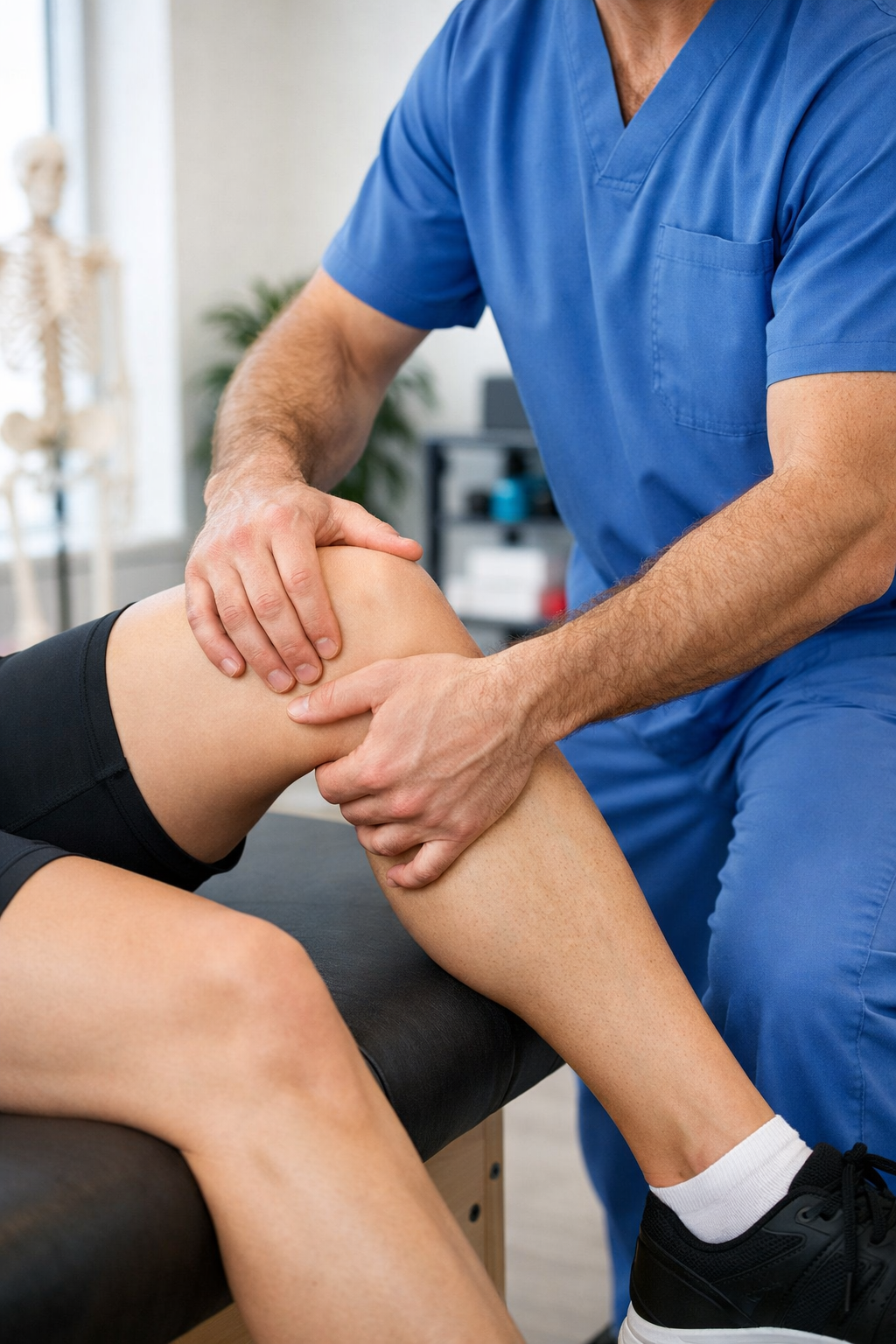
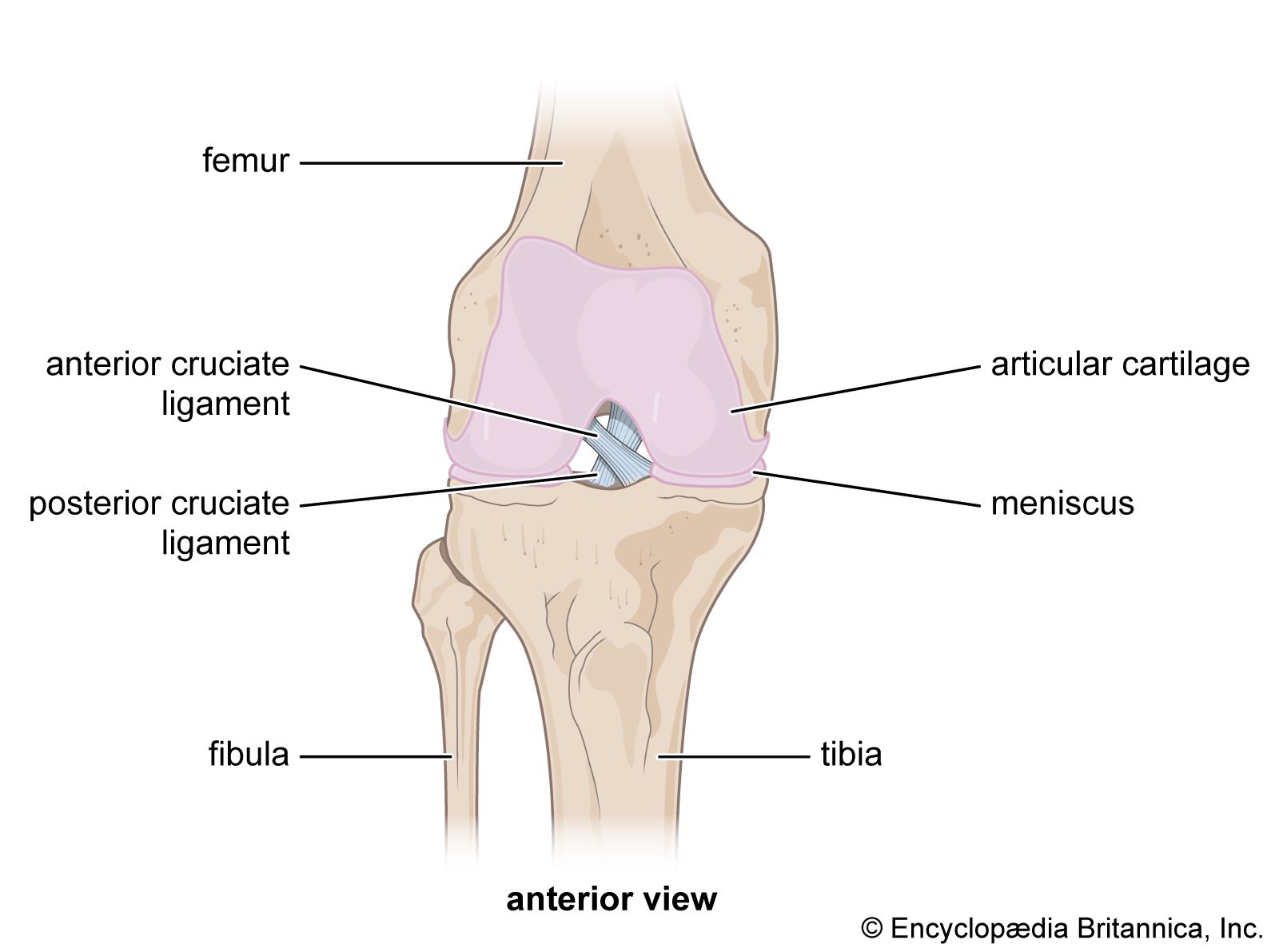
The anterior cruciate ligament is one of four primary ligaments stabilizing the knee joint. It runs diagonally through the center of the knee, connecting the femur to the tibia and preventing the shinbone from sliding forward. More critically, the ACL controls rotational forces — the exact movements demanded by cutting sports, uneven terrain, and dynamic physical labor.
An anterior cruciate ligament injury occurs when the ligament is stretched, partially torn, or completely ruptured. Most ACL tears are non-contact injuries, happening when an athlete decelerates suddenly, pivots, or lands awkwardly from a jump. The telltale signs are immediate: a pop, rapid swelling, and a knee that feels fundamentally unstable.
The severity of an ACL tear determines the treatment path, but one thing remains constant — physical therapy is essential whether you pursue surgical or non-surgical recovery.
WHY RECOVERY MATTERS
An untreated or poorly rehabilitated ACL injury does not simply “get better with rest.” Without proper rehabilitation, the knee joint loses stability, the surrounding muscles atrophy, and compensatory movement patterns develop that put the hip, ankle, and opposite knee at risk. Over time, an unstable knee accelerates cartilage breakdown, increasing the likelihood of early-onset arthritis.
For the high school athletes at Hunterdon Central, a rushed return means re-injury. For the warehouse workers and healthcare professionals who keep Flemington’s economy running, it means chronic pain and lost wages. Proper ACL rehabilitation restores knee function, rebuilds muscle strength, and returns you to the activities that define your daily life — whether that is competing for a state title or simply walking the trails at Mine Brook Park without a brace.
COMMON CAUSES OF ACL INJURIES IN FLEMINGTON
Flemington’s unique blend of competitive athletics, outdoor recreation, and physical labor creates distinct ACL risk profiles across the community.
High School and Youth Sports
Hunterdon Central Regional High School fields some of the most competitive programs in Group IV. The Red Devils’ lacrosse legacy speaks to the intensity — players perform rapid direction changes, absorb contact, and sprint on surfaces ranging from turf to rain-soaked grass. Football athletes face ACL risk on every cut route and defensive pivot. Girls soccer, which claimed Group IV titles in 2016 and 2019, and girls volleyball, with six Group IV championships, demand explosive lateral movement and landing mechanics that stress the anterior cruciate ligament. Youth leagues like Flemington-Raritan Baseball/Softball, FRYB Youth Basketball, and programs at Redline Athletics introduce competitive demands at younger ages, when developing bodies are particularly vulnerable.
Outdoor Recreation and Trail Activities
The parks that give Flemington its rural charm also present ACL risk. Deer Path Park’s trail system winds through wooded terrain with roots, loose gravel, and elevation changes that challenge knee stability. Hikers and trail runners at Lone Cedar Park and Morales Nature Preserve navigate uneven ground that can torque the knee. Weekend tennis players at the Flemington Tennis Club and pick-up athletes at Blackwell Park and Lenape Park face the pivoting and sudden stops that account for most non-contact ACL tears.
Workplace and Occupational Injuries
Flemington’s major employers put workers in ACL-vulnerable positions daily. Nurses and technicians at Hunterdon Healthcare navigate slick hospital floors while moving patients — a combination of fatigue and sudden force that strains the knee joint. Production workers at Johanna Foods and warehouse employees at Flemington Junction Business Center lift, twist, and move on concrete surfaces where a single slip can rupture a ligament. Even office workers at Chubb Insurance who stay sedentary during the week and play hard on weekends face the “weekend warrior” ACL risk — deconditioned muscles that cannot protect the knee under sudden athletic demand. If you have sustained a work injury, early intervention with a physical therapist is critical.
RECOGNIZING THE SYMPTOMS OF AN ACL INJURY
An ACL tear typically presents with:
- An audible pop or snapping sensation at the moment of injury
- Rapid swelling within the first few hours, caused by bleeding inside the knee joint
- Significant pain, particularly when bearing weight or attempting to walk
- Loss of range of motion, with the knee feeling stiff or locked
- Instability or “giving way” — a sensation that the knee buckles or cannot support your weight during lateral movement
Some individuals experience a partial ACL tear, where symptoms are less dramatic but knee stability is still compromised. If you feel any sense of the knee shifting during activity — whether you are cutting across the lacrosse field at Hunterdon Central or stepping off a curb on Main Street — seek evaluation promptly. Early diagnosis shapes the entire trajectory of recovery.
HOW PHYSICAL THERAPY HELPS: TREATMENT APPROACHES AT TRINITY REHAB FLEMINGTON
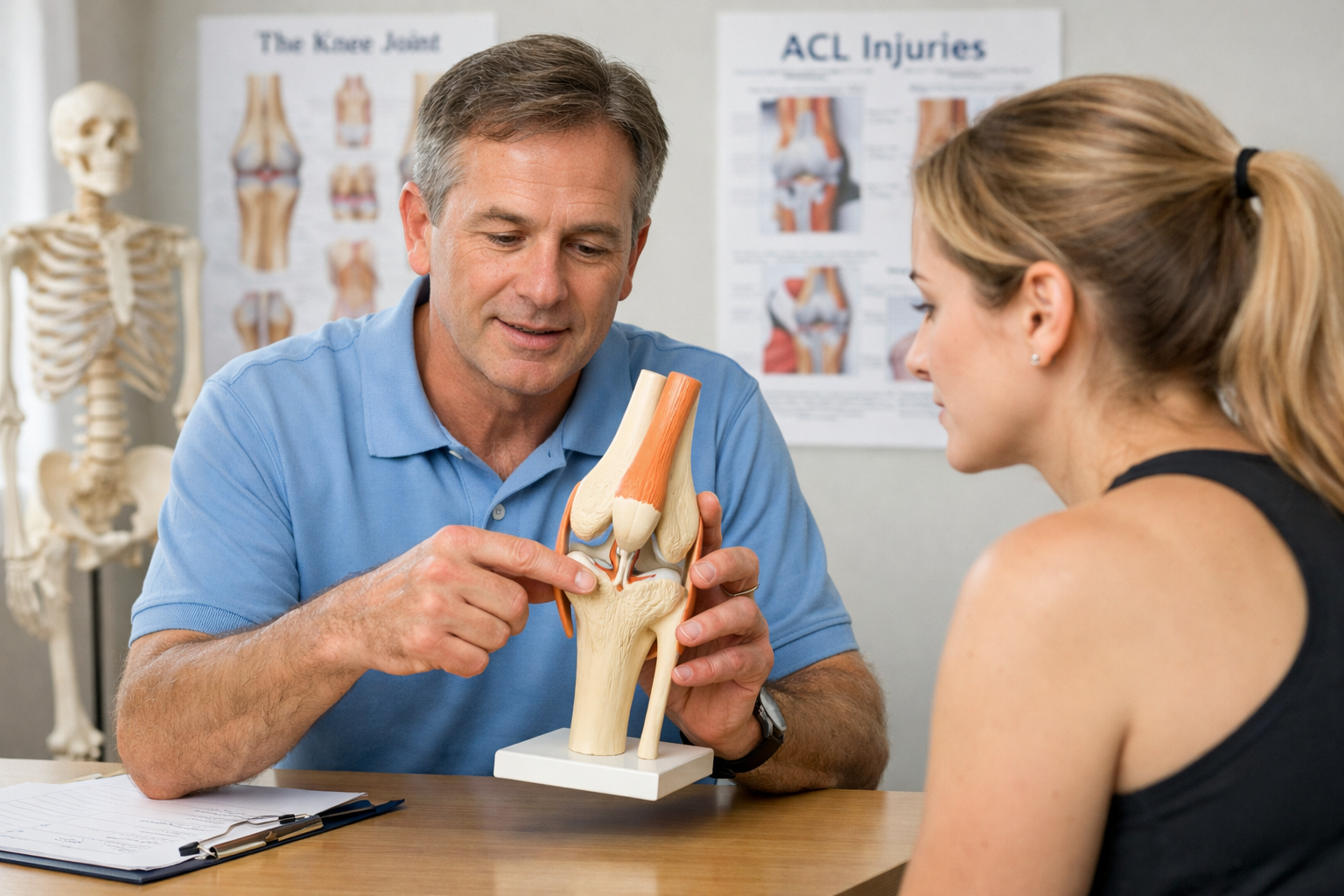
Every ACL rehabilitation program at our Flemington clinic is built around a thorough evaluation of your knee function, movement patterns, and personal goals. Your physical therapist designs a progressive plan that evolves as you heal, using a combination of evidence-based techniques to restore full knee stability and confidence.
Manual Therapy
Manual therapy is the foundation of early ACL rehabilitation. Your therapist uses hands-on joint mobilization and soft tissue techniques to reduce swelling, restore knee motion, and address stiffness that develops after injury or surgery. Manual therapy improves the patellar glide and tibiofemoral mechanics that are essential for regaining full range of motion — the first measurable milestone in any ACL recovery program.
Progressive Strengthening
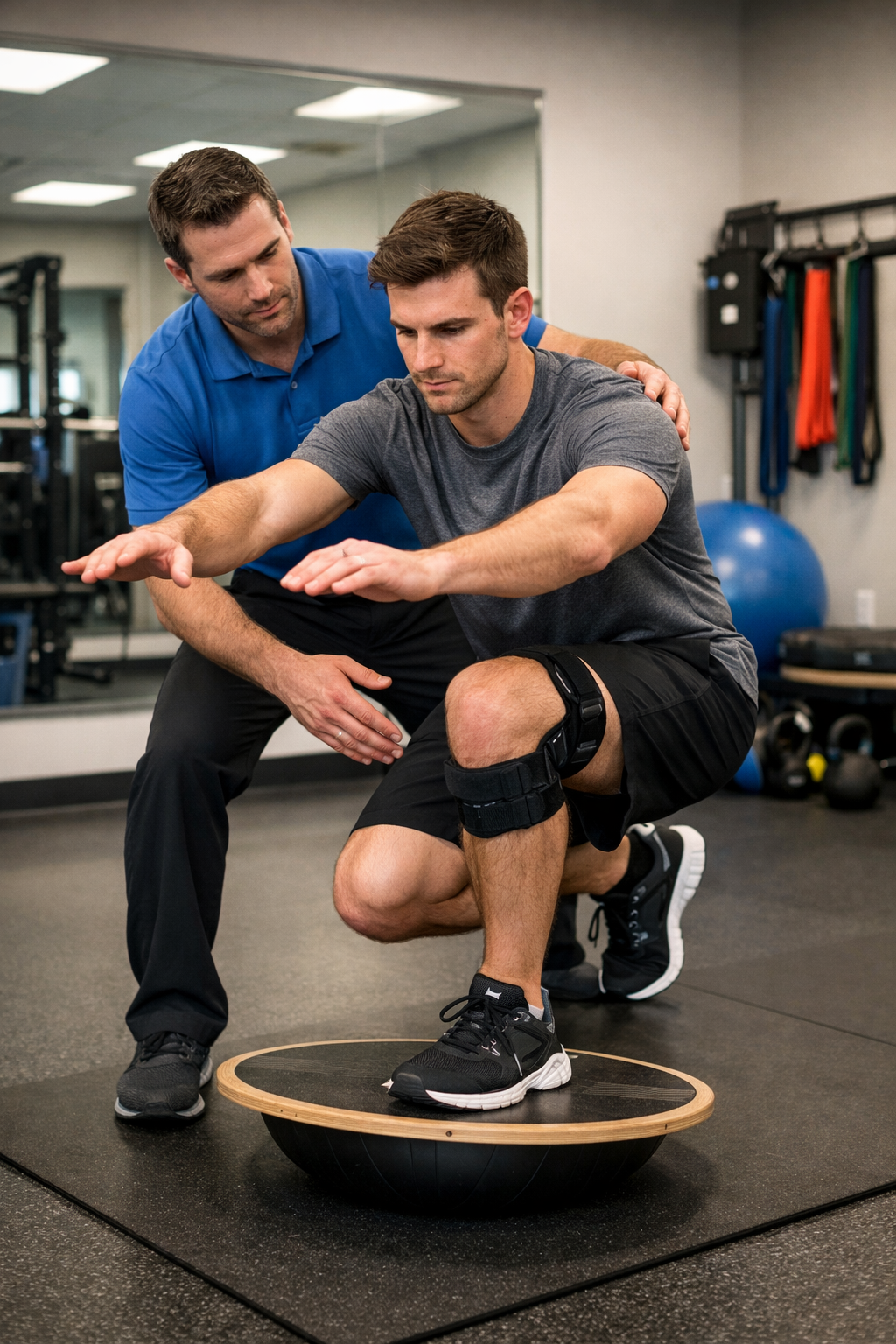
Muscle strength is the single most important factor in protecting a reconstructed or healing ACL. Your program systematically rebuilds the quadriceps, hamstrings, glutes, and calf muscles that stabilize the knee joint. Early-phase strengthening exercises include quad sets, straight leg raises, and hamstring curls in controlled ranges. As healing progresses, your therapist introduces closed-chain exercises like squats, lunges, and step-ups that load the knee in functional patterns. The goal is eliminating the strength asymmetry between your injured and uninjured legs — the measurable criterion that determines when you can safely advance.
EPAT/Shockwave Therapy
EPAT (Extracorporeal Pulse Activation Technology), also known as shockwave therapy, delivers acoustic pressure waves to injured tissue. This accelerates cellular repair, increases local blood flow, and reduces chronic inflammation around the knee. For patients dealing with persistent patellar tendon pain after anterior cruciate ligament reconstruction or lingering scar tissue that limits motion, EPAT provides a non-invasive method to break through recovery plateaus.
Dry Needling
Dry needling targets myofascial trigger points in the muscles surrounding the knee — particularly the quadriceps, hamstrings, IT band, and calf complex. After an ACL injury, these muscles develop protective guarding patterns that restrict movement. By inserting thin filament needles into trigger points, your therapist releases tension, improves circulation, and restores the neuromuscular activation patterns necessary for proper knee mechanics.
Blood Flow Restriction Training
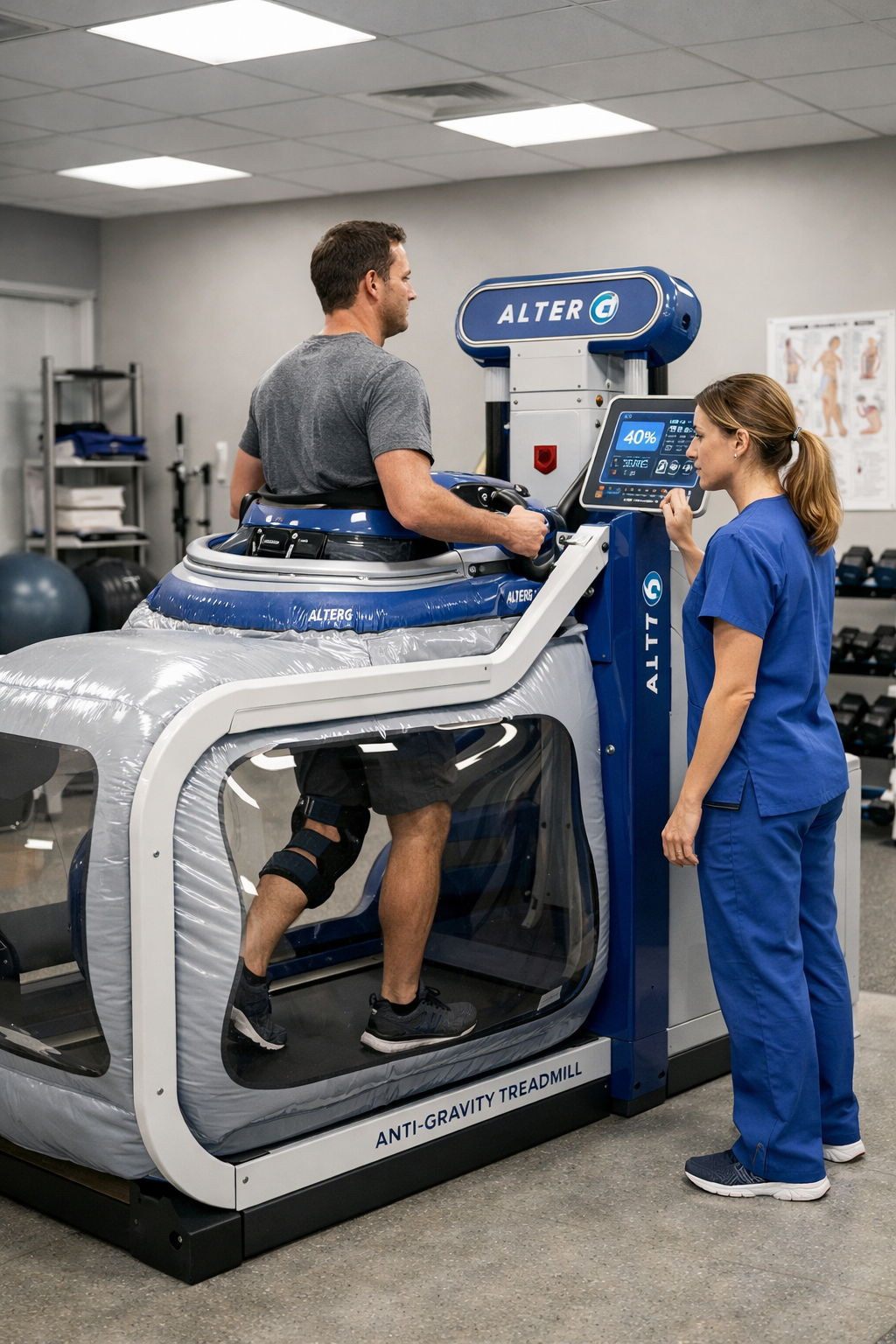
Blood flow restriction (BFR) training uses a specialized tourniquet to apply calibrated pressure to the upper thigh, partially restricting venous blood flow during low-load strengthening exercises. This stimulates muscle growth at intensities far below what would normally be required — meaning you can build significant quadriceps and hamstring strength without placing excessive stress on a healing graft. BFR training is particularly valuable in the weeks immediately following ACL surgery, when the knee cannot tolerate heavy loading.
Neuromuscular Electrical Stimulation
Neuromuscular electrical stimulation (NMES) uses controlled electrical impulses to activate the quadriceps directly. After an ACL injury or anterior cruciate ligament reconstruction, the brain’s ability to recruit the quadriceps is dramatically impaired — a phenomenon called arthrogenic muscle inhibition. NMES bypasses this neural shutdown, forcing muscle fibers to contract and preventing the rapid atrophy that occurs in the first weeks of recovery. Combined with volitional exercise, NMES accelerates the return of functional muscle strength.
Sport-Specific Rehabilitation
The final phase of ACL rehabilitation bridges clinical strength and on-field performance. Your physical therapist designs sport-specific drills replicating the demands you will face — lacrosse-style cutting patterns for a Red Devils midfielder, vertical jump landing mechanics for a volleyball player, or agility ladder work for a soccer athlete. This phase incorporates plyometric training, proprioception drills, and progressive return-to-running protocols. Balance exercises on unstable surfaces retrain the knee’s position sense, rebuilding the proprioception that was disrupted when the ACL tore.
NON-SURGICAL VS. SURGICAL PATHWAYS
Not every ACL tear requires ACL surgery. The decision between non-surgical management and anterior cruciate ligament reconstruction depends on the degree of instability, associated injuries (meniscus or cartilage damage), activity level, and personal goals.
Non-surgical (conservative) management may be appropriate for:
- Partial ACL tears with minimal instability
- Lower-demand individuals who do not participate in cutting or pivoting sports
- Patients who achieve functional stability through prehabilitation and targeted strengthening
ACL reconstruction surgery is typically recommended for:
- Complete ACL tears with significant knee instability
- Athletes who intend to return to pivoting sports (lacrosse, soccer, football, basketball)
- Individuals with concurrent meniscus tears that require surgical repair
- Workers whose jobs demand reliable knee stability under load
Regardless of the pathway, physical therapy drives the outcome. Prehabilitation — structured rehab before surgery — improves post-surgical results by restoring range of motion, reducing swelling, and building the quadriceps and hamstring strength that protect the graft from day one. For non-surgical patients, a comprehensive rehabilitation program is the treatment itself.
RETURN TO SPORT
Returning to competitive play after an ACL injury is not governed by a calendar — it is governed by objective criteria. At Trinity Rehab Flemington, your physical therapist uses standardized testing to determine readiness:
- Strength symmetry: Quadriceps and hamstrings strength within 90% of the uninjured leg, measured by dynamometry
- Hop test battery: Single-leg hop, triple hop, crossover hop, and timed hop with limb symmetry indexes above 90%
- Movement quality: Proper landing mechanics during drop jumps and cutting maneuvers, assessed visually and with slow-motion video analysis
- Proprioception and balance: Single-leg stability under dynamic conditions that simulate game demands
- Psychological readiness: Confidence in the knee during high-speed, unpredictable movement
For the Red Devils athletes at Hunterdon Central and the youth competitors in Flemington’s leagues, passing these benchmarks means the difference between a sustainable return to sport and a devastating re-tear. We do not clear athletes on timelines alone.
INJURY PREVENTION
The most effective ACL treatment prevents the injury from happening. Evidence-based injury prevention programs reduce ACL tear rates by 50% or more, particularly among female athletes. Key components include:
- Neuromuscular warm-up protocols (FIFA 11+, PEP Program) performed before every practice and game
- Hamstring strength development to balance the quadriceps-dominant patterns that increase ACL loading
- Landing mechanics training — learning to land with soft knees, avoiding knee valgus (inward collapse)
- Plyometric training that teaches proper deceleration and force absorption
- Proprioception and balance exercises on unstable surfaces to sharpen the knee’s reflexive stability
Coaches at Hunterdon Central, the Deer Path YMCA, and Flemington’s youth sports organizations can integrate these programs into existing training. For individual athletes, your physical therapist can design a personalized prevention program tailored to your sport and risk profile.
WHY CHOOSE TRINITY REHAB FLEMINGTON
Flemington is not a generic suburb. It is a small historic borough where people know their neighbors, where Friday nights revolve around Hunterdon Central athletics, and where the surrounding farmland and preserves are not just scenery — they are part of daily life. Your physical therapy should reflect that.
At Trinity Rehab Flemington, we treat the sports injuries that happen on local fields, the hip and knee pain that develops from years of active living, and the workplace injuries that affect the people who keep this community running. Our physical therapists understand the demands placed on a Hunterdon Central athlete, a Hunterdon Healthcare nurse returning to 12-hour shifts, and a weekend hiker who wants to get back on the Deer Path Park trails without a second thought.
We combine advanced treatment tools — manual therapy, dry needling, EPAT/shockwave therapy, blood flow restriction training, and neuromuscular electrical stimulation — with the individualized attention that a community like Flemington deserves.
Trinity Rehab Flemington 276 US Highway 202 #31, Flemington, NJ 08822
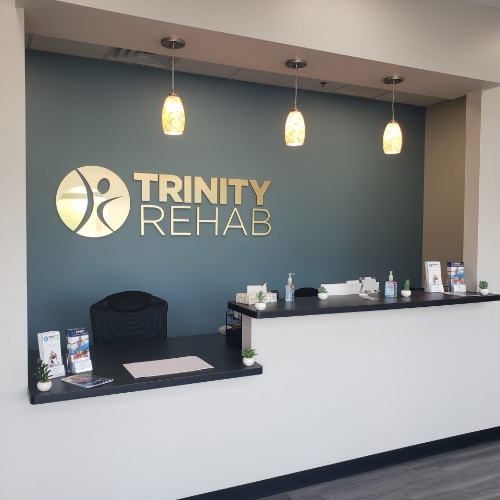
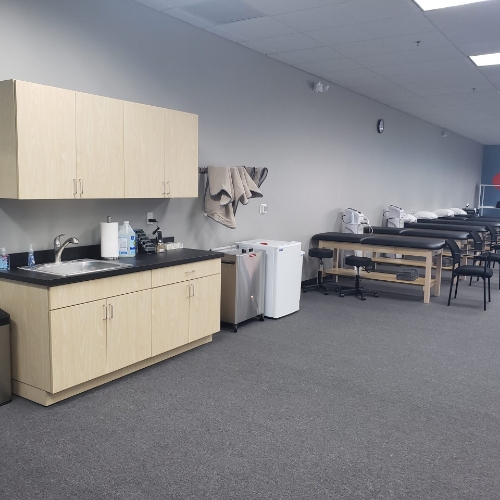
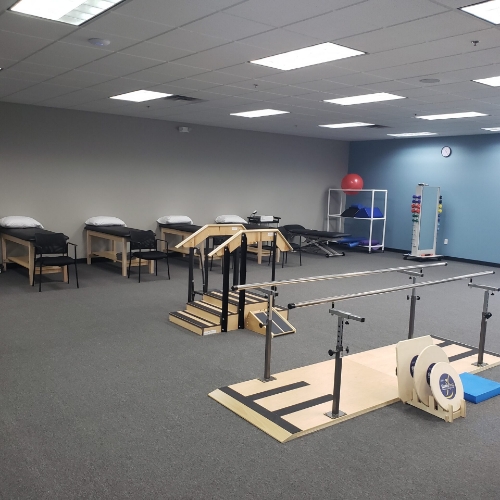
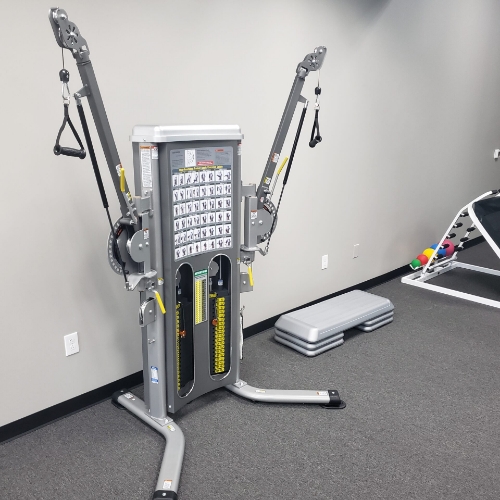
Inside Our Flemington Clinic
RELATED CONDITIONS & TREATMENTS
ACL injuries are just one of the many conditions we treat at Trinity Rehab Flemington. Explore our full range of conditions we treat or learn more about specific treatment approaches:
FREQUENTLY ASKED QUESTIONS
How long does ACL rehabilitation take after surgery?
Can a Hunterdon Central athlete recover from an ACL tear without surgery?
What is blood flow restriction training and is it safe?
I work at a Flemington warehouse and tore my ACL on the job. Can physical therapy help me get back to work?
How soon after an ACL injury should I start physical therapy?
An ACL injury does not have to define your season, your career, or your quality of life. Whether you are a Red Devils athlete chasing a championship, a Hunterdon Healthcare professional getting back on your feet, or a Flemington resident who wants to walk the Deer Path Park trails with confidence, expert rehabilitation makes the difference.
Schedule your appointment today at our Flemington clinic: 276 US Highway 202 #31, Flemington, NJ 08822.
Explore all the conditions we treat or learn more about our approach to ACL treatment.
What Our Patients Say