
PLANTAR FASCIITIS TREATMENT IN MIDDLETOWN, NJ
Middletown keeps its residents moving. Trail runners work the wooded paths of Hartshorne Woods and Tatum Park. Families spend afternoons at Ideal Beach. Youth soccer, lacrosse, and baseball players fill recreation fields from spring through fall, while commuters log daily steps to and from the NJ Transit station. With all that activity in a community of 67,000 — many of them adults over 40 — plantar fasciitis is one of the most common reasons Middletown residents seek physical therapy.
If the first thing you notice every morning is sharp heel pain before your feet reach the floor, you know how disruptive this is. The good news: plantar fasciitis is among the most treatable musculoskeletal problems, and Trinity Rehab’s Middletown-area team has the tools to help you recover completely.
WHAT IS PLANTAR FASCIITIS?
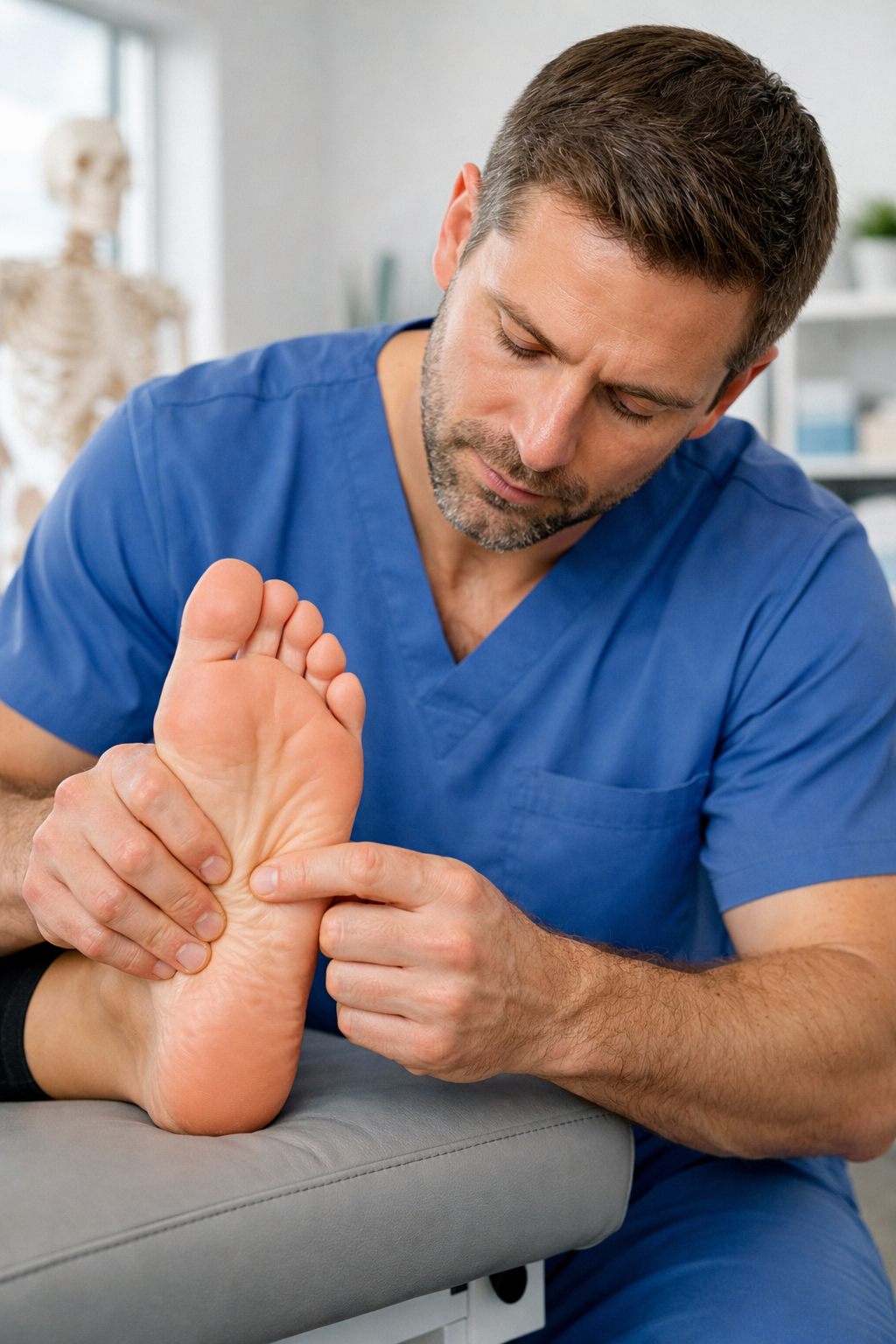
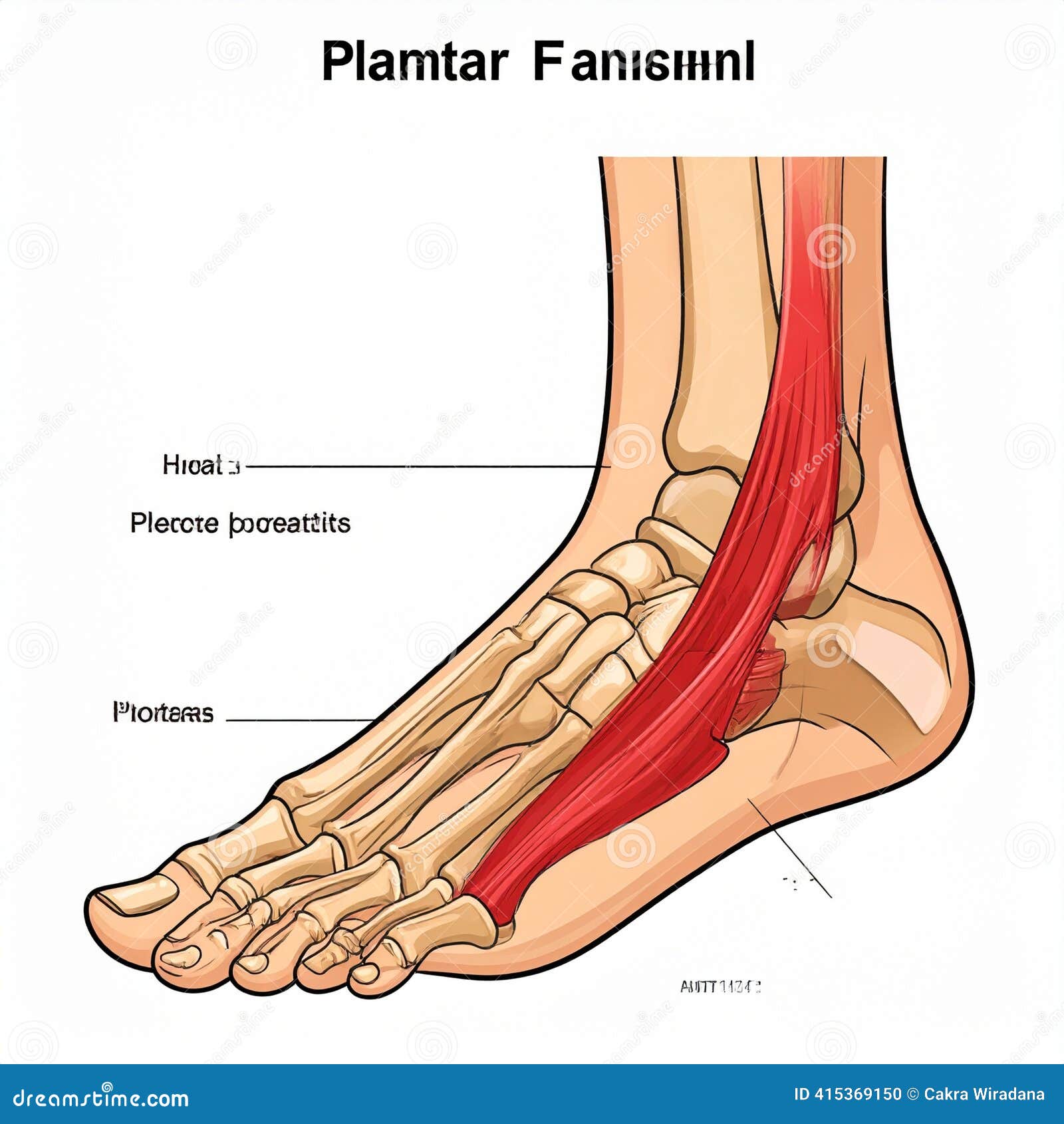
The plantar fascia is a thick band of fibrous connective tissue stretching from the heel bone to the base of the toes. It supports the arch and propels each step. During normal activity, it handles this load efficiently. When subjected to forces beyond its repair capacity — through repetitive impact, prolonged standing, inadequate footwear, or restricted ankle mobility — micro-tears accumulate along the tissue, triggering the inflammatory cycle that produces heel pain.
What makes plantar fasciitis persistent is that daily demands — walking to the car, standing in the kitchen, climbing stairs — continuously re-stress the healing tissue. Without addressing the biomechanical drivers, rest alone rarely resolves it, according to the American Academy of Orthopaedic Surgeons.
RELATED CONDITIONS & TREATMENTS
Plantar fasciitis is just one of the many conditions we treat at Trinity Rehab Middletown. Explore our full range of conditions we treat or learn more about specific treatment approaches:
MIDDLETOWN’S LANDSCAPE AND LIFESTYLE: WHY HEEL PAIN IS COMMON HERE
Middletown’s geography and community culture create specific patterns of foot loading that explain why plantar fasciitis shows up repeatedly in this township:
Hartshorne Woods and Tatum Park trail running — Middletown is home to some of Monmouth County’s most challenging trail terrain. Hartshorne Woods Park features steep, rooted trails with Navesink River views; Tatum Park offers wooded single-track and activity areas. Trail runners who train regularly on these surfaces face the combined demands of uneven terrain, elevation change, and repetitive heel strike. The Life Time Middletown Run Club keeps local runners active through the seasons — but the park terrain can punish feet that aren’t properly conditioned or shod.
Middletown High School North and South athletics — The Lions and the Eagles compete across an impressive breadth of Shore Conference sports: football with Mayor’s Cup rivalry games, cross country, soccer, basketball, lacrosse, field hockey, and ice hockey. Multi-sport student athletes who train year-round without adequate structural support or recovery time — particularly distance runners and field sport athletes — accumulate the repetitive heel stress that leads to plantar fasciitis.
The NYC commuter pattern — Middletown is a quintessential New York City bedroom community, with residents commuting via NJ Transit, the Route 36 park-and-ride, and the Highlands/Atlantic Highlands ferry. The daily pattern of sedentary travel followed by walking on hard transit surfaces — typically in shoes chosen for appearance rather than support — creates a cold-to-loaded stress cycle for the plantar fascia that compounds over weeks and months.
Retail and service employment — Middletown’s commercial corridors along Routes 35 and 36 — home to Walmart, Target, Kohl’s, and Food Circus — employ thousands of residents in positions that require prolonged standing and walking on concrete or tile floors for eight hours or more per shift. Occupational heel pain is a significant and frequently overlooked contributor to plantar fasciitis in these workers.
Beach and waterfront activity at Ideal Beach — Seasonal beach walking on Raritan Bay presents its own foot health challenges. Walking barefoot on sand shifts load distribution in ways that stress both the plantar fascia and the intrinsic foot muscles. Residents who go from minimal foot activity through winter to beach walking and summer sports without a gradual transition frequently develop heel symptoms within weeks.
Deep Cut Gardens and recreational walking — The former Genovese estate offers scenic walking paths that attract residents year-round. Like many recreational walkers, regulars at Deep Cut often underestimate how much cumulative loading their feet absorb during extended park strolls in unsupportive casual footwear.
RECOGNIZING THE SYMPTOMS
Middletown patients describe plantar fasciitis in strikingly consistent terms: the pain is worst with the first steps in the morning, eases after five to ten minutes of walking, but returns after periods of rest throughout the day. A runner who finishes a Hartshorne trail run feeling capable may find that the pain peaks that evening — a hallmark delayed inflammatory response.
Watch for:
- Severe heel pain on first morning steps — Often described as stepping directly onto a sharp object. Concentrated at the inner-bottom of the heel, precisely at the fascia’s calcaneal attachment.
- Mid-day flares after sitting — Rising from a desk, car seat, or Middletown station bench triggers a recurrence of first-step pain with each transition from rest to activity.
- Arch tightness and fatigue — A pulling, shortened sensation along the bottom of the foot, especially after long activity periods.
- Tenderness at a specific heel point — Pressing on the inner base of the heel reproduces the exact pain location.
- Post-exercise soreness — Pain that builds in the evening after a trail run or sports practice, rather than during activity.
- Limping and gait compensation — Protecting the heel by altering stride shifts mechanical stress to the ankle, knee, and lower back, potentially triggering secondary problems including back pain and sciatica.
If symptoms have persisted for more than two weeks, physical therapy will deliver far better outcomes than rest and over-the-counter anti-inflammatories alone.
TREATMENT AT TRINITY REHAB: TOPIC-BASED CARE PLAN
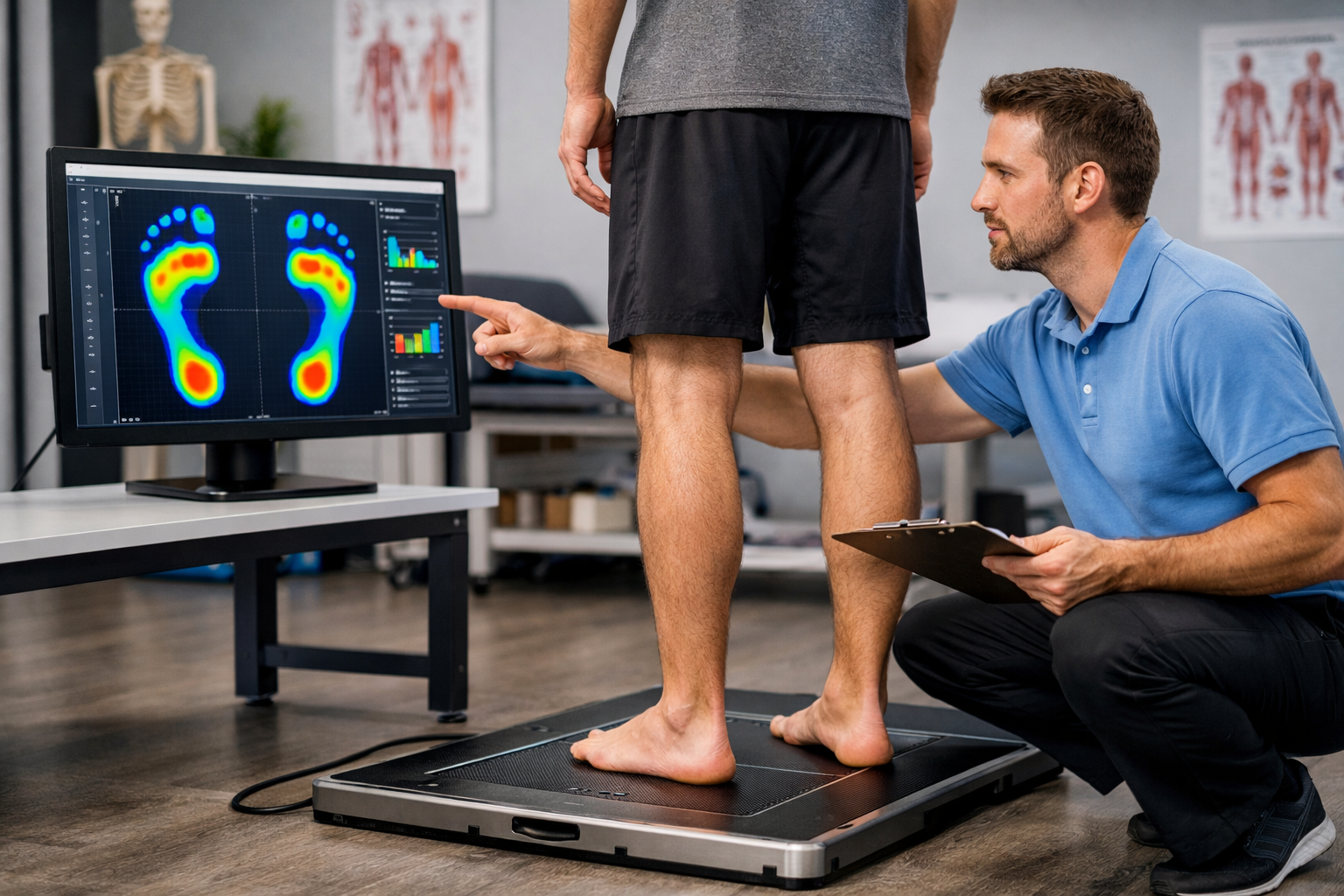
Trinity Rehab’s Middletown-area physical therapists begin every case with a comprehensive biomechanical evaluation — assessing gait mechanics, foot structure, ankle range of motion, calf flexibility, and lower leg strength. Treatment is built around the specific findings of that evaluation, not a generic protocol.
MANUAL THERAPY AND SOFT TISSUE MOBILIZATION
Manual therapy forms the cornerstone of effective early plantar fasciitis treatment. Hands-on ankle and subtalar joint mobilization restores dorsiflexion range of motion, reducing the mechanical stress that tight ankle joints place on the plantar fascia. Instrument-assisted soft tissue mobilization (IASTM) uses specialized tools to break up adhesions and scar tissue along the fascia and calf muscles, encouraging healthy tissue remodeling. Myofascial release targets trigger points in the gastrocnemius, soleus, and tibialis posterior that maintain ongoing tension through the Achilles-plantar fascia chain. Clinical practice guidelines updated in the Journal of Orthopaedic & Sports Physical Therapy specifically endorse this combination approach.
TARGETED STRETCHING PROGRAM
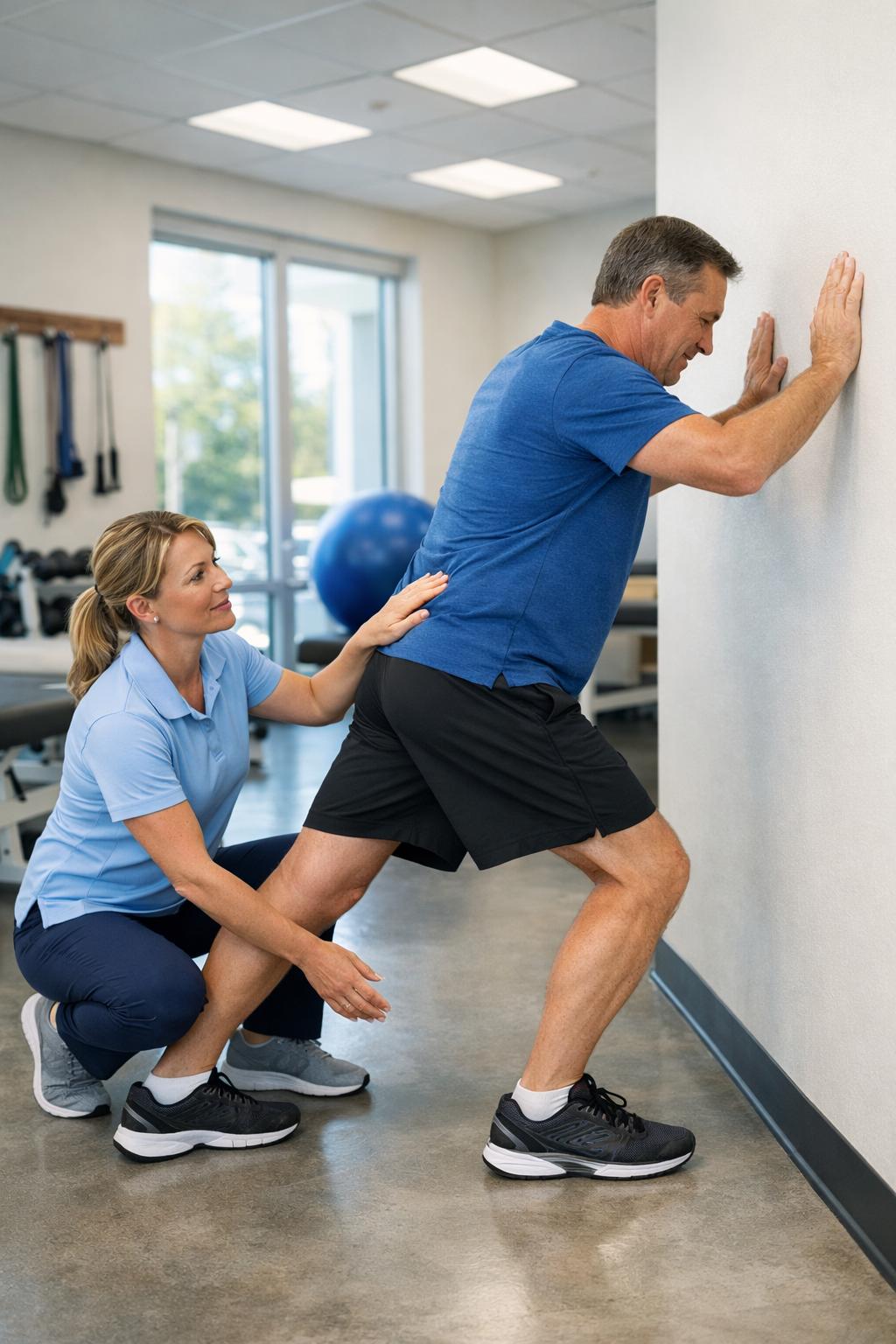
Your therapist will build a comprehensive stretching program targeting the calf complex and the plantar fascia itself. The plantar fascia-specific stretch — extending the toes before taking the first morning step, held 30 seconds for three repetitions — is one of the most evidence-supported interventions for this condition. Gastrocnemius and soleus stretching on a step or wall addresses the calf tightness that amplifies heel loading with every stride. For Hartshorne trail runners and high school athletes, sport-specific flexibility work is integrated from the start.
ECCENTRIC LOADING AND STRENGTHENING
Progressive eccentric heel drop exercises build fascial and tendon resilience — systematically increasing the tissue’s capacity to handle the loads of trail running, court sports, and daily activity. Intrinsic foot muscle training (towel scrunches, short-foot exercises, single-leg balance progressions) rebuilds the internal arch support system that external footwear cannot fully replace. For Middletown’s Lions and Eagles athletes returning from injury, sport-specific loading progressions prepare the foot for full competitive activity.
EPAT SHOCKWAVE THERAPY
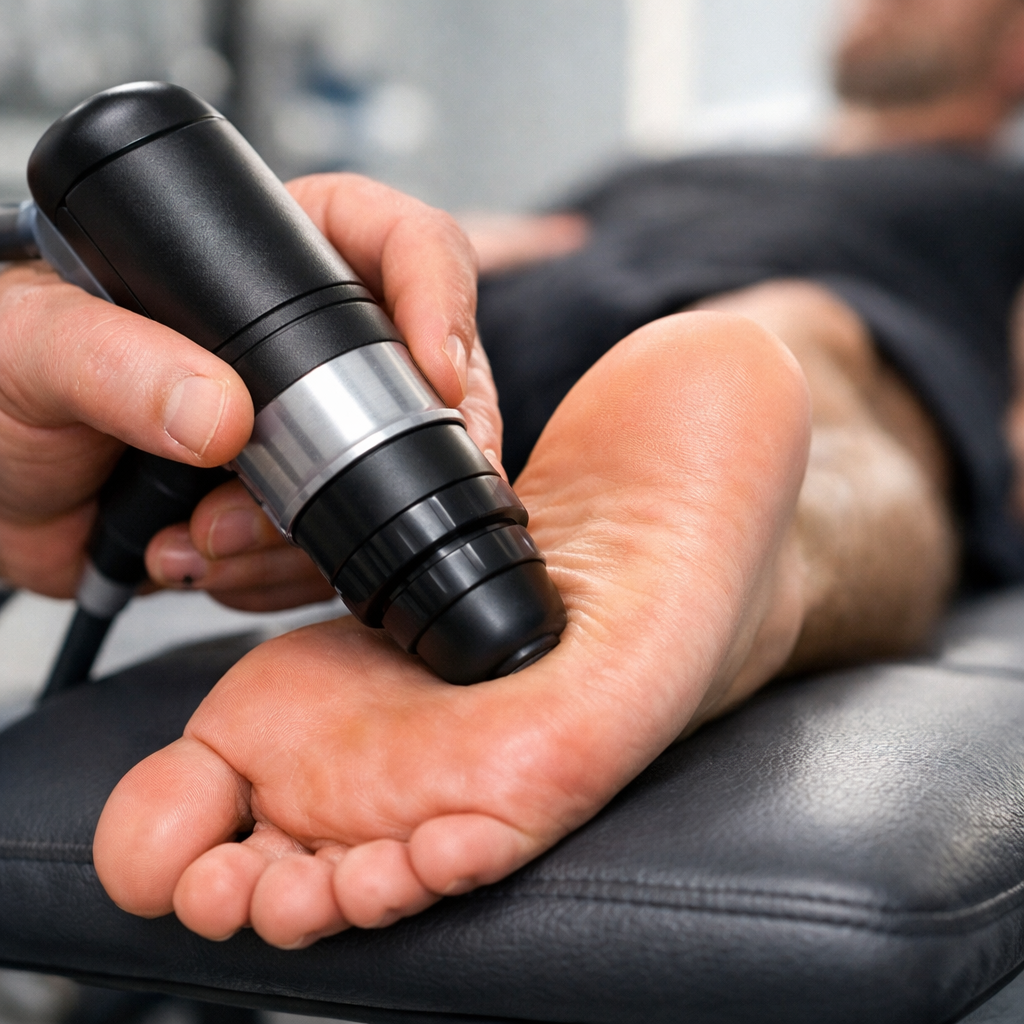
Middletown’s active, hard-working population includes many patients who have had persistent heel pain for months — sometimes years — before seeking physical therapy. For these chronic cases, EPAT (Extracorporeal Pulse Activation Technology) provides a non-invasive path to recovery. Acoustic pressure waves penetrate the damaged fascial tissue, stimulating blood flow and cellular repair in tissue that chronic inflammation has prevented from healing normally. The Mayo Clinic identifies shockwave therapy as effective for plantar fasciitis cases that have not responded to conventional treatment.
DRY NEEDLING
Dry needling addresses the myofascial trigger points that perpetuate calf and heel tension in patients with chronic or recurrent plantar fasciitis. Fine filament needles target the gastrocnemius, soleus, and foot intrinsics, provoking a local twitch response that releases contracted muscle fibers and reduces the mechanical tension transmitted through the Achilles to the plantar fascia. This technique is particularly effective for Middletown’s high school athletes and trail runners with longstanding muscle tightness.
FOOTWEAR AND ORTHOTIC GUIDANCE
A significant proportion of plantar fasciitis cases are driven or perpetuated by inadequate footwear. Your therapist will assess both your athletic shoes and your everyday footwear — including the commuter shoes that carry you to and from Middletown station each day. Patients with structural foot issues (flat feet, high arches, overpronation) may benefit from custom orthotics that provide ongoing biomechanical correction beyond what exercise alone can achieve.
PREVENTION TIPS FOR MIDDLETOWN RESIDENTS
- Trail-specific footwear for Hartshorne and Tatum — The uneven, rooted terrain of Middletown’s parks requires trail shoes with proper grip, cushioning, and lateral support. Standard road running shoes don’t provide adequate stability for technical trail running.
- Ease into beach season — If winter keeps you off the sand and summer pulls you back to Ideal Beach for daily walks, transition gradually. Bare feet on sand demand significantly more from the intrinsic foot muscles and plantar fascia than shod walking on firm surfaces.
- Invest in commuter footwear — For the daily walk to and from the Middletown station, choose shoes with arch support and cushioned soles rather than dress shoes or fashion flats. The cumulative load of 250+ commuting days per year is not trivial.
- Address early warning signs in athletes — For Middletown North and South student athletes, mild morning heel tenderness is not something to push through. A brief stretch routine and a footwear check early in the season can prevent a six-week injury from sidelining a season.
- Maintain year-round flexibility — Calf and plantar fascia stretching is most effective as a consistent habit, not a reactive response to pain. Two minutes of stretching in the morning protects the fascia whether or not you’re currently symptomatic.
WHY MIDDLETOWN PATIENTS CHOOSE TRINITY REHAB
Trinity Rehab provides one-on-one physical therapy — your licensed therapist is with you every session. Your plan is built from your evaluation, adapted to your progress, and oriented toward your specific goals — whether that’s Hartshorne trail runs, a full Walmart shift without pain, or simply walking the neighborhood again.
We accept most major insurance plans, require no physician referral, and offer scheduling that works around commutes and family schedules. Browse all conditions we treat or learn more about foot and ankle pain relief.
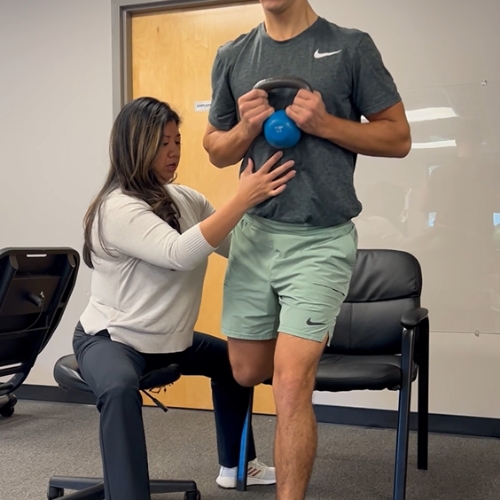
Inside Our Middletown Clinic
FREQUENTLY ASKED QUESTIONS
Where can I get plantar fasciitis treatment in Middletown, NJ?
Can plantar fasciitis go away on its own?
Are trail shoes enough to prevent plantar fasciitis at Hartshorne?
What if I have both heel pain and knee or back pain?
How many sessions will I need?
TAKE THE FIRST STEP TOWARD PAIN-FREE LIVING IN MIDDLETOWN
Heel pain should not keep you off the Hartshorne trails, away from the summer shore, or limping through your daily routine. Trinity Rehab’s Middletown-area team is ready to help you recover fully.
No physician referral needed. Most major insurance plans accepted.
Sources: Journal of Orthopaedic & Sports Physical Therapy — Clinical Practice Guidelines, Heel Pain/Plantar Fasciitis 2023 | Mayo Clinic — Plantar Fasciitis | American Academy of Orthopaedic Surgeons — Plantar Fasciitis and Bone Spurs | NIH/PMC — Management of Plantar Fasciitis in the Outpatient Setting
What Our Patients Say