
PLANTAR FASCIITIS TREATMENT IN EMERSON, NJ | TRINITY REHAB
A SMALL BOROUGH WHERE EVERY STEP MATTERS
Emerson is the kind of Bergen County town where you walk to the train, walk to the corner store, and spend weekends on the baseball diamond at Ackerman Park or hiking the trails at Emerson Woods Preserve. At just 2.2 square miles, everything in the borough is close enough to reach on foot — which makes it especially frustrating when your feet do not cooperate.
Plantar fasciitis is a condition that can strike anyone who spends meaningful time on their feet, and Emerson’s population — with a median age pushing into the mid-forties, high homeownership, and a strong tradition of youth sports and outdoor recreation — is not immune. When the sharp stabbing pain strikes the heel during those first morning steps, or returns with a vengeance every time you stand up after dinner, it changes the texture of life in a walkable community like this one.
Whether you are a commuter walking to the Pascack Valley Line platform in Emerson every morning, a Cavaliers wrestler or baseball player at Emerson Junior-Senior High School, or a retired resident who wants to keep walking the preserve trails well into your 70s, Trinity Rehab in Emerson is here to help you recover and stay recovered.
WHAT IS PLANTAR FASCIITIS?
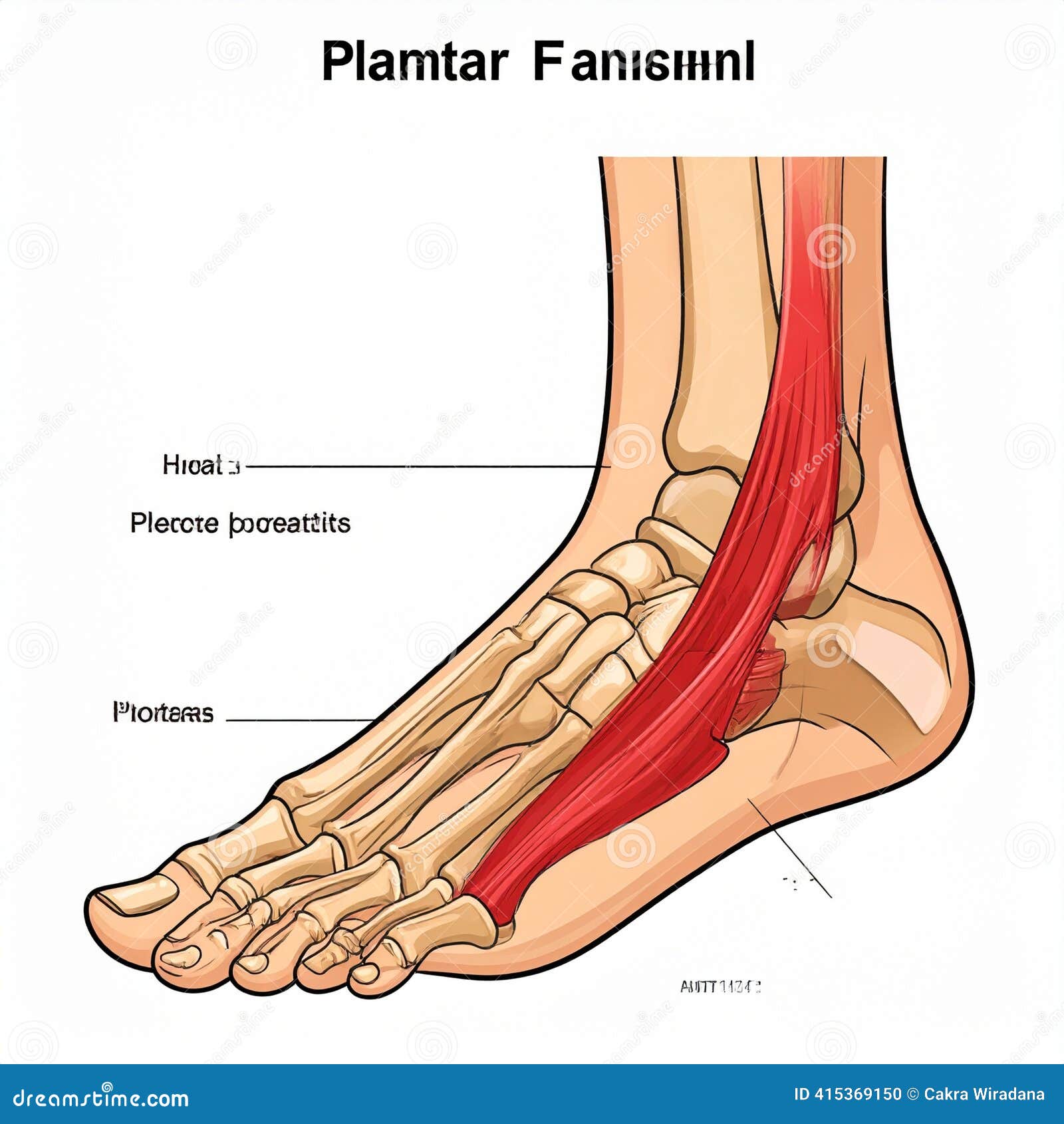
The plantar fascia is a dense, fibrous band of connective tissue that runs from your heel bone (calcaneus) to the base of your toes, spanning the full length of your foot’s arch. It is both a structural support for the arch and a dynamic shock absorber — loading under bodyweight and releasing energy forward with every step through the windlass mechanism.
Plantar fasciitis develops when repetitive stress overwhelms the tissue’s repair capacity. Micro-tears form at the fascial origin near the heel, triggering inflammation that manifests as the recognizable stabbing pain. The condition earned its name — “fasciitis” meaning inflammation of the fascia — though current clinical thinking recognizes that in chronic cases, the tissue undergoes degenerative changes (plantar fasciopathy) that involve more than simple inflammation.
Why the morning pain? During sleep, the plantar fascia naturally retracts to its shortest resting position. When you stand, your full bodyweight suddenly pulls it taut — stressing the micro-tear sites with immediate intensity. This is why the first steps from bed are often the worst, and why symptoms temporarily ease as the tissue warms up.
RELATED CONDITIONS & TREATMENTS
Plantar fasciitis is just one of the many conditions we treat at Trinity Rehab Emerson. Explore our full range of conditions we treat or learn more about specific treatment approaches:
HOW EMERSON LIFE LOADS THE PLANTAR FASCIA
Emerson may be small, but its residents put real mileage on their feet. Several specific patterns stand out:
Daily Commuter Walking: A significant portion of Emerson’s population commutes to New York City via the NJ Transit Pascack Valley Line. The walk to and from the station, the navigation through Penn Station and office buildings, and the return trip at the end of the day adds up to substantial daily step counts. Commuters who walk on hard pavement and subway tile in dress shoes or unsupportive flats — especially those whose commuting volume increases suddenly (back to office after remote work, for example) — are at elevated risk.
Youth Sports at Emerson Little League and the High School: Emerson Junior-Senior High School’s Cavaliers (the “Cavos”) carry a proud athletic legacy — six Group I state baseball titles, multiple state wrestling championships, and competitive programs in football, tennis, lacrosse, and track and field. Emerson Little League draws youth players from across the borough. Young athletes in cleated shoes on hardball diamonds and grass fields absorb repetitive heel impact during sprinting, pivoting, and fielding. Wrestlers in particular spend extensive time on their feet — both in practice and in match competition — often in minimalist footwear that offers little arch support.
Walkers and Hikers at Emerson Woods Preserve: The woodland trails of Emerson Woods Preserve offer a genuine natural escape within the borough — uneven terrain, root-covered paths, and elevation changes that demand more from the foot’s stabilizing architecture than flat pavement walking. Residents who increase their preserve hiking in spring and fall without progressively conditioning the foot for uneven terrain commonly trigger plantar fasciitis.
Recreational Golfers at Soldier Hill: Soldier Hill Golf Course sits adjacent to Emerson and draws regular play from residents. Golf involves prolonged walking on firm fairways in spiked or rigid-soled shoes — and the one-sided rotational mechanics of the golf swing can create asymmetric loading in the foot and ankle that contributes to fascial strain over a full round.
Older Adults: With more than 20% of Emerson’s population over 65, age-related changes in the foot are clinically relevant. The heel’s fat pad thins over time, reducing shock-absorbing capacity. Combined with reduced ankle dorsiflexion common in older adults, this creates a vulnerability that turns normal walking into a cumulative stress event.
RECOGNIZING PLANTAR FASCIITIS: WHAT EMERSON RESIDENTS REPORT
An Emerson commuter who walks to the train each morning might notice that heel pain has been building over the past month — first just in the morning, now flaring again when she stands up from her desk mid-afternoon. A Cavaliers baseball pitcher who has been in preseason training notices that his heel is tender after long bullpen sessions — pressing on the inner base of the heel reproduces a sharp, exact pain. A retiree who walks the preserve trails several times a week has started shortening his routes because of heel soreness that lingers all evening.
Common plantar fasciitis symptoms:
- Stabbing morning pain — the first steps of the day are the worst, often described as walking on broken glass; eases gradually with movement
- Post-inactivity pain — returning after sitting, driving, or resting; the fascia stiffens during rest and protests the return to loading
- Precise heel tenderness — applying pressure to the inner base of the heel reproduces the exact pain
- Arch tightness — a pulling, burning sensation running from the heel toward the ball of the foot
- Pain after (not during) exercise — activity warms the tissue temporarily; pain intensifies in the hours after
- Compensatory gait — unconscious toe-walking, outer-foot weight shift, or shortened stride to minimize heel contact
These compensations carry real consequences up the kinetic chain: unnatural knee loading, hip flexor strain, and lumbar back pain are frequent companions of long-standing plantar fasciitis. Sciatica can develop when altered spinal mechanics result from months of antalgic gait. The sooner treatment begins, the less likely these secondary problems are to develop.
PHYSICAL THERAPY FOR PLANTAR FASCIITIS: THE TRINITY REHAB EMERSON APPROACH
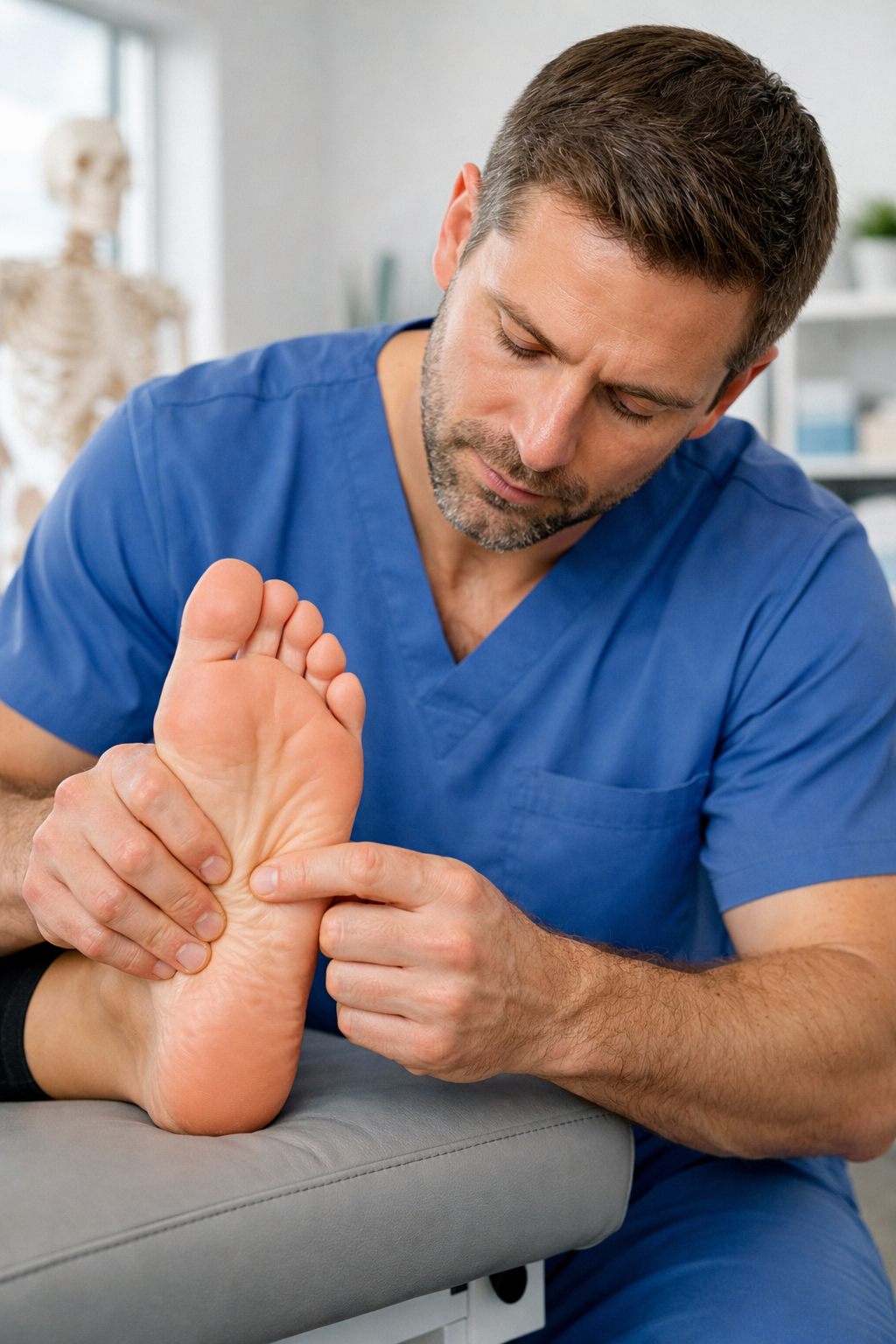
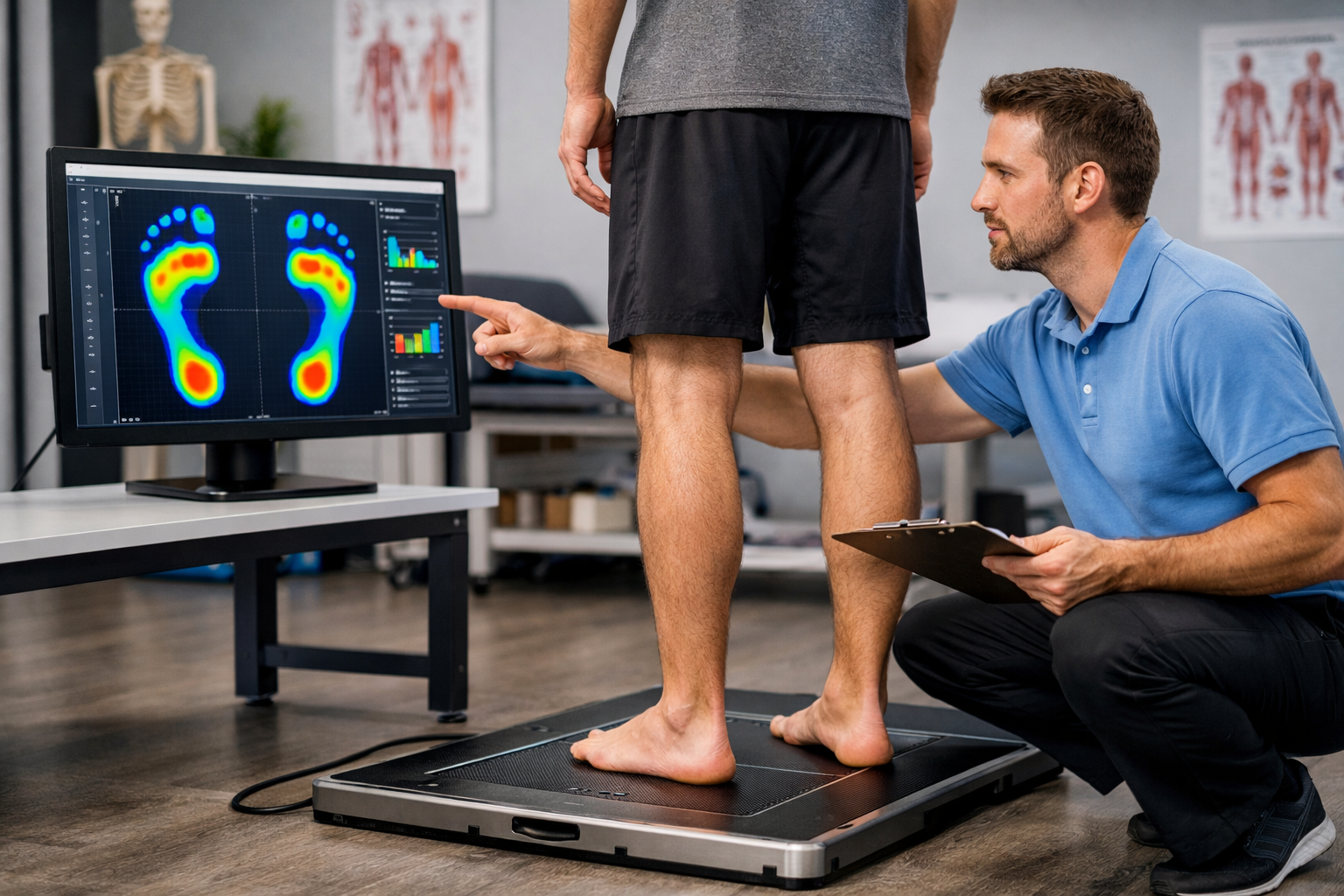
At Trinity Rehab Emerson, treatment starts with a thorough individualized evaluation — not a generic stretching sheet. Your licensed physical therapist assesses the specific contributing factors in your case: foot mechanics, ankle dorsiflexion, calf flexibility, gait, footwear, and the demands of your daily activities. Treatment is then built around those findings.
Explore our dedicated foot and ankle conditions page and our full list of treated conditions.
MANUAL THERAPY AND SOFT TISSUE MOBILIZATION
Manual therapy is the hands-on foundation of every plantar fasciitis program at Trinity Rehab. Your therapist uses subtalar and ankle joint mobilization to restore the joint mechanics that are routinely restricted in plantar fasciitis patients — research in the Journal of Orthopaedic & Sports Physical Therapy confirms that subtalar mobilization with stretching significantly outperforms conventional stretching-only care.
Instrument-assisted soft tissue mobilization (IASTM) addresses scar tissue adhesions along the plantar fascia and calf complex. Myofascial release techniques work through chronic trigger points in the gastrocnemius, soleus, and foot intrinsic muscles — the tight spots whose tension is constantly transmitted down into the plantar fascia.

TARGETED STRETCHING
A structured flexibility program targets the specific deficits that allow the plantar fascia to be perpetually overstressed:
- Plantar fascia-specific stretch — dorsiflexing the toes before the first morning steps provides a targeted stretch through the windlass mechanism at the exact point of peak stress. Clinical guidelines identify this as the single highest-evidence intervention for plantar fasciitis.
- Gastrocnemius and soleus stretching — both calf layers are stretched systematically to restore ankle dorsiflexion; restricted ankle mobility is among the most consistent biomechanical findings in plantar fasciitis patients.
- Achilles eccentric loading — progressive eccentric heel drops off a step edge build resilience in the tendon-fascia complex over time.
STRENGTHENING THE ARCH FROM WITHIN
Many patients with plantar fasciitis have never trained the intrinsic foot muscles — the small muscles that support the arch from beneath the surface. Short-foot exercises, towel scrunches, marble pickups, and single-leg balance progressions restore this muscular support, reducing the passive load on the plantar fascia during every step. For commuters who walk significant daily distances, building this foundation is essential for long-term durability.
ADVANCED MODALITIES: EPAT AND DRY NEEDLING
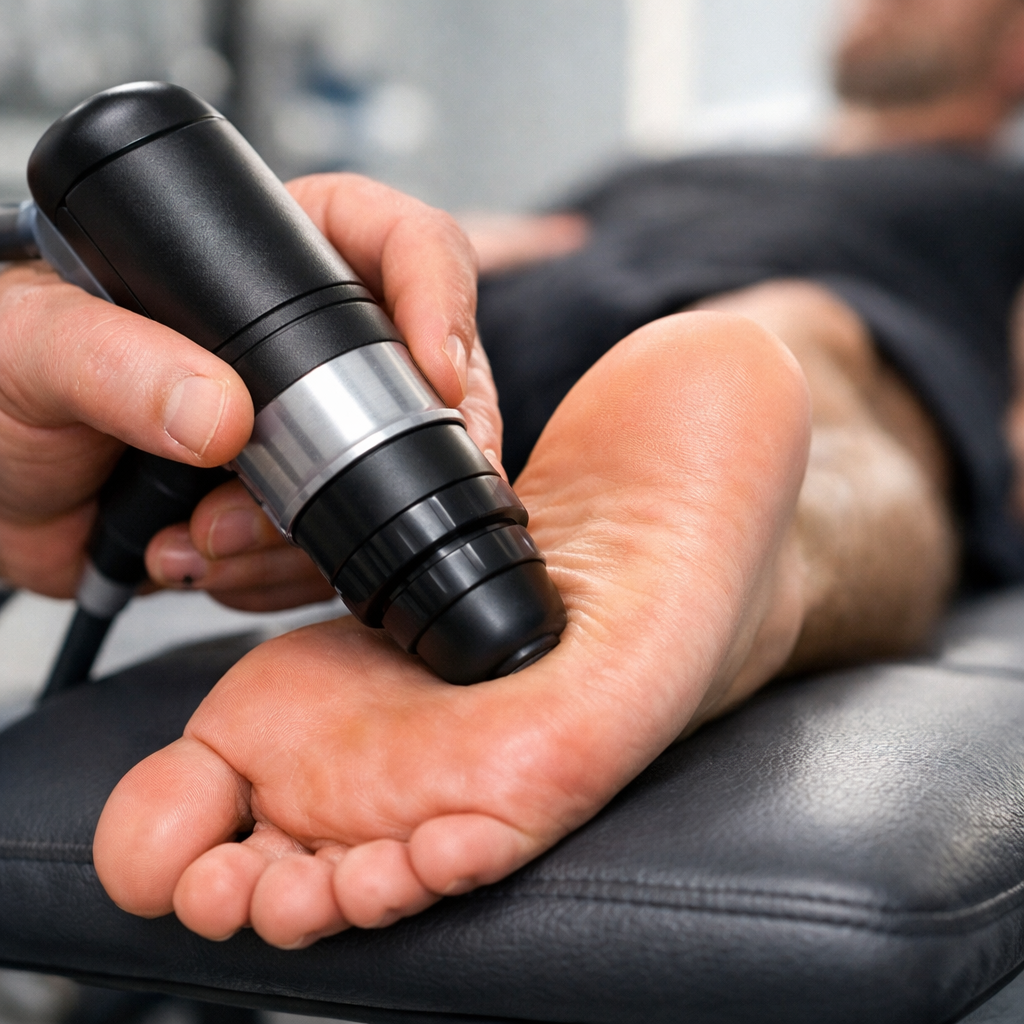
For cases that have not responded adequately to manual therapy and exercise alone, Trinity Rehab offers EPAT shockwave therapy. EPAT delivers focused acoustic pressure waves into the damaged tissue, stimulating blood flow and activating cellular repair mechanisms in degenerated fascial tissue. The Mayo Clinic identifies extracorporeal shockwave therapy as effective for chronic plantar fasciitis.
Dry needling targets the deep myofascial trigger points in the calf and intrinsic foot muscles that stretching and manual therapy alone cannot fully reach.
FOOTWEAR ASSESSMENT AND ORTHOTICS
Your therapist will evaluate your current footwear across all the contexts you wear them — walking to the train, working at a desk, weekend hiking at Emerson Woods, rounds of golf at Soldier Hill, sports practice. Custom orthotics or quality over-the-counter inserts may be recommended to correct overpronation, support flat arches, or manage the demands of specific activities. Night splints prevent the overnight fascial shortening that generates first-step morning pain.
PREVENTION: STAYING AHEAD OF RECURRENCE IN EMERSON
Protect your commute footwear. If you walk to the Pascack Valley Line every morning, your commuting shoes take more abuse than most. Supportive, cushioned shoes with proper arch support should be the rule — not just for runs and hikes, but for the daily walking that adds up over a year.
Warm up before Cavaliers practice and Emerson Little League games. A five-minute dynamic warm-up — ankle circles, heel raises, calf stretches, and arch activation exercises — dramatically reduces injury risk for young athletes competing in cleats on diamond and grass surfaces.
Stretch year-round, not just when symptoms appear. The plantar fascia and calf stretching routine taught during rehabilitation should become a permanent morning habit. Two minutes before standing up each morning can prevent months of painful recovery.
Build trail fitness gradually. If you are increasing your use of Emerson Woods Preserve or starting trail hiking after time away, progress weekly activity by no more than 10% to allow the foot’s connective tissues to adapt to uneven terrain demands.
Address foot mechanics early. Age-related changes — heel pad thinning, reduced ankle mobility, increased pronation — are manageable with the right orthotics and footwear before they trigger injury.
WHY EMERSON PATIENTS TRUST TRINITY REHAB
Trinity Rehab Emerson provides the individual, personalized care that characterizes every location in our network. Every session is one-on-one with your licensed physical therapist — no aides, no assistants, no sharing time with other patients. That focused attention allows your treatment plan to evolve precisely with your progress.
We accept most major insurance plans, offer scheduling that accommodates NYC commuters and youth sports calendars, and our protocols are grounded in the American Physical Therapy Association’s evidence-based clinical practice guidelines for heel pain.
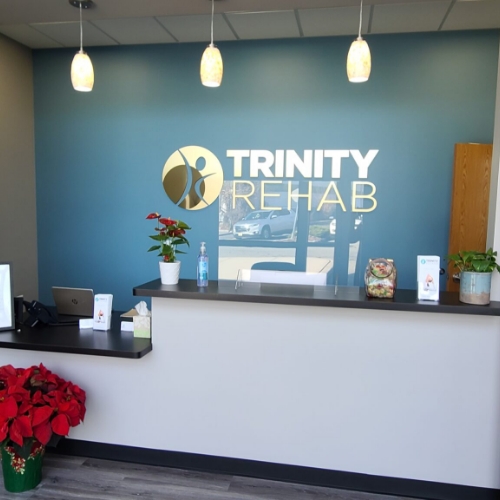
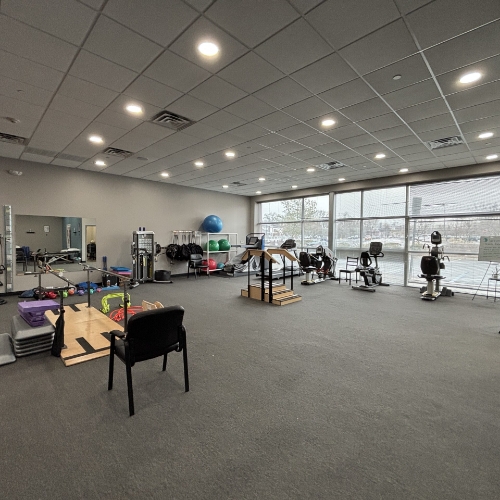
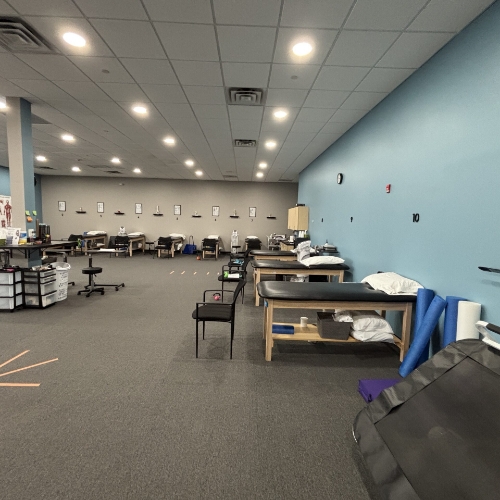
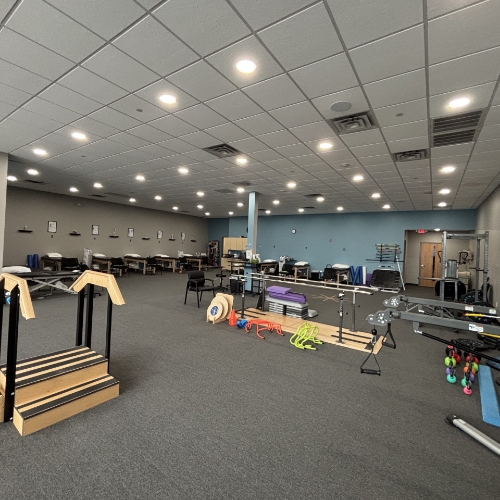
Inside Our Emerson Clinic
FREQUENTLY ASKED QUESTIONS
Where can I get plantar fasciitis treatment in Emerson, NJ?
I commute to New York every day and cannot reduce my walking. Can physical therapy still help?
My child is a Cavaliers athlete with heel pain. Is this plantar fasciitis?
Do I need a referral?
How long does recovery typically take?
EMERSON DESERVES TO BE WALKED WITHOUT PAIN
This borough was built for walking — to the train, to the park, to the preserve trails. Trinity Rehab Emerson is ready to make sure you can keep doing exactly that.
No referral required. Most insurance accepted.
Sources: Journal of Orthopaedic & Sports Physical Therapy — Heel Pain Clinical Practice Guidelines, 2023 | Mayo Clinic — Plantar Fasciitis | APTA — Plantar Fasciitis Clinical Practice Guidelines | NIH/PMC — Outpatient Management of Plantar Fasciitis