
PLANTAR FASCIITIS TREATMENT IN EAST BRUNSWICK, NJ | TRINITY REHAB
HEEL PAIN IN A TOWNSHIP THAT NEVER SLOWS DOWN
East Brunswick residents do not sit still. The township’s trail system — Frost Woods, Ireland Brook Conservation Area, Tamarack Hollow Preserve — draws hikers, trail runners, and dog walkers year-round. The East Brunswick Soccer Club fields dozens of teams across age groups, and families spend entire weekends shuttling between Heavenly Farms, Bicentennial Park, and Community Park. At the other end of the activity spectrum, the warehouses, logistics hubs, and retail corridors along Route 18 and the NJ Turnpike employ thousands of workers who are on their feet for full shifts on hard concrete floors.
When plantar fasciitis develops in this environment, it is not just inconvenient. It threatens the trail runs you planned, the soccer games you coach, the workday you need to get through. The sharp, stabbing heel pain that greets you each morning — and returns every time you stand after sitting — has a way of rewriting your week one step at a time.
Trinity Rehab in East Brunswick specializes in the evidence-based physical therapy that resolves plantar fasciitis at its root, so you can stop managing the pain and start living the life you had before it.
INSIDE THE INJURY: WHAT IS ACTUALLY HAPPENING IN YOUR HEEL
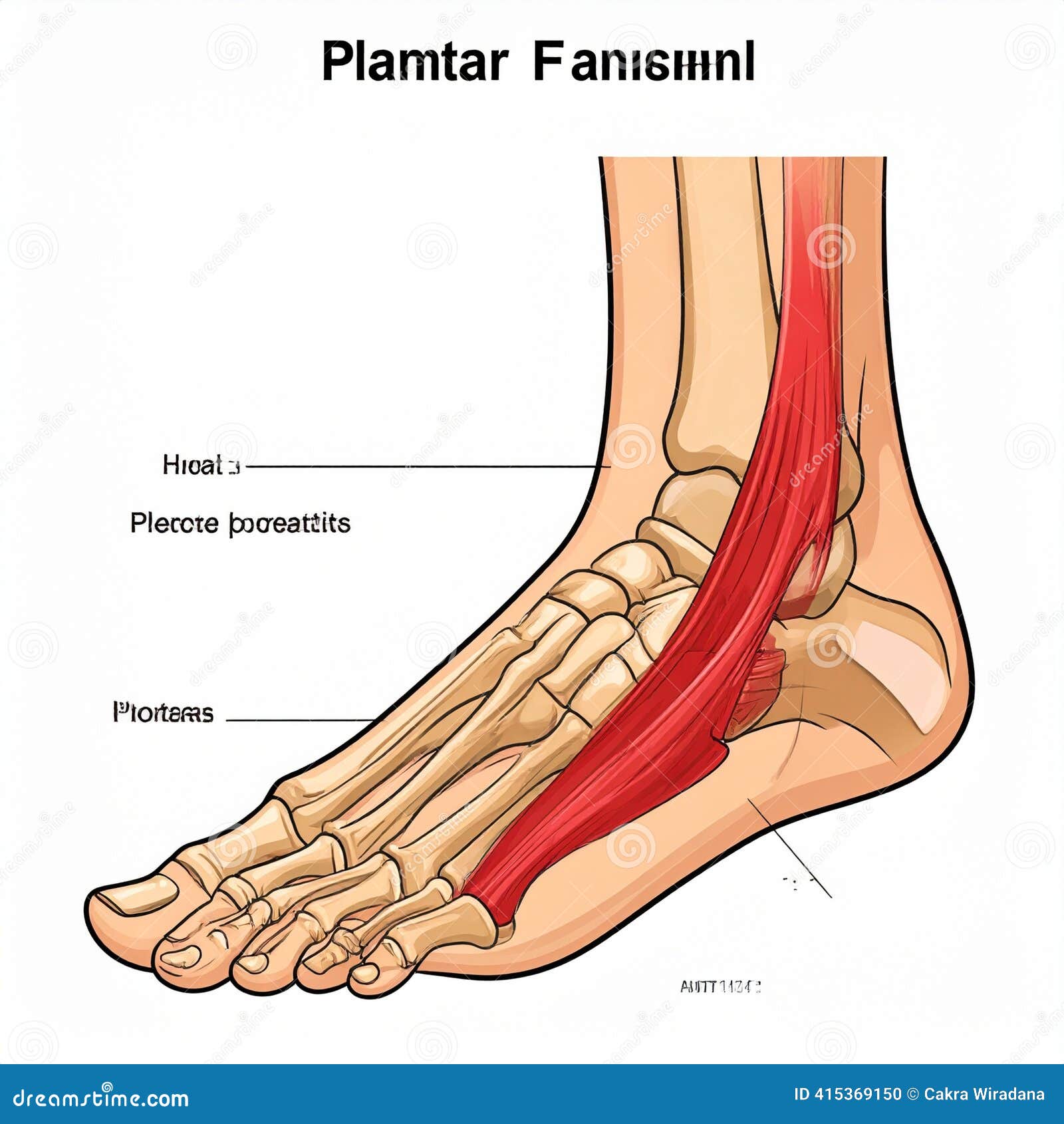
The plantar fascia is a dense fibrous band connecting your calcaneus (heel bone) to the base of your toes, spanning the arch of the foot. It plays a dual role: structural support for the arch, and dynamic shock absorber for every step. The mechanism by which it loads and unloads — the windlass mechanism — is essential to normal walking, running, and jumping.
Plantar fasciitis develops when this tissue is asked to absorb more repetitive force than it can adequately repair between loading cycles. The result is micro-tears at the fascial origin near the heel, followed by an inflammatory response that produces the characteristic pain pattern. Over time, especially in cases that are undertreated, the tissue may shift from simple inflammation to structural degeneration — a state sometimes called plantar fasciopathy — that becomes increasingly resistant to rest alone.
According to the American Academy of Orthopaedic Surgeons, plantar fasciitis affects approximately 2 million Americans annually and accounts for roughly 11–15% of all professional foot care visits. It is the most common cause of heel pain in adults — and it is highly treatable with the right approach.
RELATED CONDITIONS & TREATMENTS
Plantar fasciitis is just one of the many conditions we treat at Trinity Rehab East Brunswick. Explore our full range of conditions we treat or learn more about specific treatment approaches:
WHO GETS PLANTAR FASCIITIS IN EAST BRUNSWICK — AND WHY
Understanding your risk factors is the first step toward both treatment and prevention. East Brunswick’s specific demographic and lifestyle patterns generate several predictable causes:
Trail Runners and Hikers: Frost Woods, Ireland Brook Conservation Area, and Tamarack Hollow Preserve are the jewels of East Brunswick’s outdoor recreation. These trails draw a dedicated population of trail runners and hikers whose foot biomechanics are tested by varied terrain, root-covered surfaces, and significant elevation changes compared to road running. While trail running reduces repetitive impact compared to pavement, foot instability on uneven ground places different demands on the arch — especially with worn or unsupportive trail shoes.
Soccer and Multi-Sport Athletes: East Brunswick High School’s Bears compete in a full athletic program with state championships in girls soccer, boys tennis, and boys volleyball. East Brunswick Soccer Club fields competitive travel and recreational teams across multiple age groups. These athletes — from youth players on rec fields to high school and travel squad participants — absorb enormous repetitive stress through their heels in cleats on turf and grass. Stop-and-start movement patterns are particularly hard on the plantar fascia.
The Healthy Kids Running Series and Recreational Runners: East Brunswick hosts the Healthy Kids Running Series, and the larger running community includes adults training for half marathons, 5Ks, and personal fitness goals on the township’s paths and park perimeters. Increases in training load — especially during spring race-prep seasons — are a primary trigger for plantar fasciitis in this population.
Warehouse and Logistics Workers: The Route 18 corridor and NJ Turnpike access points have made East Brunswick a home for significant warehouse and logistics operations. Wipro, UPS, FedEx, and Target distribution facilities employ workers who spend shifts on concrete — the hardest, least forgiving surface for the plantar fascia. The constant demand of standing, walking, and lifting without adequate arch support creates ideal conditions for fascial breakdown.
Commuter Fatigue on the Feet: With a mean commute time of 38 minutes, East Brunswick residents regularly navigate long walks through parking lots, train stations, and offices on top of their workday and recreational activity. Cumulative standing and walking time — not any single event — is what breaks the tissue down.
THE SYMPTOM PATTERN YOU ARE PROBABLY LIVING WITH
A Bears cross country runner who notices that her heel aches intensely after every morning practice — not during it — and dreads the first steps across the locker room floor. A warehouse worker at a Route 18 facility who can barely walk to his car after a ten-hour shift, and who has started rescheduling his Frost Woods weekend hikes because he knows he will pay for them the next morning. A soccer coach who winces every time he rises from the team bench.
These are plantar fasciitis presentations — and they share a consistent set of warning signs:
- First-step pain upon waking or rising from a seat: sharp, stabbing, often described as walking on glass
- Heel tenderness directly at the inner base of the heel, reproducible with firm pressure
- Arch tightness that runs from the heel toward the ball of the foot, especially in the morning
- Post-exercise pain that peaks hours after activity rather than during it
- Pain after rest periods — rising from your desk, car, or couch restarts the cycle
- Compensatory gait changes — unconscious toe-walking, shortened stride, or outer-foot weighting
If these symptoms are allowed to persist untreated, the downstream consequences multiply: compensatory gait places unnatural stress on the ankles, knees, hips, and lower back. Back pain and sciatica are frequent companions of long-standing plantar fasciitis. Treating the foot early prevents that chain reaction.
HOW PHYSICAL THERAPY RESOLVES PLANTAR FASCIITIS: THE TRINITY REHAB APPROACH
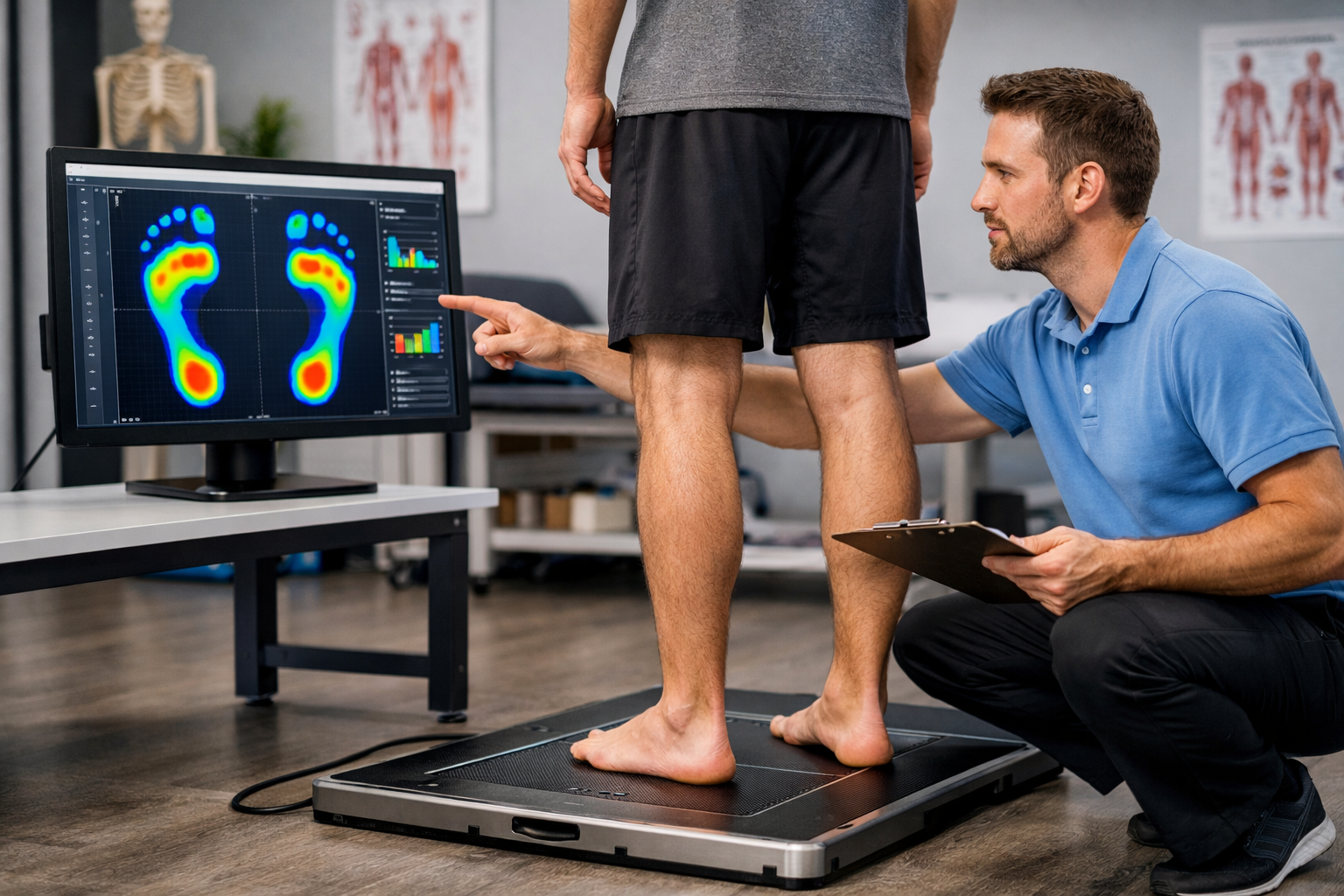
At Trinity Rehab East Brunswick, every treatment plan starts with a thorough evaluation — not an assumption that all heel pain is the same. Your licensed physical therapist assesses your foot mechanics, ankle dorsiflexion range, calf muscle flexibility, gait pattern, footwear, and activity history. That assessment drives a personalized, evidence-based treatment plan.
Explore our foot and ankle treatment program and our complete list of conditions.
MANUAL THERAPY: HANDS-ON HEALING AT THE SOURCE
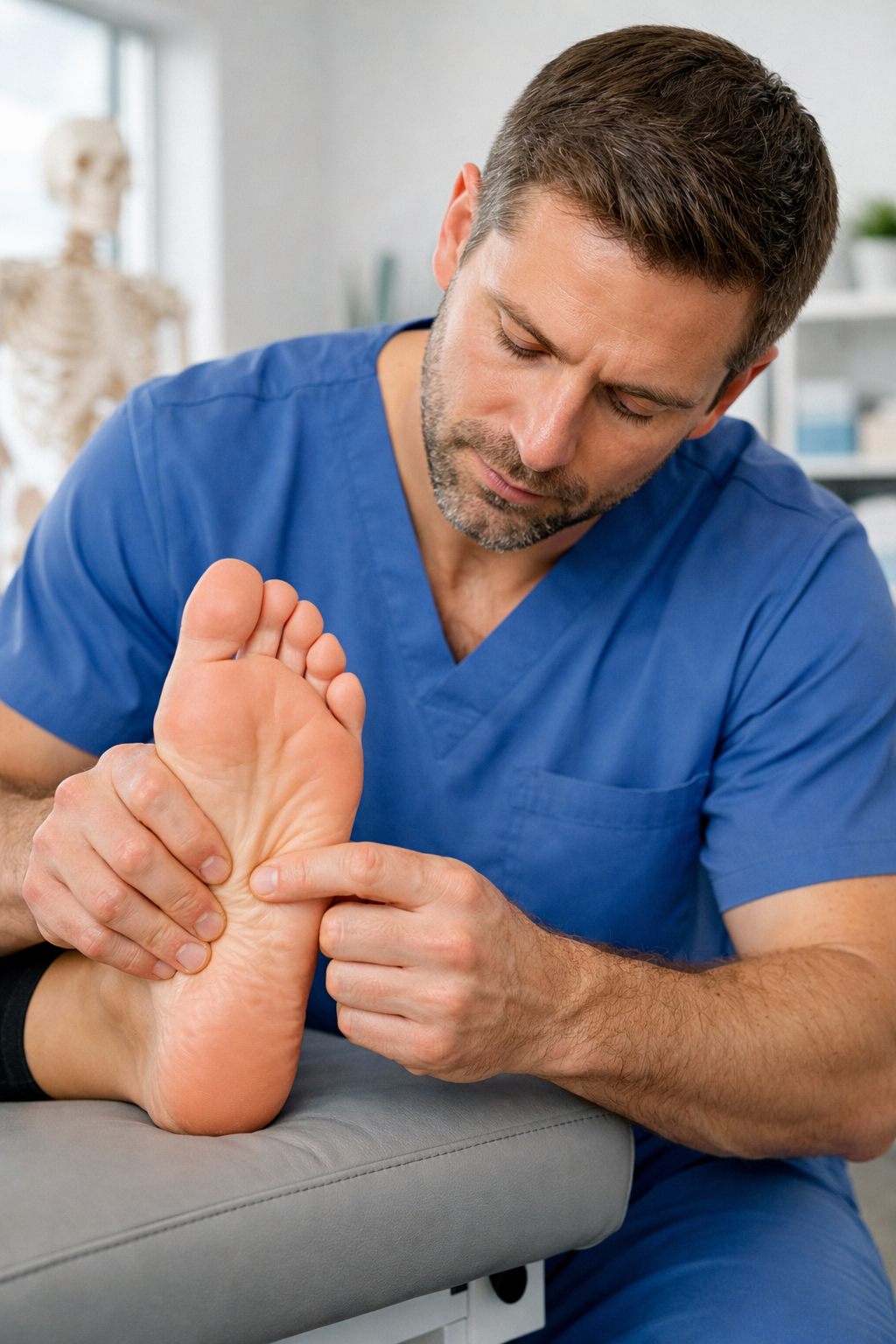
Manual therapy is the hands-on cornerstone of effective plantar fasciitis rehabilitation. At Trinity Rehab, your therapist uses:
- Joint mobilization of the ankle and subtalar joints — restoring the normal range of motion that is consistently restricted in plantar fasciitis patients. Research in the Journal of Orthopaedic & Sports Physical Therapy demonstrates that subtalar mobilization combined with targeted stretching produces significantly greater functional improvement than conventional stretching alone.
- Instrument-assisted soft tissue mobilization (IASTM) — targeted work through the plantar fascia, Achilles tendon, and calf complex to break down scar tissue adhesions and stimulate tissue remodeling.
- Myofascial release and trigger point therapy — sustained pressure techniques addressing the deep calf and intrinsic foot muscle tension that perpetuates fascial overload.
TARGETED STRETCHING: THE FOUNDATION OF RECOVERY
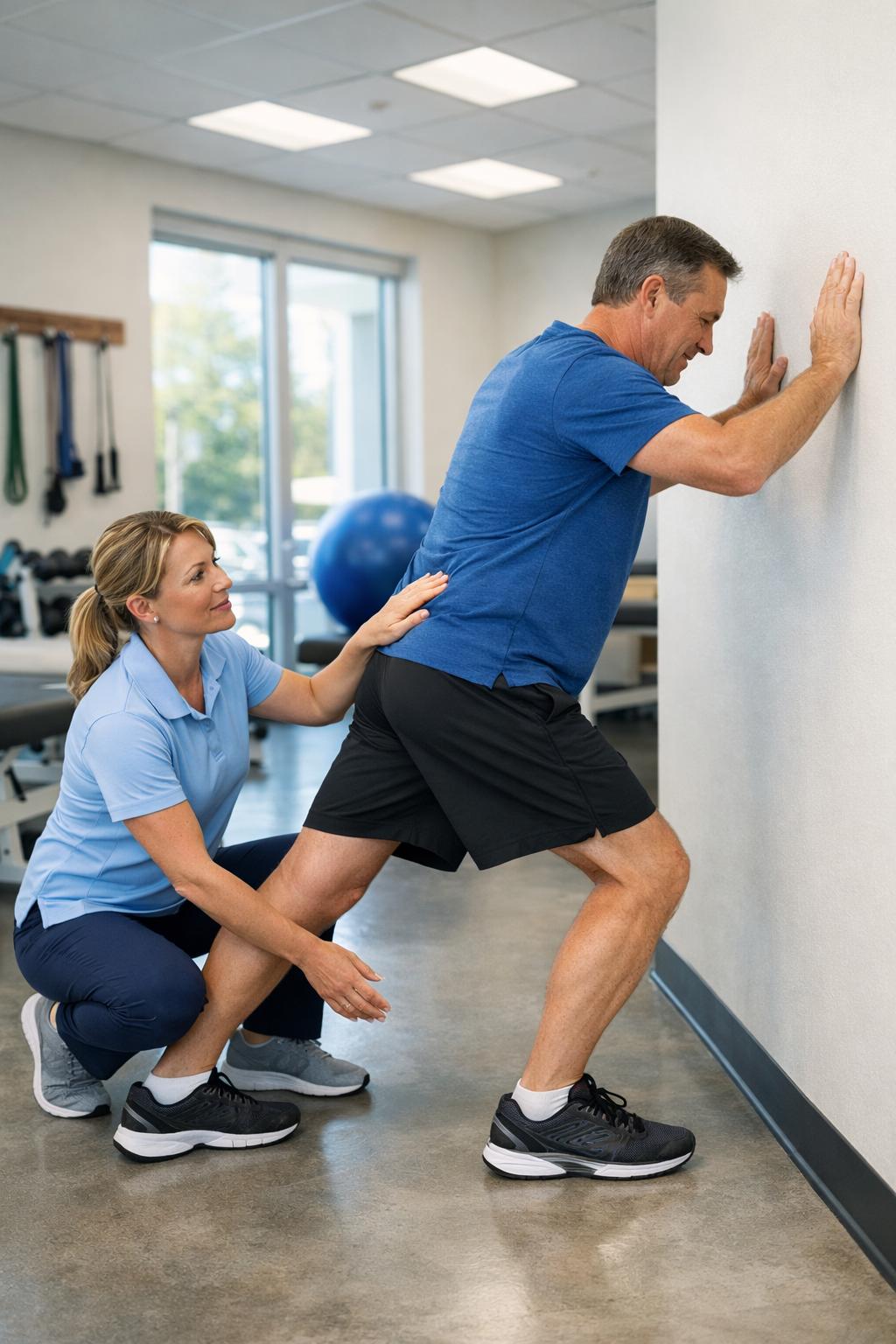
No plantar fasciitis program is complete without a structured flexibility component:
- Plantar fascia-specific stretch — dorsiflexing the toes while gently palpating the plantar fascia before taking the first morning steps. This intervention has the strongest evidence base of any single plantar fasciitis treatment in the clinical literature.
- Calf stretching — both the gastrocnemius (straight-knee) and soleus (bent-knee) stretches restore the ankle dorsiflexion range whose restriction directly increases stress on the plantar fascia during every step.
- Achilles eccentric loading — progressive heel drops off a step edge load the tendon-fascia complex under controlled tension, building resilience over time.
STRENGTHENING TO SUPPORT THE ARCH
Weakness in the intrinsic foot muscles — the small muscles that support the arch from within — is a primary contributor to plantar fasciitis that stretching alone cannot address. Your program includes short-foot exercises, towel scrunches, and progressive single-leg balance work that build the arch’s muscular support system. For trail runners returning to Frost Woods, sport-specific gait retraining ensures that your foot mechanics are optimized before you increase mileage.
EPAT SHOCKWAVE THERAPY AND DRY NEEDLING
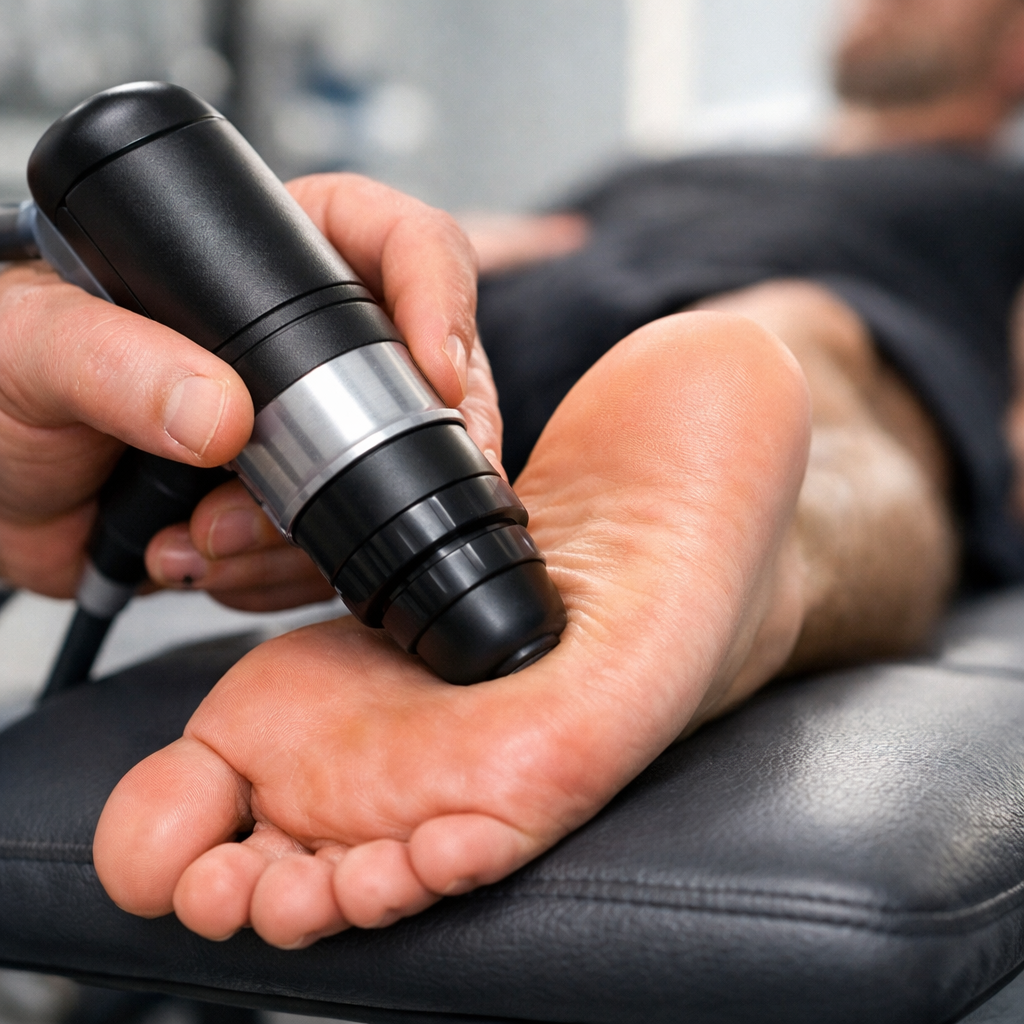
For cases that have persisted despite conservative care, Trinity Rehab offers EPAT shockwave therapy — acoustic pressure waves delivered directly into the degenerated fascial tissue. EPAT stimulates blood flow, breaks up calcium deposits, and activates the cellular repair mechanisms that have stalled in chronic cases. The Mayo Clinic recognizes ESWT as an effective option for chronic plantar fasciitis that has not responded to conservative treatment.
Dry needling targets deep trigger points in the gastrocnemius-soleus complex and foot intrinsics — releasing the chronic neuromuscular tension that stretching alone cannot resolve.
FOOTWEAR AND ORTHOTIC ASSESSMENT
Your therapist evaluates your current footwear as part of the initial assessment. Worn-out trail shoes, unsupportive warehouse work boots, or flat casual footwear are common perpetuating factors. Custom orthotics or high-quality inserts may be recommended to correct overpronation or provide arch support appropriate for your activity level. Night splints are prescribed in cases of severe morning first-step pain.
PREVENTION: KEEPING YOUR HEELS HEALTHY
Recovery is only sustainable if the conditions that caused the injury are changed. Key prevention habits for East Brunswick residents:
- Audit your trail shoes. Replace trail running shoes every 300–500 miles. The varied terrain of Frost Woods and Ireland Brook accelerates midsole breakdown compared to road running.
- Warm up before soccer. East Brunswick Soccer Club players — at every age — benefit from dynamic calf and ankle warm-ups before practice and games. Rigid fascia plus explosive loading equals injury.
- Stretch every morning, not just when it hurts. The plantar fascia and calf stretching routine should be a permanent morning habit, not something you do during flare-ups. It takes under two minutes and dramatically reduces recurrence risk.
- Protect your feet on the warehouse floor. Workers along Route 18 should prioritize anti-fatigue mats where possible and replace occupational footwear on a schedule — not when the soles wear through.
- Respect the 10% training rule. Whether you are running, hiking, or doing multi-sport training, increase your weekly activity volume by no more than 10% at a time.
WHY EAST BRUNSWICK PATIENTS CHOOSE TRINITY REHAB
Trinity Rehab East Brunswick provides personalized, one-on-one physical therapy from a licensed therapist at every visit. No aides, no assistants, no shared treatment time. That direct, individualized attention is what drives the outcomes our patients return to tell us about — the runner who made it to the Tamarack Hollow loop without limping, the warehouse worker who got through a full shift pain-free for the first time in a year.
We accept most major insurance plans, offer flexible scheduling for commuters and shift workers, and our clinical protocols are grounded in the American Physical Therapy Association’s evidence-based guidelines.
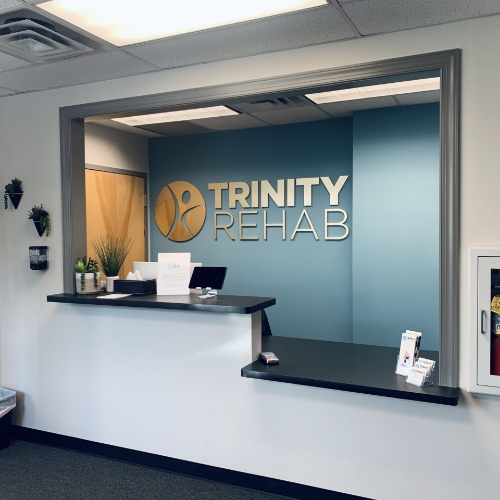
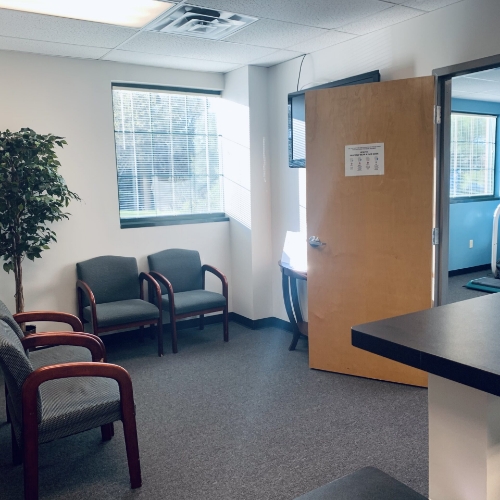
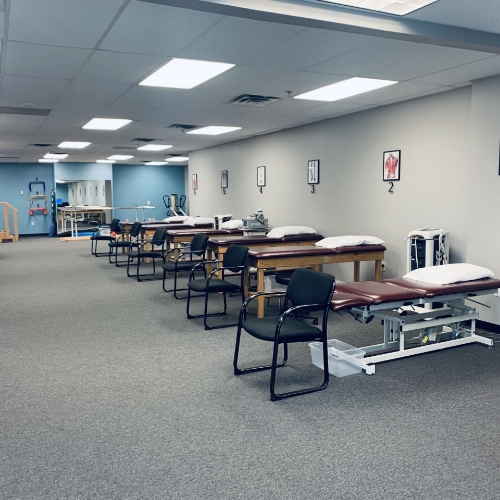
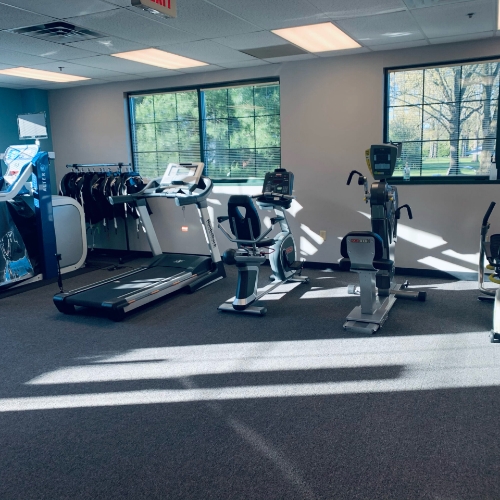
Inside Our East Brunswick Clinic
FREQUENTLY ASKED QUESTIONS
Where can I get plantar fasciitis treatment in East Brunswick, NJ?
I hike and trail run at Frost Woods. Do I need to stop while in treatment?
What if I have been dealing with this for over a year?
Do I need a doctor’s referral?
How long does plantar fasciitis take to heal with physical therapy?
YOUR RECOVERY STARTS HERE
East Brunswick is a community that stays active — and you should too. Plantar fasciitis does not have to define your mornings, limit your trail runs, or compromise your time on the job. Trinity Rehab East Brunswick is ready to build your individualized recovery plan.
No referral required. Most insurance accepted.
Sources: Journal of Orthopaedic & Sports Physical Therapy — Heel Pain Clinical Practice Guidelines, 2023 | Mayo Clinic — Plantar Fasciitis | American Academy of Orthopaedic Surgeons — Plantar Fasciitis | APTA — Heel Pain Guidelines
What Our Patients Say