
PLANTAR FASCIITIS TREATMENT IN CHERRY HILL, NJ | TRINITY REHAB
WHEN EVERY STEP AT COOPER RIVER BECOMES A CHORE
Cherry Hill is a community that moves. Early mornings bring runners circling the paved 3.6-mile loop at Cooper River Park, parents hauling gear to soccer fields at John Adler Memorial Park, and commuters walking long stretches of parking lots to make the PATCO train into Philadelphia. Evenings fill up with tennis at the Cherry Hill Health and Racquet Club, youth basketball leagues at the Katz JCC, and lacrosse practice for Cherry Hill East Cougars and Cherry Hill West Lions.
So when a stabbing pain develops at the base of your heel — worst the moment you step out of bed, then nagging all day — it does not just hurt. It rewrites your schedule. You skip the Cooper River loop. You sit out your kid’s soccer practice rather than walking the sideline. You arrive at work with Jefferson Cherry Hill Hospital or at the retail floor of the Cherry Hill Mall already dreading the hours ahead.
That pain has a name: plantar fasciitis. It is the most common cause of heel pain in adults, and it is entirely treatable with the right physical therapy approach. Trinity Rehab in Cherry Hill specializes in getting patients like you back to full, pain-free function.
UNDERSTANDING WHAT IS HAPPENING IN YOUR HEEL
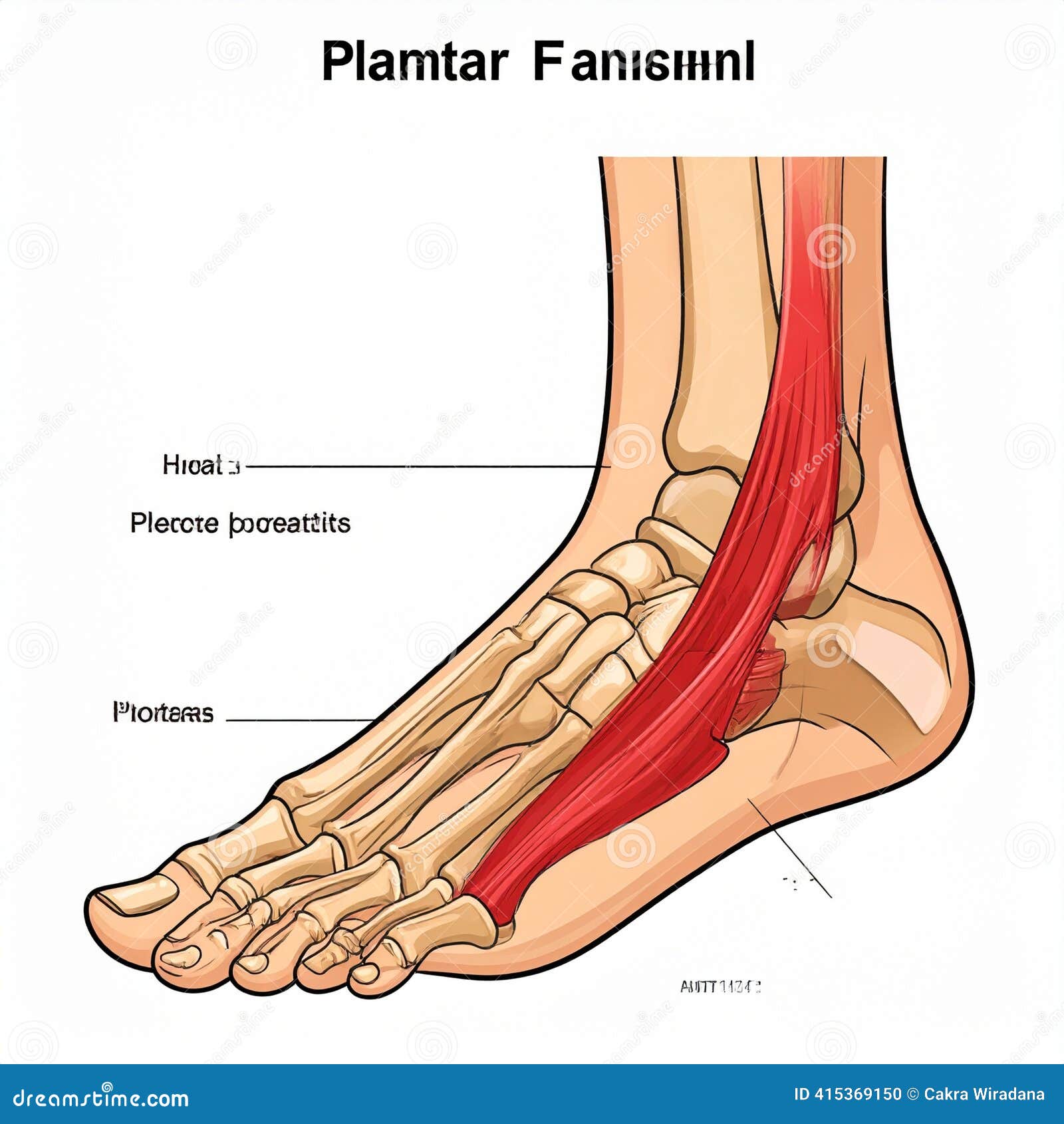
The plantar fascia is a thick, rope-like band of connective tissue that runs across the bottom of your foot from your heel bone to the base of your toes. It acts as a structural support for your foot’s arch and a natural shock absorber — loading and releasing with every step through a process called the windlass mechanism.
When the cumulative forces placed on this tissue exceed its capacity to recover, micro-tears develop at the point where the fascia attaches to the heel bone. Your body responds with inflammation — and that inflammation is what creates the characteristic burning, stabbing pain. In cases that have gone untreated for months, the tissue can begin to thicken and degenerate (a stage clinicians call plantar fasciopathy), making it harder to resolve with rest alone.
According to the American Academy of Orthopaedic Surgeons, roughly 2 million Americans seek treatment for plantar fasciitis each year, with the condition accounting for 11–15% of all foot symptoms requiring professional care. You are not alone — and you do not have to wait it out.
RELATED CONDITIONS & TREATMENTS
Plantar fasciitis is just one of the many conditions we treat at Trinity Rehab Cherry Hill. Explore our full range of conditions we treat or learn more about specific treatment approaches:
WHAT PUTS CHERRY HILL RESIDENTS AT RISK
Cherry Hill’s demographics and lifestyle patterns create several distinct risk factors for plantar fasciitis:
Cooper River Park Runners and Walkers: The paved trail at Cooper River Park is one of South Jersey’s most popular outdoor venues, and for good reason — it is flat, scenic, and easily accessible from all corners of Cherry Hill. But the hard surface combined with repetitive impact creates sustained loading on the plantar fascia. Runners who increase their mileage in the spring, or walkers who ramp up activity after a winter off, frequently push past the tissue’s recovery threshold.
Youth and High School Athletes: Cherry Hill High School East (Cougars) and Cherry Hill High School West (Lions) both field comprehensive athletic programs in the Olympic Conference. Soccer, cross country, field hockey, basketball, and track athletes train year-round on turf, court, and track surfaces. Repetitive sprinting, jumping, and cutting movements in inadequate footwear are among the most consistent contributors to adolescent plantar fasciitis. Youth leagues at the Katz JCC and Cherry Hill club sports programs compound this exposure.
Healthcare and Retail Workers: Jefferson Cherry Hill Hospital and the Virtua Health and Wellness Center employ significant numbers of nurses, aides, and support staff who stand on hard floors for 8–12 hour shifts. Retail workers at the Cherry Hill Mall and surrounding commercial corridors face similar prolonged standing demands, often in shoes that prioritize appearance over biomechanical support.
Commuters: Cherry Hill’s location between Philadelphia and the NJ suburbs means many residents are on their feet for extended periods during commutes — walking to PATCO stations, navigating parking structures, and covering long distances through offices and campuses once they arrive.
Footwear During Warmer Months: Camden County summers mean flip-flops and flat sandals become daily staples. These provide essentially no arch support, allowing the plantar fascia to stretch excessively with every step — particularly on the hard pavement of parking lots and shopping areas.
HOW YOU KNOW IT IS PLANTAR FASCIITIS
The symptom pattern is distinctive enough that many patients recognize the condition before they ever see a provider. Consider a Cherry Hill teacher who commutes to a Philly school: after a summer of walking Bunker Hill Trails and Cooper River, she notices heel pain that is agony during the first steps of every morning — but mysteriously eases after twenty minutes of moving around. By lunch she is fine. By her evening walk, the pain is back.
Or a Cherry Hill High School West lacrosse player who notices that his heel hurts most after games, not during them — and that pressing the inner edge of his heel reproduces a sharp, exact pain.
Common signs include:
- Sharp, stabbing pain with the first steps in the morning — often described as stepping on a nail or glass shard
- Pain after prolonged sitting, standing, or inactivity — worst when returning to weight-bearing after rest
- Tenderness at the inside-bottom of the heel that is reproducible with direct pressure
- Tight, aching arch that stretches along the sole toward the toes
- Pain after high-impact activity that often peaks the following morning
- Subtle changes in how you walk — shifting weight to the outer foot, limping, shortening your stride
If these symptoms have been present for more than two weeks, early physical therapy intervention will shorten your recovery dramatically compared to waiting. Left untreated, compensatory gait changes place unnatural stress on the ankles, knees, hips, and lumbar spine, sometimes triggering sciatica or lateral elbow pain from altered upper-body mechanics.
PHYSICAL THERAPY FOR PLANTAR FASCIITIS AT TRINITY REHAB CHERRY HILL
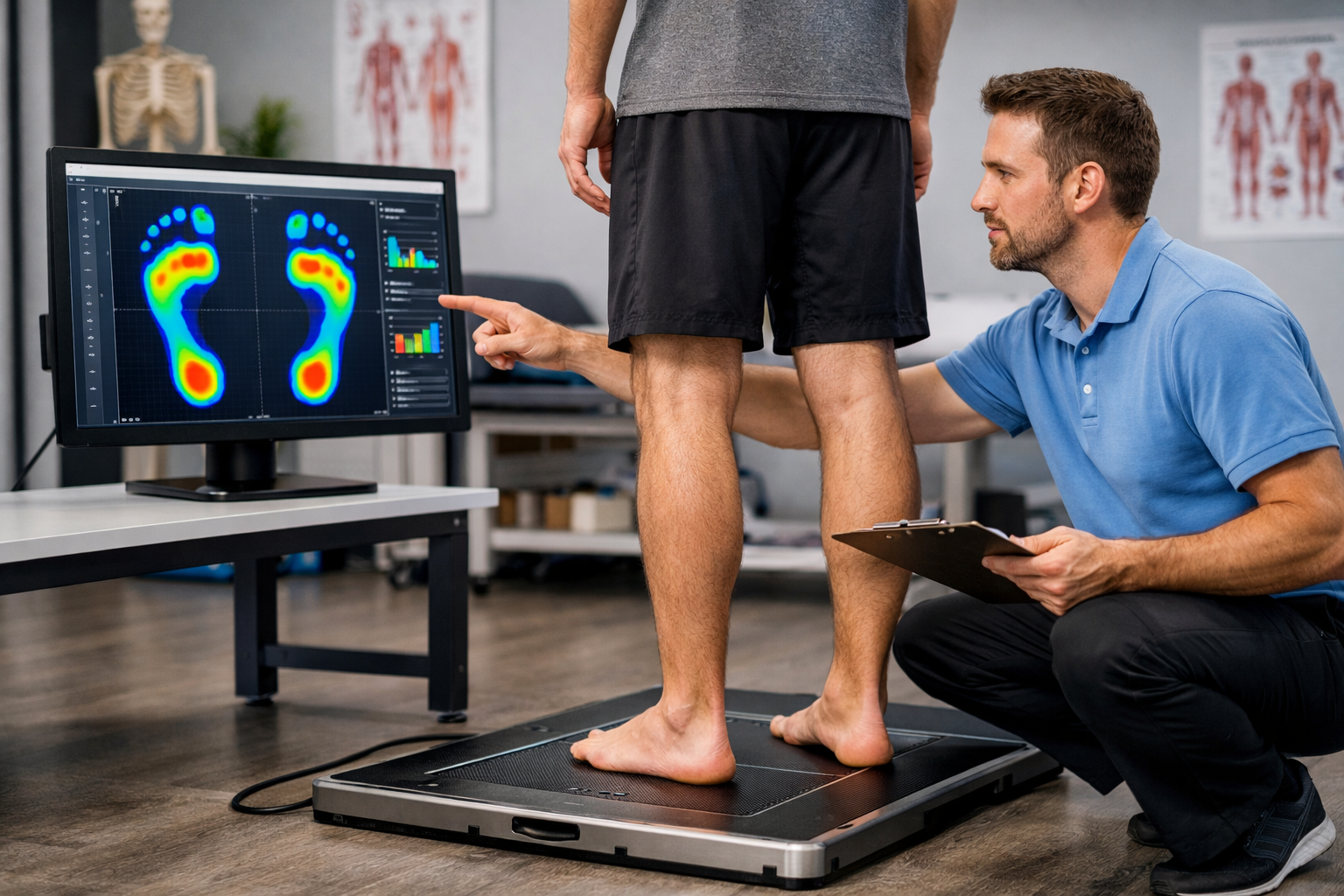
At Trinity Rehab, we do not hand you a printout of generic exercises and send you on your way. Your licensed physical therapist conducts a thorough biomechanical evaluation — assessing your foot mechanics, ankle mobility, calf flexibility, gait pattern, and footwear — to identify the specific combination of factors driving your pain. Your treatment plan is built around those findings, not a template. Explore our full range of foot and ankle treatments and conditions we treat.
MANUAL THERAPY
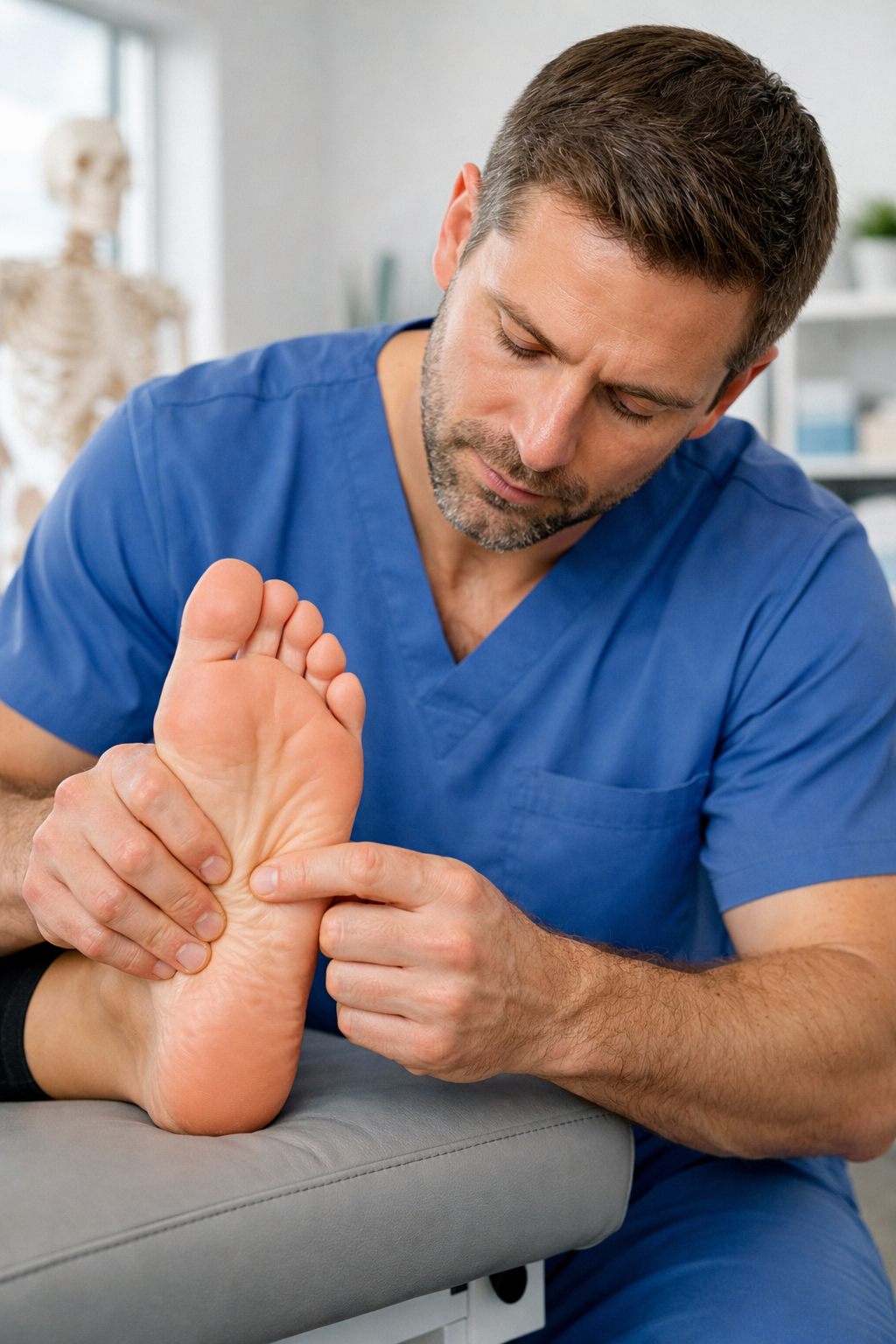
Hands-on manual therapy is the cornerstone of every plantar fasciitis treatment plan at Trinity Rehab. Techniques may include:
- Subtalar and ankle joint mobilization — Targeted, gentle movements restore normal joint mechanics and reduce the stiffness that places extra demand on the plantar fascia. Research in the Journal of Orthopaedic & Sports Physical Therapy demonstrates that subtalar mobilization combined with stretching produces significantly greater pain reduction and functional improvement than stretching alone.
- Instrument-assisted soft tissue mobilization (IASTM) — Specialized tools work systematically through scar tissue adhesions along the fascia and the calf complex, stimulating tissue remodeling and reducing local stiffness.
- Trigger point release and myofascial work — Deep pressure techniques target the calf muscles, Achilles insertion, and foot intrinsics to reduce the tension being transmitted into the plantar fascia.

TARGETED STRETCHING
Flexibility deficits — particularly in the gastrocnemius, soleus, and Achilles complex — are among the most modifiable contributors to plantar fasciitis. Your stretching program will include:
- Plantar fascia-specific stretch: Performed before taking your first morning steps, this toe-extension stretch directly unloads the fascial insertion and is supported by the strongest evidence in the clinical guidelines.
- Calf stretching progressions: Wall stretches targeting both the gastrocnemius (straight-knee) and soleus (bent-knee) restore ankle dorsiflexion — the single best predictor of plantar fasciitis recurrence risk.
- Achilles mobilization: Dynamic and eccentric loading techniques address the kinetic chain link between the Achilles tendon and the plantar fascia.
ECCENTRIC LOADING AND STRENGTHENING
Rebuilding the foot’s structural capacity is what prevents recurrence. Your program will progress through:
- Intrinsic foot exercises: Towel scrunches, short-foot exercises, and toe-spreading drills strengthen the deep muscles that support the arch from within — reducing the passive demand placed on the plantar fascia.
- Eccentric heel raises: Slowly lowering through the heel off a step edge, initially double-leg and progressing to single-leg, builds tensile strength and resilience in both the Achilles tendon and the plantar fascia.
- Proprioception and balance training: Single-leg balance progressions and wobble board work improve neuromuscular control, correcting the subtle gait asymmetries that repeatedly overload one side.
EPAT SHOCKWAVE THERAPY AND DRY NEEDLING
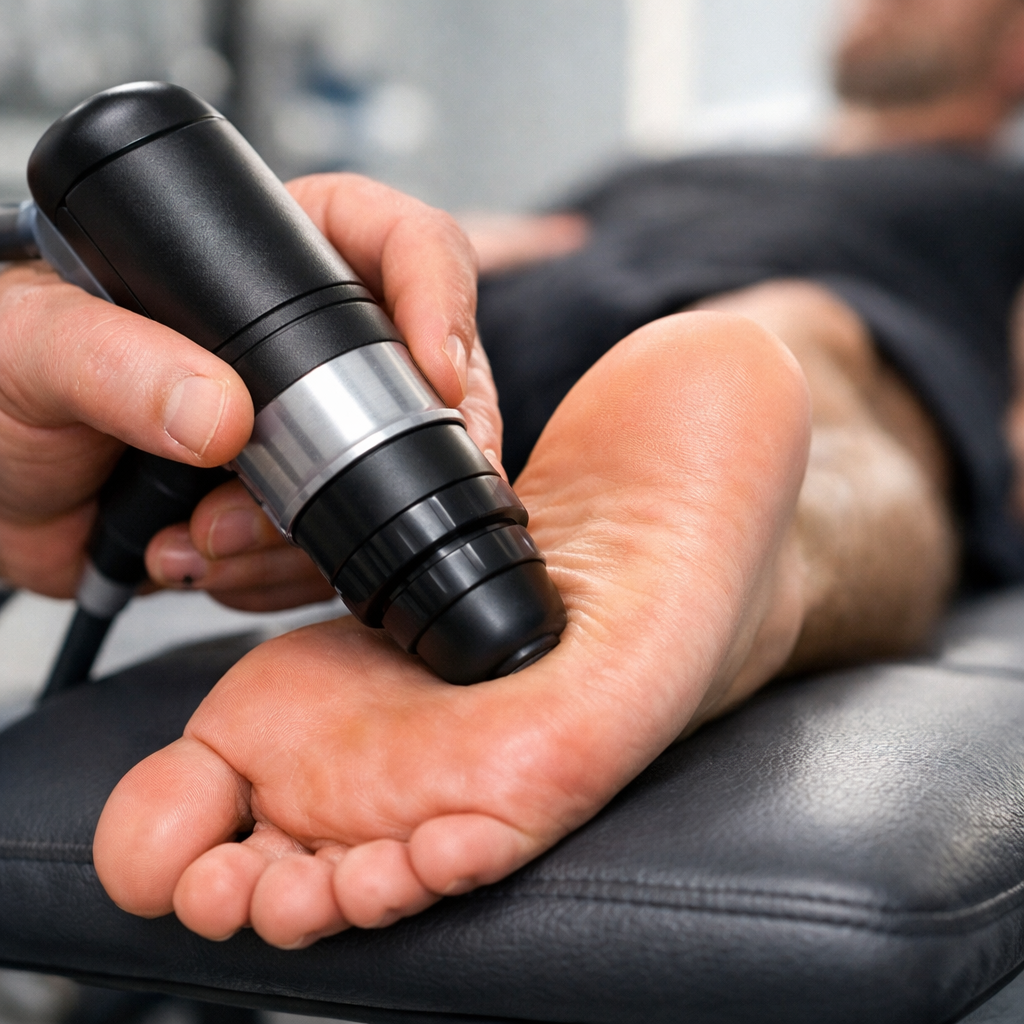
For cases that have persisted despite conventional treatment, Trinity Rehab offers EPAT (Extracorporeal Pulse Activation Technology). EPAT delivers acoustic pressure waves into the damaged tissue, breaking up calcific deposits, stimulating cellular healing, and jumpstarting the repair process in chronically degenerated fascia. The Mayo Clinic recognizes shockwave therapy as an effective option for chronic plantar fasciitis.
Dry needling — the insertion of thin filament needles into myofascial trigger points in the calf and plantar muscles — releases deep neuromuscular tension that stretching alone cannot address.
ORTHOTIC ASSESSMENT AND FOOTWEAR GUIDANCE
Your therapist will evaluate your current shoes and, where indicated, recommend custom orthotics or high-quality over-the-counter inserts to correct overpronation, support flat arches, or manage the biomechanical demands of your specific activity level. Night splints may be prescribed to prevent the overnight fascial shortening that causes first-step morning pain.
PREVENTING PLANTAR FASCIITIS RECURRENCE IN CHERRY HILL
With lifestyle risk factors in mind, here is what makes the biggest difference for long-term prevention:
- Protect the Cooper River loop. If you run regularly at Cooper River Park, track your weekly mileage and follow the 10% rule — increase no more than 10% per week to allow tissue adaptation.
- Retire shoes on schedule. Running shoes lose meaningful shock absorption after 300–500 miles. Do not let a great-looking pair work against you.
- Upgrade your work shoes. Healthcare workers at Jefferson Cherry Hill Hospital or the Virtua campus should prioritize supportive, cushioned occupational footwear over prolonged standing on worn-out soles.
- Stretch before your first step. A 30-second plantar fascia stretch performed while sitting on the edge of your bed before standing can break the morning pain cycle.
- Cross-train during heavy training periods. Swap two running days for cycling or pool running to maintain fitness while reducing cumulative fascial load.
WHY CHERRY HILL PATIENTS TRUST TRINITY REHAB
At Trinity Rehab Cherry Hill, every session is one-on-one with a licensed physical therapist. We do not rotate patients between aides or treat multiple people simultaneously. That focused attention means faster progress, more personalized adjustments, and better long-term outcomes.
We accept most major insurance carriers, maintain flexible scheduling for commuters and healthcare professionals, and our clinical protocols reflect the American Physical Therapy Association’s evidence-based guidelines for heel pain treatment.
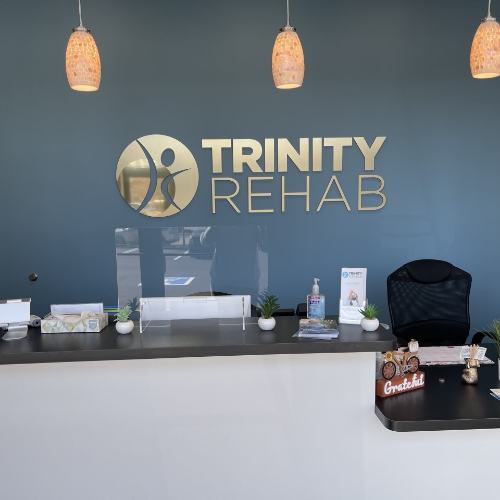
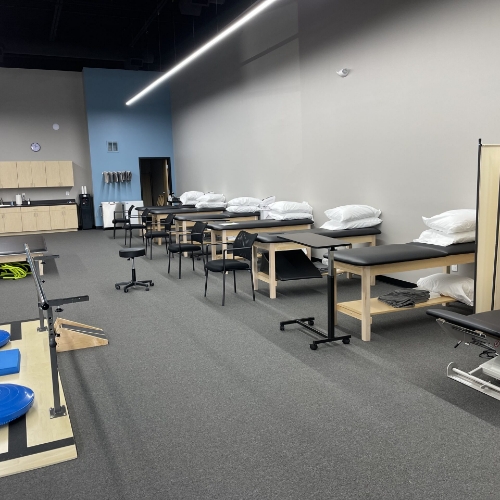
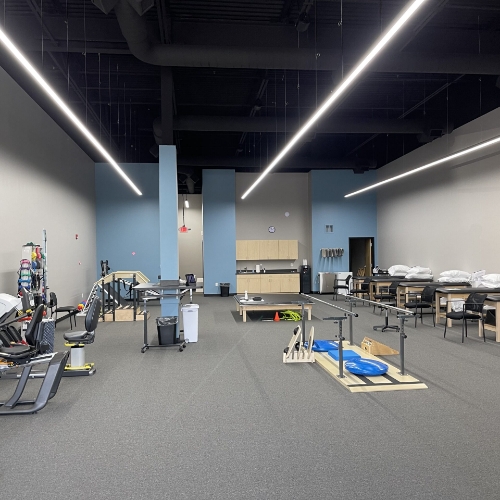
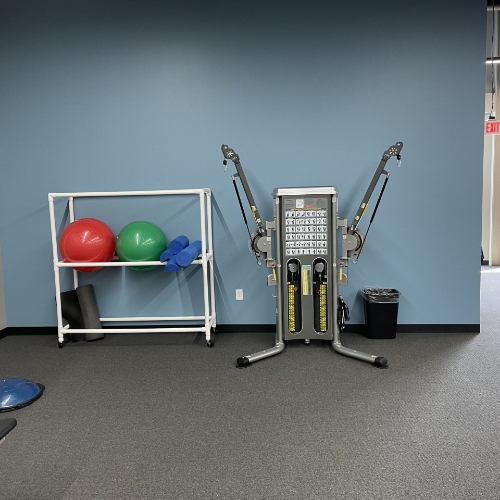
Inside Our Cherry Hill Clinic
FREQUENTLY ASKED QUESTIONS
Where can I get plantar fasciitis treatment in Cherry Hill, NJ?
I run at Cooper River Park regularly. Can I continue while in treatment?
How many visits will I need?
Do I need a doctor’s referral to start treatment at Trinity Rehab?
What is the difference between plantar fasciitis and a heel spur?
START YOUR RECOVERY TODAY
Plantar fasciitis is one of the most treatable conditions in physical therapy — when it is addressed correctly and early. Whether you are a Cooper River regular who wants to run without limping, a healthcare worker who needs to make it through a full shift, or a Cherry Hill athlete trying to get back on the field, Trinity Rehab has the expertise to get you there.
No referral required. Most insurance accepted.
Sources: Journal of Orthopaedic & Sports Physical Therapy — Heel Pain Clinical Practice Guidelines, 2023 | Mayo Clinic — Plantar Fasciitis | American Academy of Orthopaedic Surgeons — Plantar Fasciitis and Bone Spurs | APTA — Clinical Practice Guidelines
What Our Patients Say