

SCIATICA TREATMENT IN SOMERSET, NJ
Somerset sits at the center of one of New Jersey’s most active pharmaceutical and technology corridors — and that means a large portion of the community spends its weekdays at a desk, often for eight hours or more before a 34-minute average commute home on Route 27 or the NJ Transit rail line. If you have felt that familiar electric ache shoot from your lower back into your leg after a long day at a corporate campus in Bridgewater Crossing or a pharmaceutical facility along the Raritan Valley, you already know what sciatic nerve pain can do to an otherwise ordinary Tuesday. Add in a weekend of canal towpath hiking along the Delaware and Raritan Canal State Park, a round at Quail Brook or Spooky Brook golf course, or a Saturday morning at Colonial Park chasing your kids through the rose garden — and you have a lifestyle that is genuinely meaningful and worth protecting. Sciatica treatment at Trinity Rehab is designed to keep you in it.
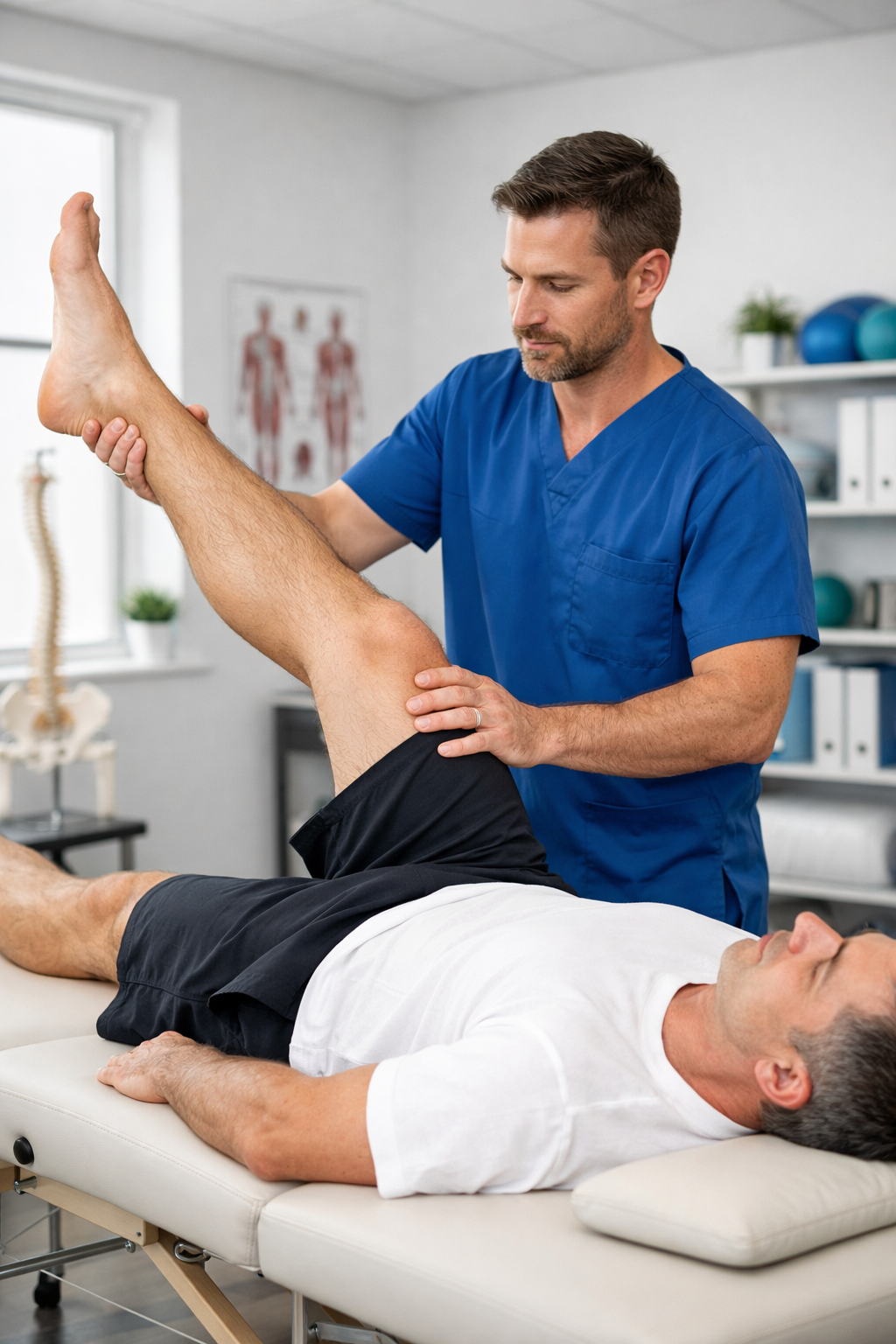
What Is Sciatica?
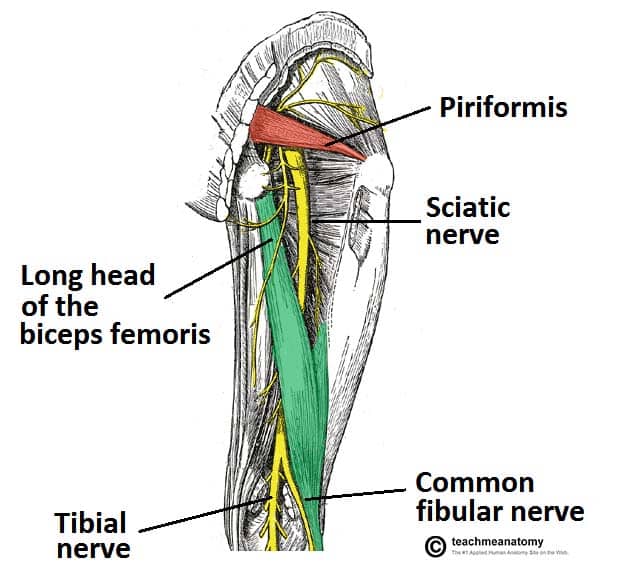
The sciatic nerve is the longest nerve in the human body. It originates as a bundle of nerve roots in the lumbar spine (L4 through S3), travels through the deep buttock, and runs down the back of the leg to the foot. When one of those nerve roots becomes compressed or irritated — typically by a herniated disc, a narrowed spinal canal, or a tight piriformis muscle pressing against the nerve from outside the spine — the result is a cascade of symptoms along its entire pathway. That is why a problem in your lower back can produce pain, numbness, or weakness as far down as your calf or toes.
The clinical term is lumbar radiculopathy, and according to Mayo Clinic, sciatica most commonly occurs between the ages of 30 and 50 — squarely within the working demographic of Somerset’s Raritan Valley. The good news: physical therapy is among the most effective evidence-based treatments for sciatica, with the majority of patients achieving meaningful recovery without surgery.
Common Causes of Sciatica for Somerset Residents
Somerset’s mix of pharmaceutical workers, tech professionals, logistics and warehouse employees, and active families creates a wide range of sciatica risk profiles:
Pharma and biotech desk workers. Companies like Lupin Pharmaceuticals, Legend Biotech, and Catalent’s operations in the region employ thousands of Somerset-area residents in roles that involve sustained seated work — at lab benches, at computers, in conference rooms. Long-term sitting compresses lumbar discs and shortens hip flexors, both of which elevate the risk of herniated disc and piriformis syndrome. The seated posture typical in corporate campus environments often loads the lower spine asymmetrically over months and years.
Warehouse and distribution employees. The Branchburg and South Bound Brook industrial corridor employs a meaningful share of Somerset’s workforce in warehousing, logistics, and manufacturing. Repetitive lifting, bending, and twisting — especially with high-volume, time-pressured workflows — are among the most well-documented triggers for lumbar disc herniation and the sciatica that follows it. Workers in these environments often tolerate minor back discomfort until a single heavy lift creates an acute nerve compression episode. For more on work-related injuries, see Trinity Rehab’s back pain treatment page.
Raritan Valley trail and outdoor sports enthusiasts. The Delaware and Raritan Canal State Park towpath winds through the heart of the region, drawing cyclists, runners, and walkers year-round. Washington Valley Park and the Sourland Mountain trails attract hikers willing to push longer distances. Repetitive impact from trail running on uneven terrain, combined with tight hip flexors from hours of desk work, is a particularly common sciatica trigger among Somerset’s active 30-to-50 age group.
Golf and racquet sports players. With five public golf courses within a short drive — including Green Knoll, Quail Brook, Spooky Brook, Warrenbrook, and Neshanic Valley — golf is a major weekend activity in Somerset County. The rotational mechanics of a golf swing place significant asymmetric load on the lumbar spine and sacroiliac joint. Add pickleball leagues at Iron Peak Sports & Events or indoor tennis at Green Knoll, and the pattern of repetitive single-direction spinal loading becomes a genuine risk factor.
Seasonal contributors. Somerset County’s full four seasons bring specific sciatica triggers each quarter. Late-fall gardening and mulching send many residents to their knees and bent at the waist for hours. Heavy winter snowfalls demand sustained shoveling — a task that combines awkward lumbar flexion with forceful lifting, one of the most reliable ways to aggravate or create a herniated disc. Spring planting and summer sports round out the cycle.
Symptoms to Watch For
Sciatica has a recognizable pattern that sets it apart from other types of back or leg pain. In Somerset’s working population, these symptoms frequently appear or worsen mid-workday or on the morning commute:
- Pain radiating from the lower back through the buttock and down one leg — often burning, shooting, or described as a “deep ache with a streak of electricity”
- Numbness or tingling in the outer calf, ankle, or sole of the foot — frequently confused with circulation problems but distinctly neurological in character
- Leg weakness or foot drop — difficulty lifting the foot, pushing off when walking, or holding a squat position during workouts at the YMCA or Performance Sports Center
- Pain that intensifies with sitting — particularly pronounced after long meetings or a full day at a lab bench, even before the commute home
- Improvement with gentle walking — many patients find movement temporarily relieves nerve tension, while prolonged rest worsens stiffness
One common Somerset scenario: a biotech researcher who carries a heavy laptop bag on one shoulder and sits through back-to-back calls develops gradual left-sided leg numbness that worsens over a few weeks. It starts as occasional tingling and progresses to a persistent ache behind the knee. That gradual accumulation — rather than a single dramatic injury — is how sciatica often begins in office-dominant professions.
Sciatica Treatment at Trinity Rehab: A Topic-by-Topic Approach
Rather than moving through rigid phases, your Trinity Rehab physical therapist will address the specific components of your sciatica in the sequence and combination your condition requires. Here is what treatment typically involves:
Manual Therapy for the Lumbar Spine and Hips
Manual therapy — hands-on joint mobilization and soft tissue techniques — is often the most immediately impactful component of early sciatica care. Your therapist uses specific manual techniques to reduce stiffness in the lumbar facet joints that may be contributing to nerve root compression, to release tension in the hip flexors and piriformis that can directly compress the sciatic nerve, and to restore normal movement mechanics to the sacroiliac joint. For Somerset’s desk workers, this often means addressing the thoracolumbar fascia restrictions that build up from sustained seated postures.
Neural Mobilization (Nerve Gliding)
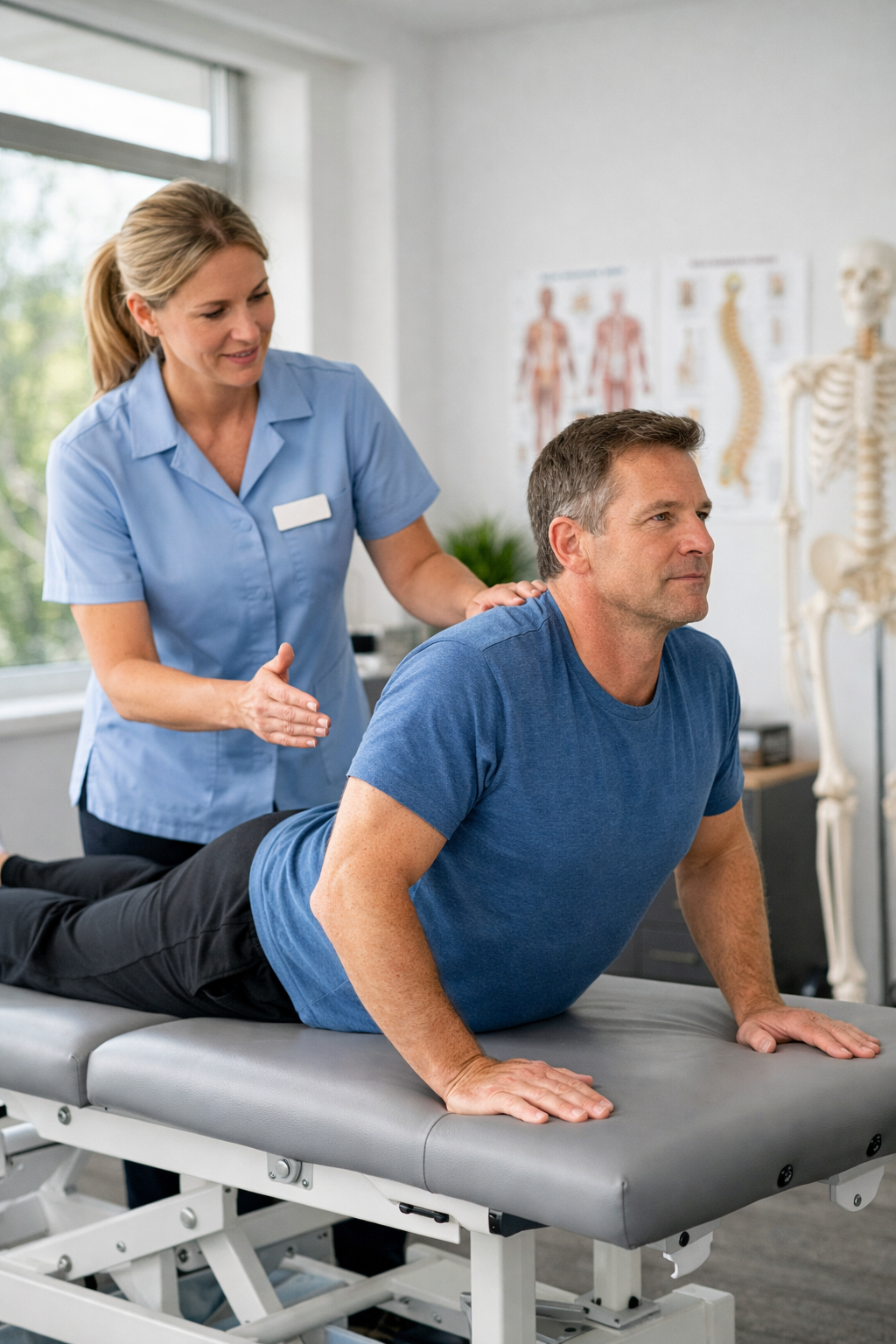
The sciatic nerve needs to move freely through the surrounding soft tissue. When it becomes sensitized and adherent, even small movements produce disproportionate pain. Neural mobilization techniques — a series of carefully designed movements that glide the nerve through its pathway — reduce this hypersensitivity and restore normal nerve mechanics. These exercises are often taught as part of the home program so that patients can continue managing symptoms between sessions.
Core Stabilization and Spinal Support
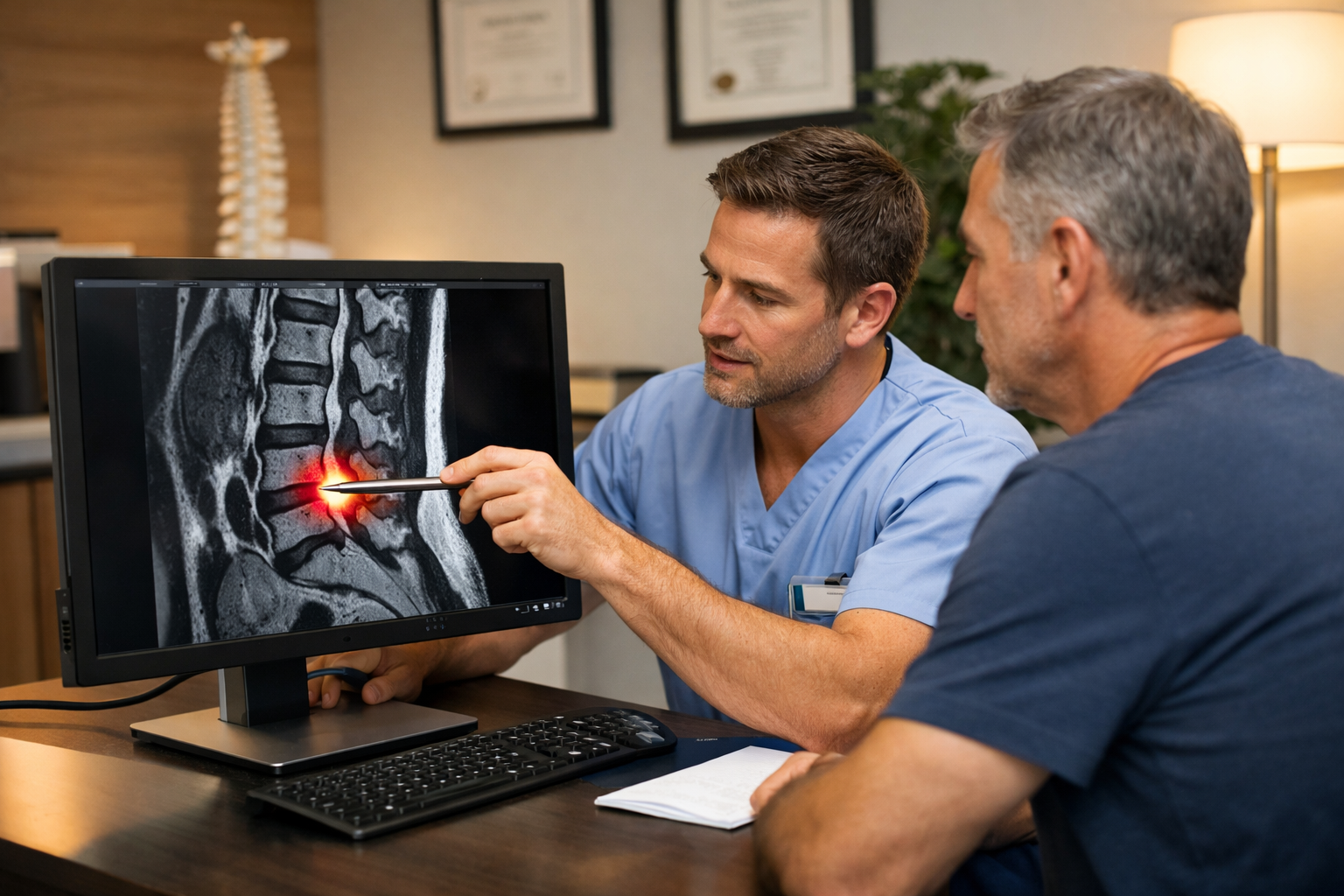
A weak or poorly coordinated core is one of the most common underlying contributors to sciatica in working adults. Deep stabilizers — the transversus abdominis and multifidus — form a natural brace around the lumbar spine. When they are not activating properly, every lift, every reach, and every hour of sitting places disproportionate load on the discs and nerve roots. Trinity Rehab’s core stabilization work is precise and individualized; it is not generic sit-ups but targeted activation of the muscles that protect your specific vulnerable segments.
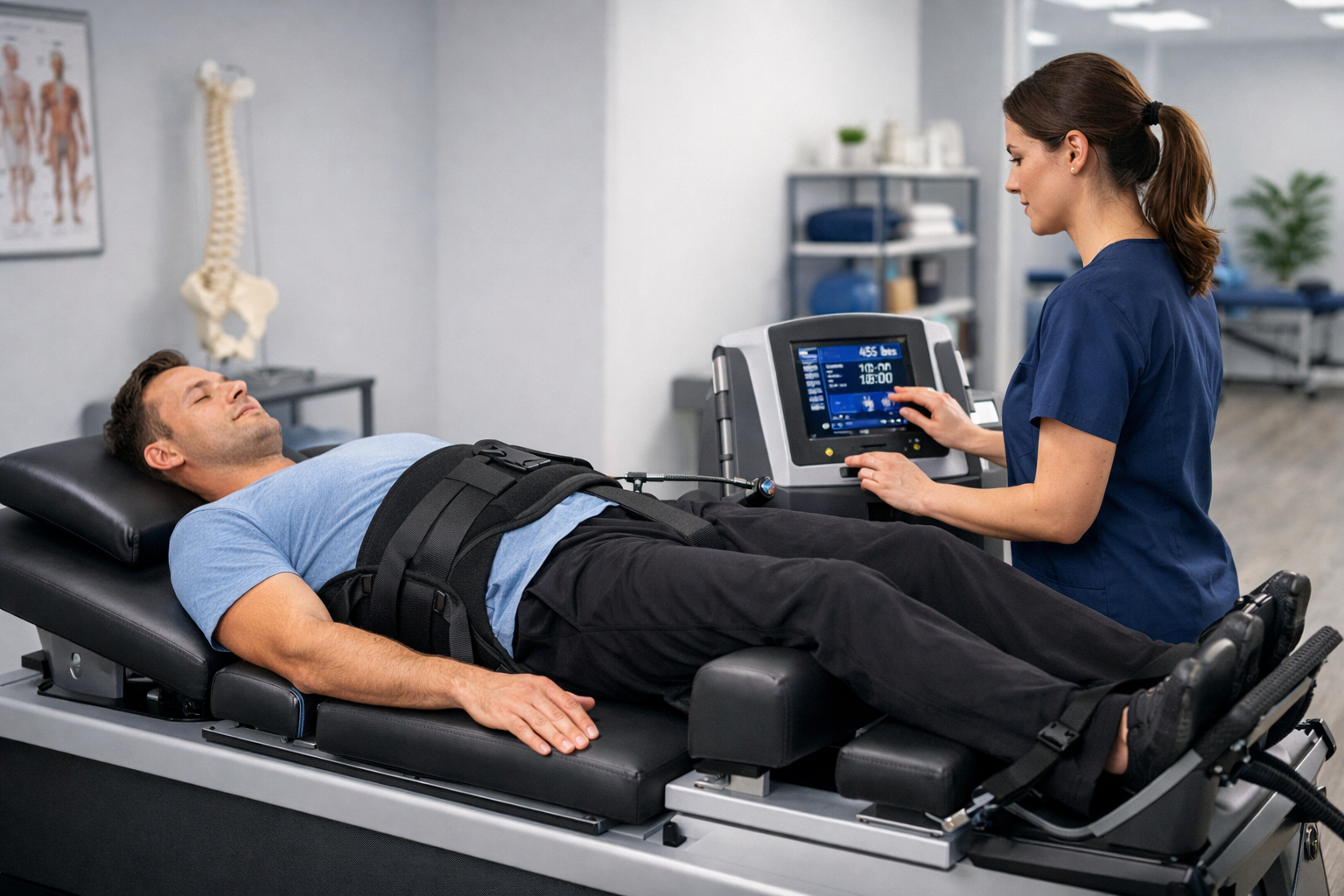
Hip and Glute Strengthening
Weak glutes are among the most underappreciated drivers of sciatica. The gluteus maximus and medius control pelvic alignment during walking, running, and lifting — and when they are not doing their job, the lumbar spine and sacroiliac joint compensate. For golfers and cyclists in Somerset, hip abductor strengthening can dramatically reduce the lumbar rotational strain that accumulates over a round of golf or a long towpath ride.
Dry Needling for Trigger Point Release
When piriformis syndrome, deep gluteal tightness, or paraspinal muscle guarding is limiting progress, dry needling offers a targeted way to release those trigger points. This technique — distinct from acupuncture — uses thin monofilament needles to access deep myofascial tension that stretching and massage cannot reach, often producing immediate improvements in mobility and pain levels.
Posture and Ergonomics Coaching
For Somerset’s office and lab workers, the treatment environment extends to the workstation. Your therapist will review your seated posture, laptop positioning, and movement patterns throughout the workday, providing specific recommendations that reduce lumbar disc loading during the 8-plus hours per day you spend at work. Small ergonomic corrections — seat height, screen position, standing intervals — compound into meaningful reductions in nerve compression over time.
Why Choose Trinity Rehab in Somerset
Trinity Rehab’s one-on-one care model is particularly well suited to the Somerset professional community. Your sessions are not shared with other patients, and your licensed physical therapist is not managing multiple cases simultaneously during your appointment. Every minute of your session is focused on your specific presentation, your goals, and your progress.
New Jersey’s Direct Access Law means no physician referral is required — you can schedule an evaluation and begin treatment the same week symptoms appear. Early intervention consistently produces faster recovery and lower recurrence rates, which matters for professionals who cannot afford extended time away from their demanding work schedules.
Trinity Rehab accepts most major insurance plans and offers scheduling that accommodates early morning and evening appointments around corporate hours. Whether your employer is Lupin Pharmaceuticals, SHI International, or a smaller Somerset County business, getting to treatment should not mean taking a personal day.
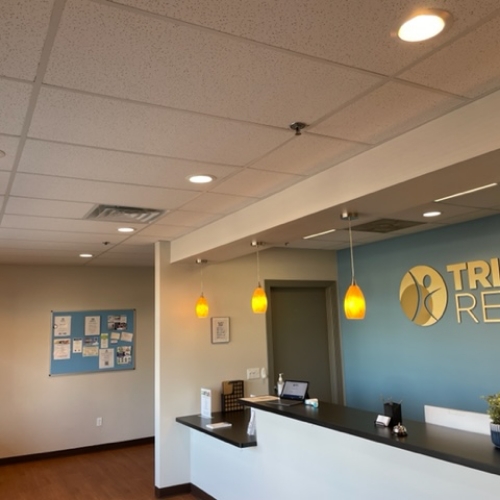
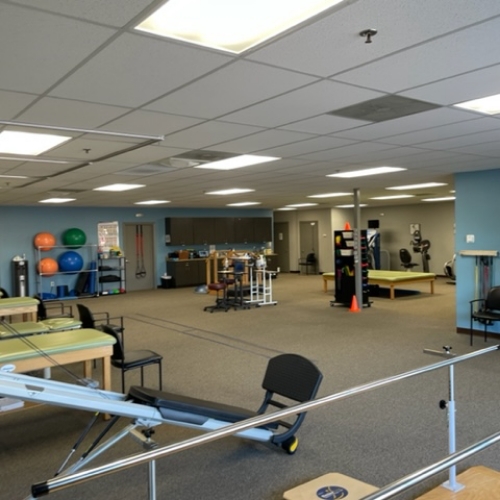
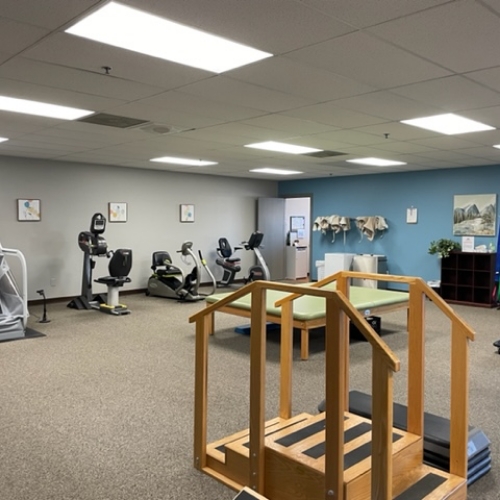
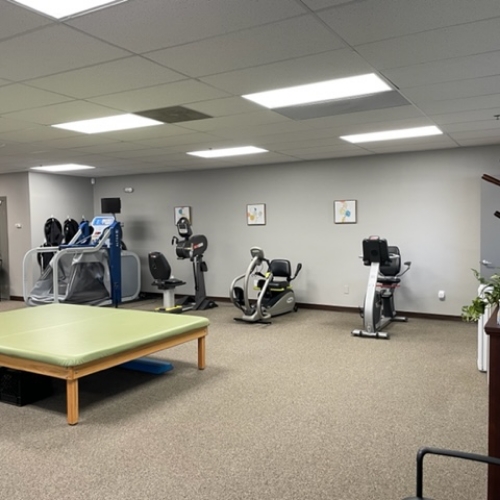
Inside Our Somerset Clinic
Related Conditions & Treatments
Sciatica is just one of the many conditions we treat at Trinity Rehab Somerset. Explore our full range of conditions we treat or learn more about specific treatment approaches:
- Sciatica Treatment Overview
- Back Pain Treatment
- Hip & Knee Pain Relief
- Manual Therapy
- Dry Needling
- EPAT / Shockwave Therapy
Somerset Sciatica Rehab For Leg Pain, Sitting Pain, And Walking Tolerance
Sciatica-like symptoms can make sitting, driving, bending, sleeping, and walking difficult. Somerset patients need a plan that separates nerve-related leg pain from back, hip, or muscle-driven symptoms.
Your therapist may assess symptom behavior, lumbar mobility, nerve tension, hip strength, walking tolerance, and positions that calm or worsen symptoms. Progressive weakness, numbness, or bowel/bladder changes should be medically reviewed urgently.
Related Somerset spine options include lumbar disc herniation rehab, hip pain physical therapy, and the Somerset clinic page.
Frequently Asked Questions
Somerset Sciatica Rehab For Leg Pain, Sitting Pain, And Walking Tolerance
Sciatica-like symptoms can make sitting, driving, bending, sleeping, and walking difficult. Somerset patients need a plan that separates nerve-related leg pain from back, hip, or muscle-driven symptoms.
Your therapist may assess symptom behavior, lumbar mobility, nerve tension, hip strength, walking tolerance, and positions that calm or worsen symptoms. Progressive weakness, numbness, or bowel/bladder changes should be medically reviewed urgently.
Related Somerset spine options include lumbar disc herniation rehab, hip pain physical therapy, and the Somerset clinic page.
Where can I get sciatica treatment in Somerset, NJ?
Does Trinity Rehab in Somerset accept my insurance?
How is physical therapy different from just resting for sciatica?
Can a pharmaceutical lab worker with ergonomic constraints benefit from PT?
How soon will I feel better?
Sciatic nerve pain does not belong in your workday, your weekend at the D&R Canal, or your Saturday round of golf. Trinity Rehab is ready to help you find the cause, address it properly, and get you back to the Raritan Valley life you have built.
- Schedule your appointment — no referral needed, evening and early morning times available
- Get a thorough evaluation — understand exactly what is driving your sciatica, not just what is hurting
- Follow a plan built for you — one-on-one care, every session, until you are back to full function
Do not let sciatica manage your schedule. Book your appointment today.