

SCIATICA TREATMENT IN EMERSON, NJ: RESTORING FUNCTION TO BERGEN COUNTY’S FAMILY TOWN
Emerson, NJ, has long carried a well-deserved reputation as “The Family Town.” In this tight-knit Pascack Valley borough, weekend mornings mean youth baseball at Emerson Little League fields, walks through the quiet woods of Emerson Woods Preserve, or cheering on the Cavaliers wrestling team — which has produced more than a few state championships under the coaching legacy of Coach Stan Woods. Weekday rhythms revolve around the Pascack Valley Line commute into Manhattan, school drop-offs, and the kind of active homeownership that means the yard is always being maintained.
For Emerson residents, back and leg pain that radiates from the lower back through the buttock and down one leg can disrupt all of it. The morning walk through the Preserve becomes painful. The commute on NJ Transit grows miserable. Even watching the Cavaliers from the bleachers becomes something you dread if sitting aggravates your sciatica.
Trinity Rehab brings expert, personalized sciatica treatment to Bergen County residents who deserve more than generic advice and a sheet of printout exercises. Here is what you need to know.
Understanding Sciatica
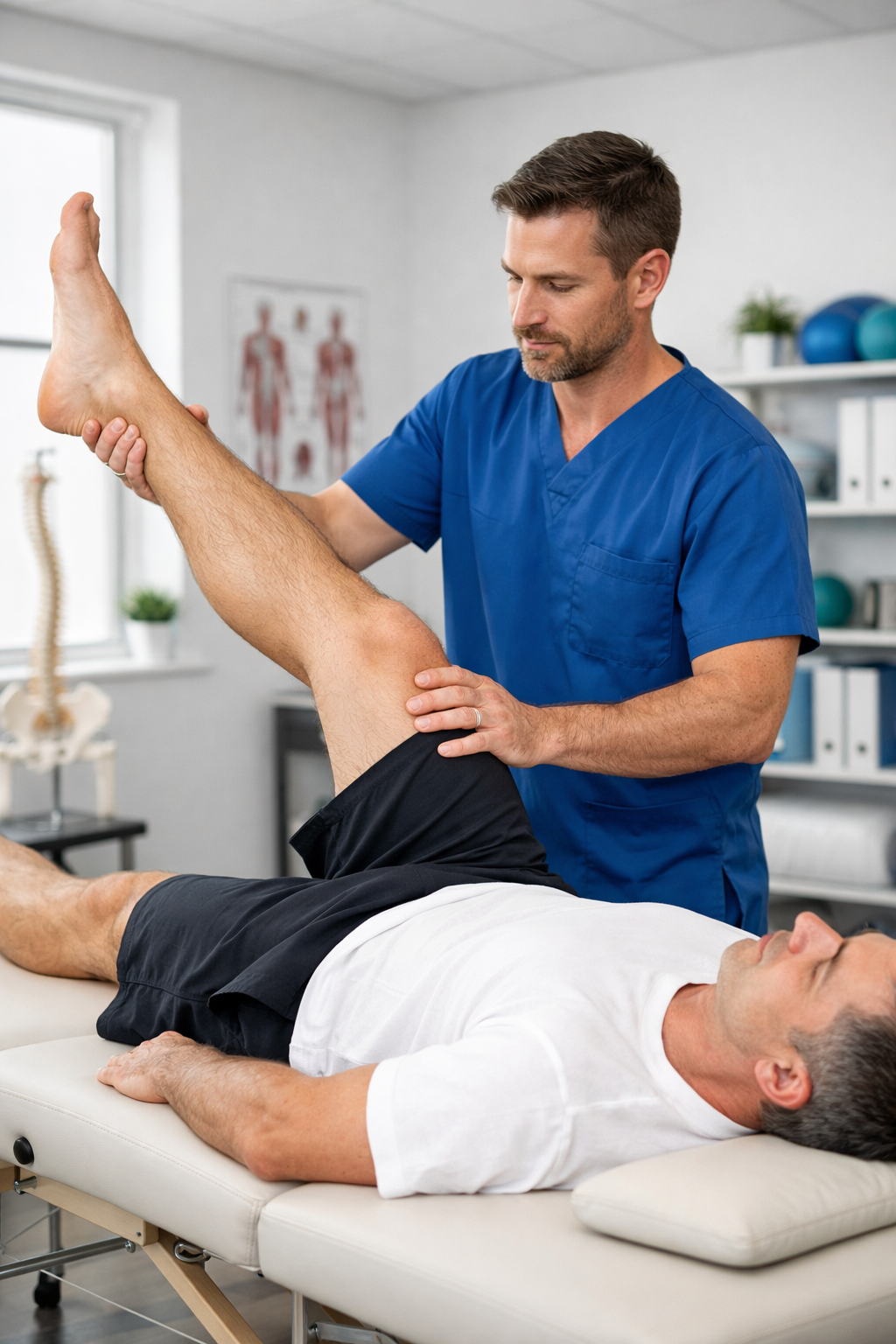
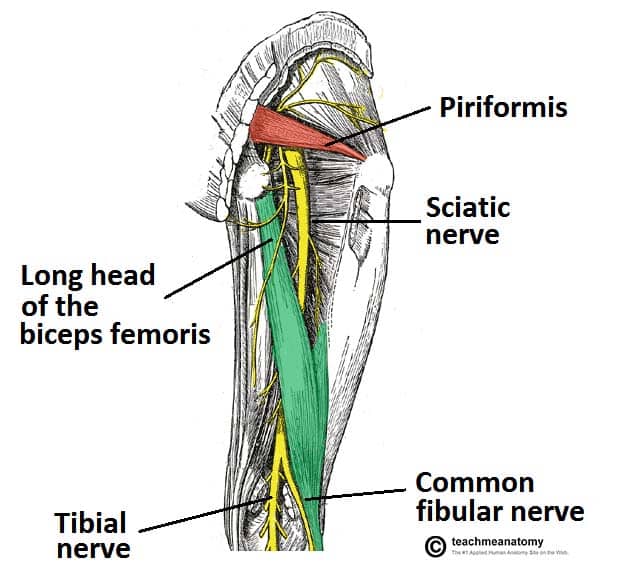
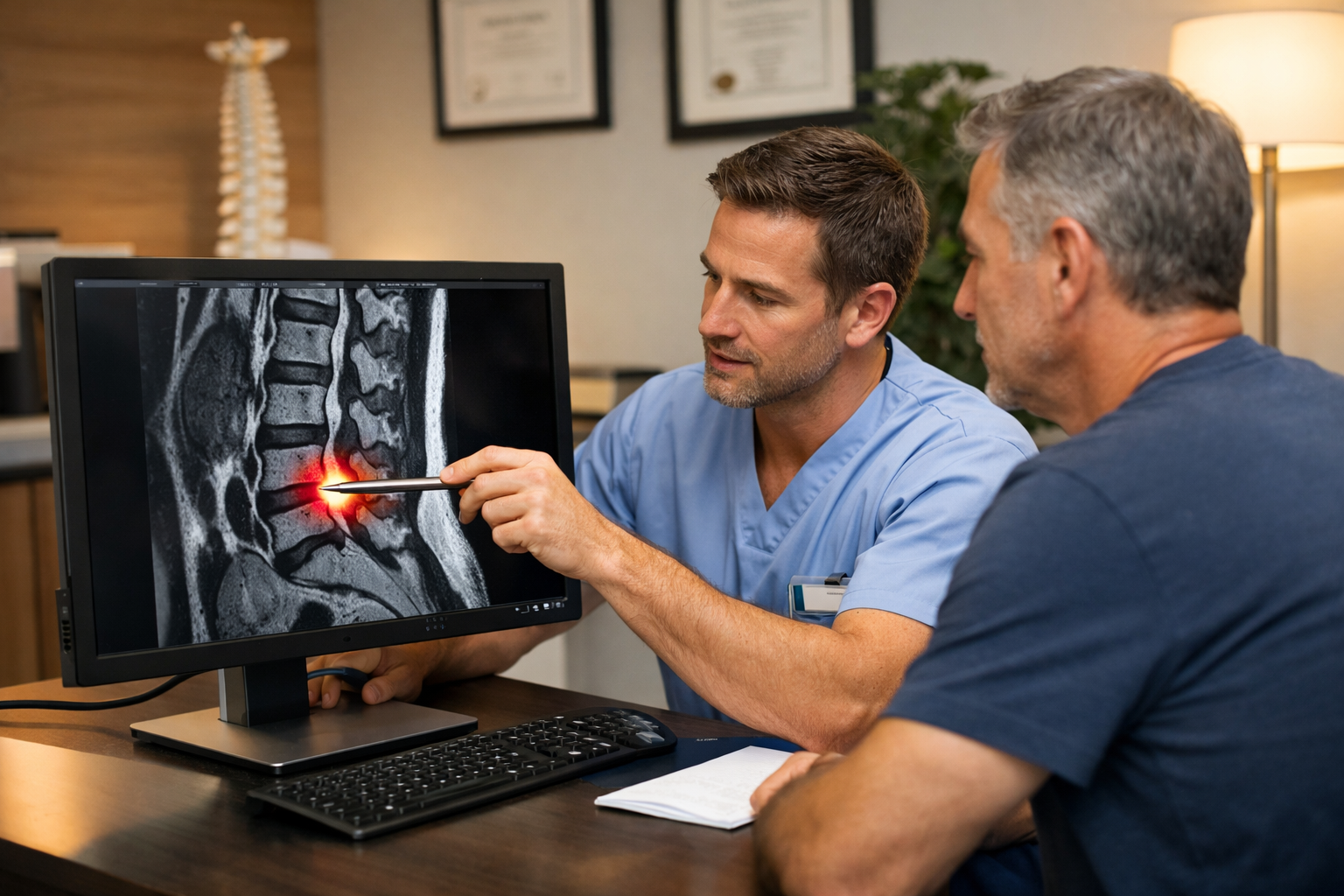
The sciatic nerve is formed from multiple nerve roots in the lower lumbar and sacral spine. It runs through the deep buttock, behind the hip joint, and down the back of the thigh to the calf and foot. When those nerve roots become compressed or irritated — most commonly by a herniated lumbar disc, but also by a tight piriformis muscle, lumbar spinal stenosis, or vertebral instability — pain follows their path. This is what clinicians call lumbar radiculopathy, and what patients call sciatica.
The condition is more common than most people realize: Cleveland Clinic estimates that nearly 40% of adults will experience it at some point in their lives. For Emerson residents, it is not always an acute trauma that brings it on — often it is the gradual accumulation of postural stress, occupational loading, and the physical demands of homeownership that builds quietly until something tips the balance.
The encouraging news is that physical therapy — targeted, one-on-one, and designed around the actual cause of your nerve compression — resolves the vast majority of sciatica cases without surgery or dependence on medication. The key is identifying what is specifically causing your nerve compression and addressing it at its root.
See also: back pain treatment resources at Trinity Rehab.
What Triggers Sciatica in Emerson Residents
Emerson’s demographics and character create a distinct profile of risk factors that differ from larger urban or industrial communities nearby:
Pascack Valley Line commuters. Emerson is a commuter-oriented community with direct NJ Transit Pascack Valley Line access to Hoboken and New York Penn Station. Average commutes run approximately 31 minutes, and residents who commute by train still spend significant time sitting — first on the train, then at desks in Manhattan offices. The cumulative daily sitting load, especially for residents whose professional lives involve extended periods at a workstation, creates sustained lumbar disc pressure over the course of a career.
Work-from-home professionals. Emerson’s high median household income (estimated at $135,000 to $155,000) and its predominantly residential character suggests a high proportion of professionals, many of whom have shifted to hybrid or remote work in recent years. Extended home office setups — often ergonomically suboptimal compared to corporate workstations — create new patterns of lumbar stress that have driven a notable increase in sciatica presentations in this demographic.
Homeownership and yard maintenance. Emerson’s culture of homeownership (92% homeownership rate) means a community where residents regularly engage in raking, shoveling, mulching, planting, and landscaping. Spring and fall yard work involves sustained lumbar flexion, bending with load, and the kind of repetitive motion that — especially after winter inactivity — can tip a compromised disc toward herniation and nerve root compression.
Winter snow removal. Bergen County winters regularly deliver snow events that require driveway and walkway clearing. Snow removal is one of the most reliable seasonal triggers for acute disc herniation among suburban homeowners, combining heavy load, cold-stiffened muscles, and asymmetric repetitive motion.
Emerson Cavaliers athletics and adult recreation. The Emerson Junior-Senior High School Cavaliers program is proud and competitive — particularly in wrestling, baseball, and basketball. Athletes who push through lumbar discomfort in season — common in wrestling and contact sports — can accumulate unresolved disc damage that surfaces as sciatica in later years. Adult residents who participate in recreation programs, Little League coaching activities, or fitness classes carry their own cumulative loading histories.
Retirees and older residents. Emerson’s median age of 47 to 49 and its significant retiree population (23% over 65) mean that lumbar spinal stenosis — age-related narrowing of the spinal canal — is a relevant cause of sciatica in a meaningful portion of our patients. Stenosis-related sciatica has a characteristic pattern: symptoms worsen with prolonged standing or walking and improve with sitting or leaning forward, which helps distinguish it from disc-related presentations.
Symptoms Emerson Patients Describe
Sciatica has a recognizable character. Our Emerson patients typically describe:
- Shooting, burning, or deep aching pain from the lower back or buttock traveling down the back or side of one leg — sometimes to the knee, sometimes into the foot
- Numbness or tingling in the thigh, calf, or foot, often following a consistent path with each episode
- Leg weakness — particularly noticeable when climbing the stairs at Emerson Station, stepping off the train, or pushing up from a low chair
- Pain that builds during the commute and peaks when transitioning from sitting to standing at Penn Station
- Night pain that interrupts sleep, especially when rolling onto the affected side
- Stiffness and soreness on one side of the lower back upon waking, lasting 20 to 30 minutes before easing
An Emerson resident — a work-from-home financial professional — described how months of sitting at an improvised desk setup gradually produced radiating pain into the left leg, eventually making the Pascack Valley Line commute to weekly in-office meetings nearly unbearable. That pattern — slow onset through accumulated postural stress — is among the most common in Emerson’s professional, homeowning population.
How Trinity Rehab Treats Sciatica in Emerson: A Topic-Based Approach
Our Emerson-area physical therapists organize treatment around specific clinical targets rather than a fixed phase structure — allowing flexibility in emphasis based on your individual findings. The core treatment elements include:
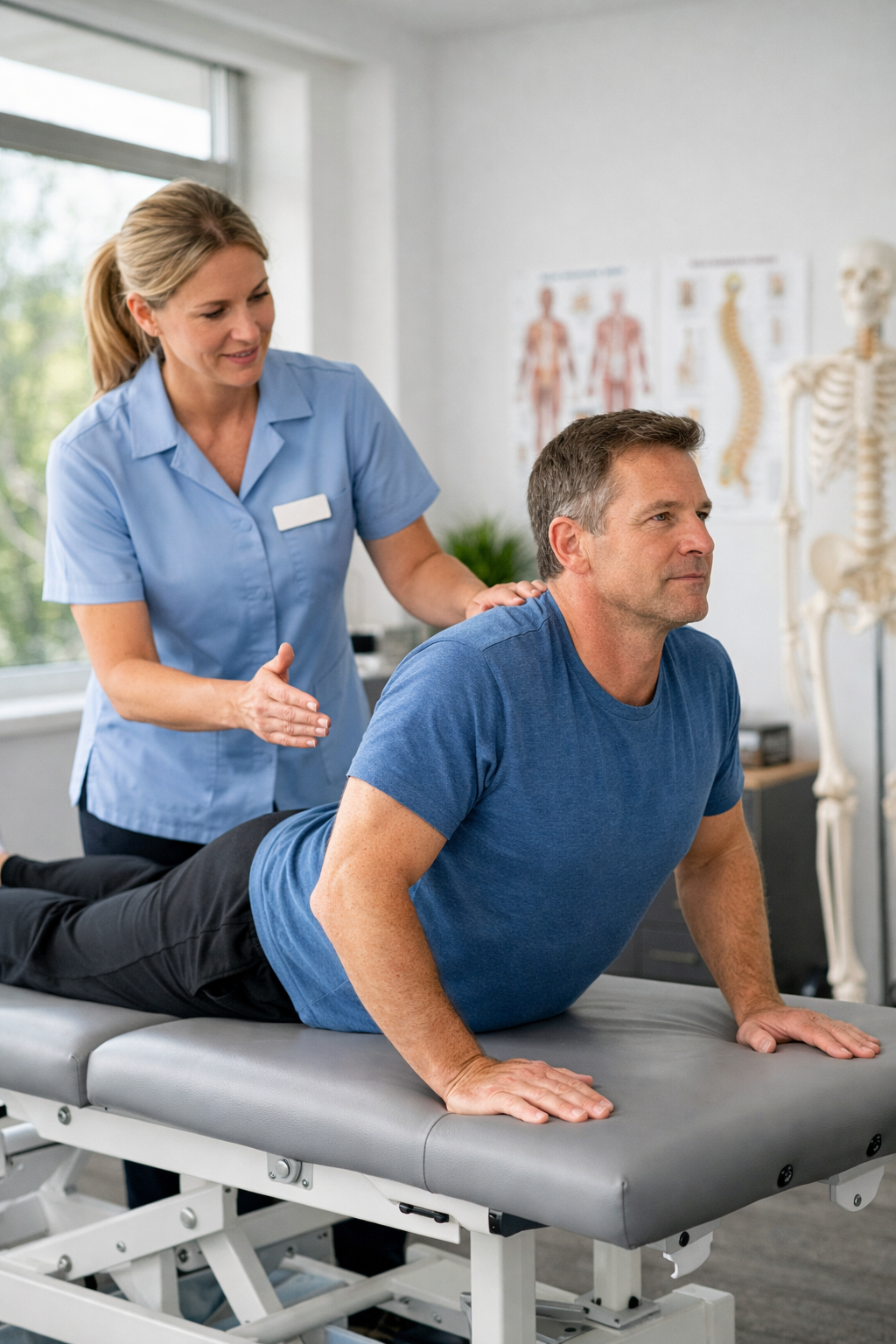
Manual Therapy: Hands-On Spinal Decompression
Manual therapy is the physical foundation of sciatica treatment. Your therapist applies skilled joint mobilization to the lumbar vertebrae and sacroiliac joints to restore normal segmental movement, reduce stiffness, and directly relieve mechanical pressure on compressed nerve roots. Soft tissue mobilization of the piriformis, gluteal muscles, and hip external rotators addresses the muscular layer of compression that intensifies nerve symptoms.
For Emerson’s older residents with stenosis-related sciatica, manual therapy techniques are carefully selected to work within the reduced tolerance of the stenotic spine — focusing on flexion-biased mobilization and soft tissue work rather than the extension-oriented techniques more appropriate for disc herniation.
Neural Mobilization: Restoring Nerve Freedom
When the sciatic nerve has been under compression, it loses its normal capacity to glide freely through the surrounding tissues. Neural mobilization exercises — carefully designed limb movements that create a gentle, gradual tension through the nerve — restore that gliding capacity and reduce the hypersensitivity that sustains radiating pain even after the mechanical compression has begun to resolve.
This is among the most immediately impactful elements of sciatica treatment. Most patients notice that their radiating leg symptoms begin to diminish within the first two to three weeks of consistent neural mobilization work.
Core and Hip Strengthening
Emerson’s population — a community of commuters, homeowners, and remote workers — shares a common biomechanical vulnerability: underactive deep core muscles and inhibited glutes from the combination of extended sitting and reduced lower-body loading. This pattern allows the lumbar spine to absorb stress that should be distributed through the hips and pelvis, contributing to the cumulative disc load that eventually triggers sciatica.
Your Trinity Rehab therapist will guide you through progressive core stabilization — from isolated deep muscle activation through dynamic stabilization in functional positions — combined with systematic glute and hip strengthening. The result is a lumbar spine that has meaningful mechanical protection against the demands of Emerson life: the commute, the yard, the athletic sidelines.
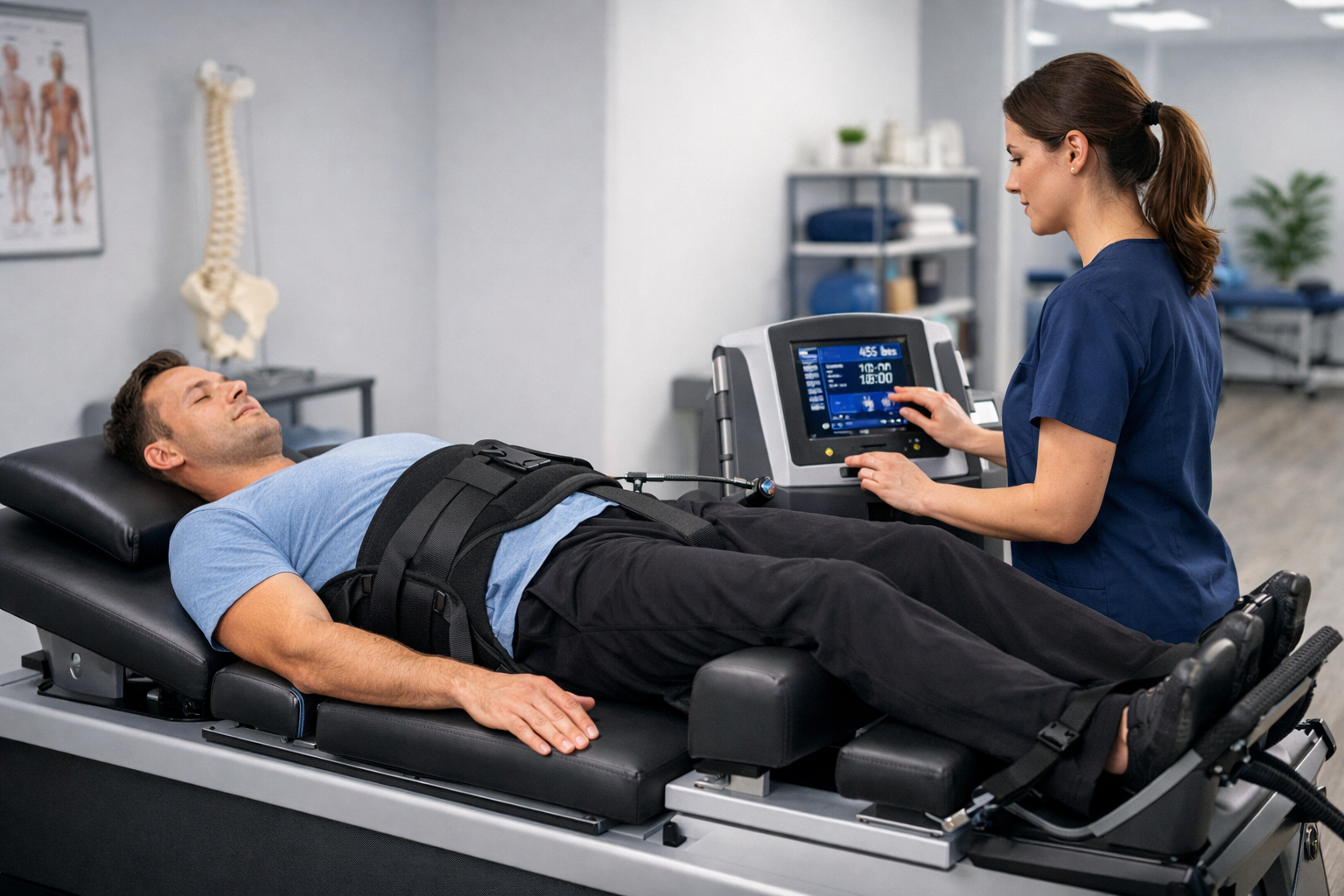
Dry Needling for Persistent Trigger Points
For patients whose sciatica is driven or perpetuated by myofascial trigger points in the piriformis, gluteal, or paraspinal muscles, dry needling offers a targeted way to release that deep tension. Thin filiform needles are inserted into the trigger point to elicit a local twitch response, releasing chronic muscle holding patterns that stretching and manual therapy alone cannot fully resolve.
This technique is particularly useful for Emerson’s older patients whose piriformis syndrome may have a long history of subthreshold irritation before presenting as acute sciatica.
Ergonomics and Lifestyle Modification
For Emerson’s work-from-home population, ergonomic guidance is not supplementary — it is often the single highest-yield intervention for preventing recurrence. Your therapist will review your home workstation setup, sitting posture, transition movements (standing from a chair, getting in and out of a car), and daily activity patterns to identify the specific behaviors that are sustaining your lumbar stress. Small, targeted changes to your home office environment can produce significant reductions in disc pressure throughout the day.
Your home exercise program — a practical, sustainable routine of 15 to 20 minutes — will give you the tools to maintain your recovery and protect your spine independently.
Why Choose Trinity Rehab for Emerson Sciatica Care
Bergen County residents deserve physical therapy that takes their individual lives seriously. At Trinity Rehab:
- One physical therapist, one patient, every session. Your PT is engaged and present throughout — not circulating between multiple patients.
- No physician referral required. New Jersey’s Direct Access Law means you can call today and start tomorrow.
- We work with most major insurance plans, including those common among Bergen County commuter-professionals and homeowners.
- Early and evening appointment slots accommodate commuter schedules on the Pascack Valley Line and school-year family routines.
- Treatment is personalized to Emerson’s particular lifestyle — the commute, the homeownership demands, the family sports culture.
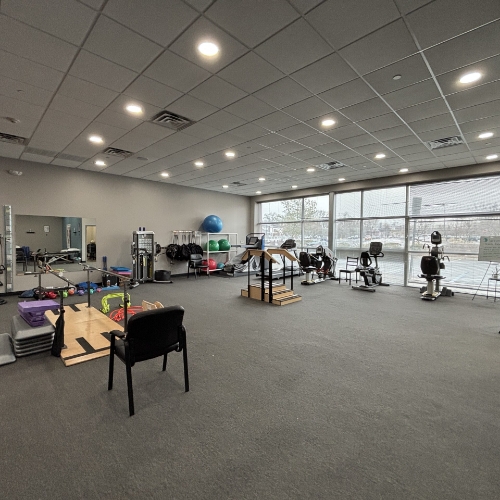
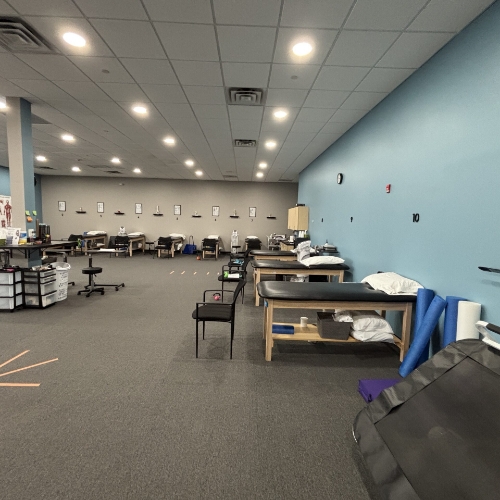
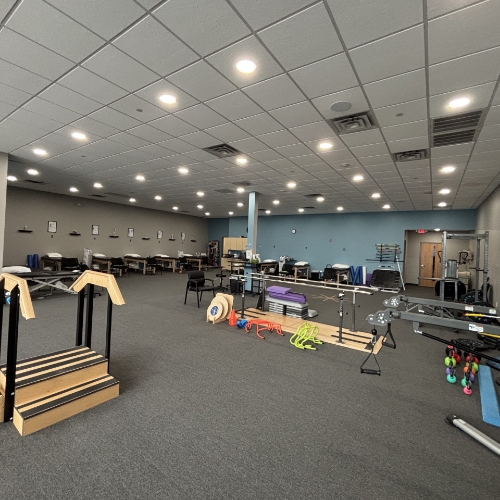
Inside Our Emerson Clinic
Related Conditions & Treatments
Sciatica is just one of the many conditions we treat at Trinity Rehab Emerson. Explore our full range of conditions we treat or learn more about specific treatment approaches:
- Sciatica Treatment Overview
- Back Pain Treatment
- Hip & Knee Pain Relief
- Manual Therapy
- Dry Needling
- EPAT / Shockwave Therapy
Emerson Sciatica Rehab For Leg Pain, Sitting Pain, And Walking Tolerance
Sciatica-like symptoms can make sitting, driving, bending, sleeping, and walking difficult. Emerson patients need a plan that separates nerve-related leg pain from back, hip, or muscle-driven symptoms.
Your therapist may assess symptom behavior, lumbar mobility, nerve tension, hip strength, walking tolerance, and positions that calm or worsen symptoms. Progressive weakness, numbness, or bowel/bladder changes should be medically reviewed urgently.
Related spine options include back pain physical therapy, lumbar disc herniation rehab, and the Emerson physical therapy clinic page.
Frequently Asked Questions
Emerson Sciatica Rehab For Leg Pain, Sitting Pain, And Walking Tolerance
Sciatica-like symptoms can make sitting, driving, bending, sleeping, and walking difficult. Emerson patients need a plan that separates nerve-related leg pain from back, hip, or muscle-driven symptoms.
Your therapist may assess symptom behavior, lumbar mobility, nerve tension, hip strength, walking tolerance, and positions that calm or worsen symptoms. Progressive weakness, numbness, or bowel/bladder changes should be medically reviewed urgently.
Related spine options include back pain physical therapy, lumbar disc herniation rehab, and the Emerson physical therapy clinic page.
Where can I find sciatica treatment in Emerson, NJ?
Does Trinity Rehab accept insurance plans common in Bergen County?
Is sciatica different in older adults compared to younger patients?
My sciatica improves when I lean forward or sit. What does that mean?
Can I manage sciatica with stretching alone?
Emerson’s woodland walks, baseball diamonds, and commuter platforms should not be places you dread. Sciatica is treatable, and recovery brings you back to full function.
Request your appointment at Trinity Rehab serving Emerson — no referral needed. Your licensed physical therapist will identify the source of your sciatic pain and design a program built for Bergen County’s family town.