

TENNIS ELBOW TREATMENT IN WARREN, NJ | TRINITY REHAB
Warren Township sits at the intersection of executive ambition and athletic pursuit. Along the I-78 corridor, thousands of professionals report each morning to Chubb Insurance’s global headquarters, Mindtree’s technology offices, and the engineering firms that line the Watchung Mountains foothills. By evening, many of those same professionals are gripping a racquet at Warren Health & Racquet Club, teeing off at Warrenbrook Golf Course before the light fades, or squeezing in a pickleball doubles match at Greenwood Meadows Park.
This transition — eight hours of keyboard and mouse work followed by high-grip-demand recreation — is precisely the pattern that produces lateral epicondylitis, the clinical term for tennis elbow. At Trinity Rehab Warren, we treat this condition frequently, and the demographics of this affluent, active township explain why.
Tennis elbow develops wherever repetitive wrist extension, forearm rotation, and sustained grip converge. In Warren, that convergence happens daily — in corner offices, on manufacturing floors, and across every tennis court in the township.

What Is Tennis Elbow?
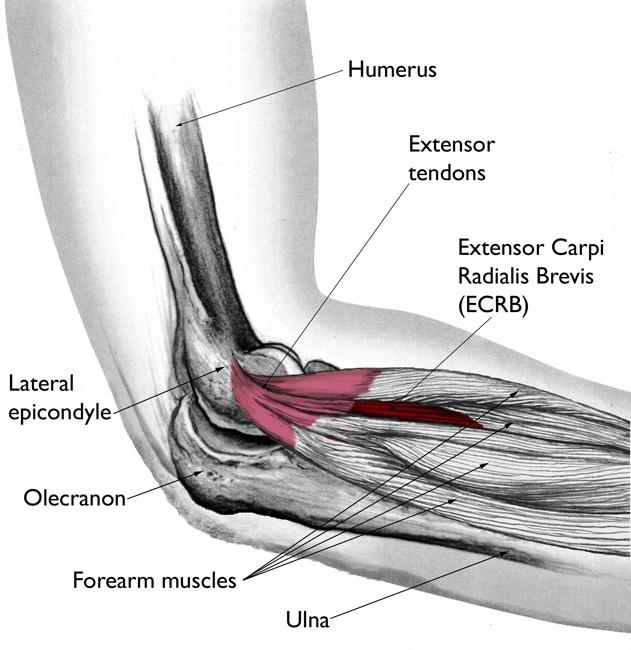
Lateral epicondylitis — tennis elbow — is a degenerative overuse condition affecting the tendons that attach to the lateral epicondyle, the bony prominence on the outside of the elbow. When repetitive movements exceed the tendon’s capacity to recover, the collagen structure begins to break down.
Despite its name, tennis elbow is not primarily an inflammatory condition. Current research classifies it as a tendinopathy — a failed healing response within the tendon. While early-stage lateral elbow pain may involve some inflammation, the persistent elbow pain that brings most patients to physical therapy reflects structural tendon disorganization.
Common symptoms include:
- Pain on the outer side of the elbow that worsens with gripping, lifting, or twisting
- Weak grip strength when shaking hands, turning doorknobs, or holding a coffee mug
- Pain radiating into the forearm and wrist during wrist extension
- Stiffness in the lateral elbow after prolonged keyboard or mouse use
- Tenderness directly over the lateral epicondyle
Left unmanaged, tennis elbow can persist for twelve to eighteen months. Early intervention from a qualified physical therapist significantly improves recovery timelines and reduces the likelihood of recurrence.
Who Is at Risk in Warren?
Warren’s unique economic and recreational profile produces several distinct patient populations. At Trinity Rehab Warren, we see patterns that reflect this community’s character.
The Corporate Athlete. Consider the Chubb Insurance executive who spends the workday toggling between spreadsheets and conference calls — wrist extended over a mouse, forearm muscles in sustained contraction for hours. After work, that same executive heads to Warren Health & Racquet Club for competitive doubles. The cumulative load — occupational strain layered with sport-specific demand — tips the balance toward tendinopathy. This pattern is equally common among IT professionals at Mindtree and Lightspeed, where keyboard-intensive work is the baseline.
The Skilled Trades Worker. At Picut Manufacturing and the engineering firms along Route 22, repetitive assembly tasks and manual handling place sustained demands on the forearm muscles. A machinist performing repetitive motions with pneumatic tools develops the same tendon overload that affects a tennis player — without ever stepping on a court. Pharma and biotech workers at Aquestive Therapeutics face similar exposure through pipetting and lab bench work.
The High School Athlete. Watchung Hills Regional High School fields competitive tennis, baseball, softball, and golf programs. A Warriors tennis player mid-season, hitting hundreds of forehands and backhands weekly while tendons are still maturing, is vulnerable to lateral elbow tendinopathy. The same applies to baseball and softball players whose throwing mechanics create repetitive stress on the lateral elbow. Early identification and load management are critical for these younger athletes.
The Weekend Warrior. Warren’s recreational infrastructure — Warrenbrook Golf Course, disc golf at Greenwood Meadows Park, tennis courts at the Warren Municipal Complex, and trails through East County Park — supports a community that plays sports year-round. Golfers who grip too tightly, disc golfers generating rapid forearm pronation and supination, and pickleball players adjusting to a shorter paddle all present with lateral elbow pain. Indoor tennis and pickleball leagues at Warren Health & Racquet Club extend the risk through winter, eliminating the off-season rest that tendons once relied upon.
How We Treat Tennis Elbow at Trinity Rehab Warren
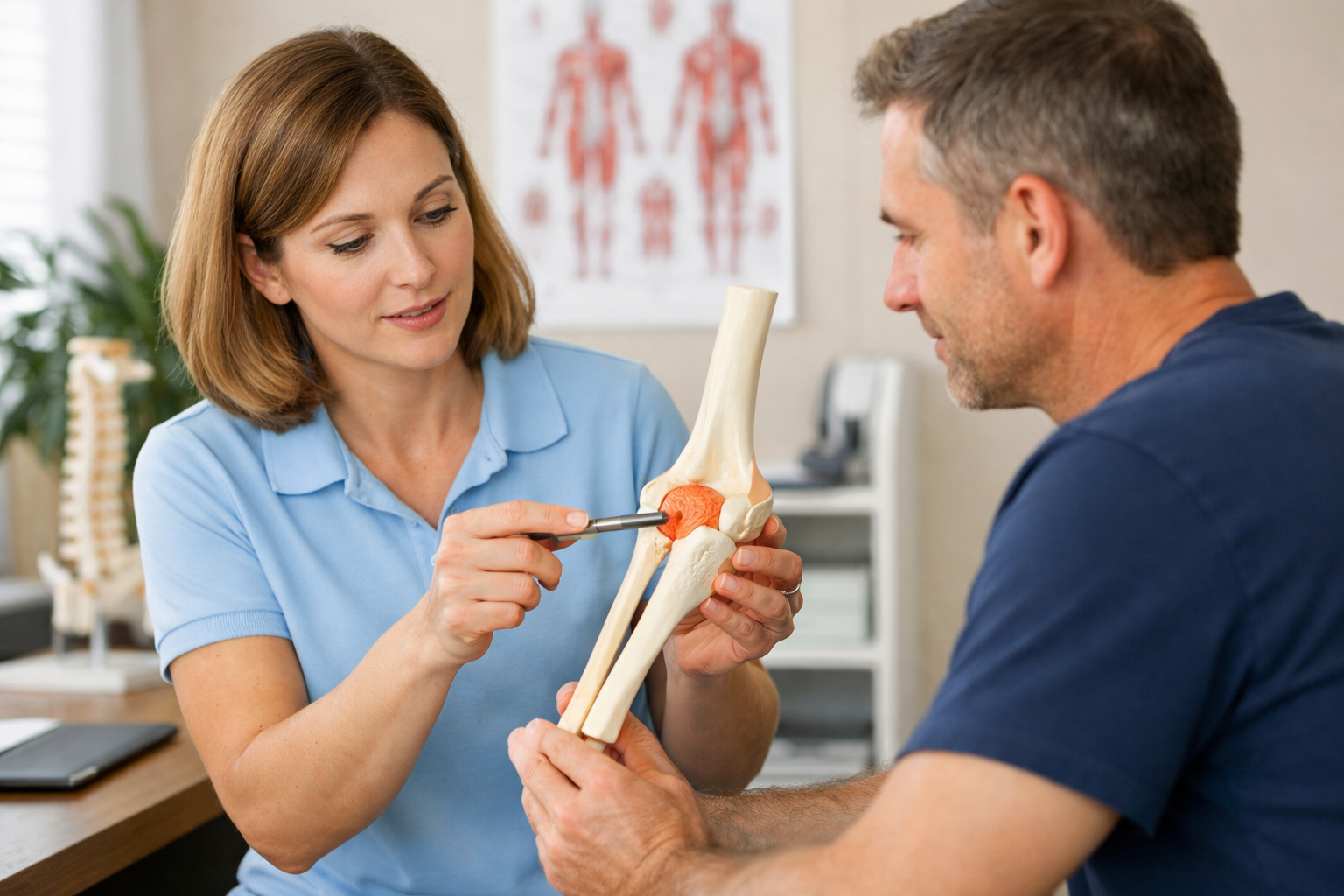
Effective tennis elbow management requires more than rest and a counterforce strap. At Trinity Rehab Warren, our physical therapists build individualized programs based on the stage of your tendinopathy, your functional demands, and your long-term goals.
Manual Therapy
Hands-on treatment targets soft tissue restrictions and joint mobility limitations contributing to lateral elbow pain. Our therapists apply targeted techniques to the forearm extensor muscles, the lateral elbow, and surrounding joints to reduce pain and restore movement. Manual therapy also addresses compensatory patterns in the wrist, shoulder, and thoracic spine that develop when patients guard an injured elbow.

Progressive Loading and Eccentric Exercise
The foundation of tendinopathy rehabilitation is progressive mechanical loading. Tendons recover by being loaded appropriately — not rested indefinitely. Our programs emphasize eccentric exercise, in which the tendon lengthens under controlled resistance, stimulating collagen remodeling and restoring tendon tolerance.
A typical home exercise progression includes:
- Wrist extension with eccentric lowering. Starting position: forearm on a table, palm facing down, holding a light weight. Slowly lower the wrist over the edge, resisting gravity. Exercise slowly — three seconds down, return to the top with the opposite hand.
- Grip strengthening. Using a tennis ball or therapeutic putty, perform sustained squeezes to rebuild grip strength without overloading the tendon.
- Towel twists. Hold a rolled towel with both hands, shoulders relaxed, and wring in opposite directions. This targets forearm pronation and supination across the entire forearm.
- Forearm pronation and supination. Elbow bent at 90 degrees, light weight held vertically — slowly rotate the arm outward and inward. No additional equipment needed beyond a household item with offset weight.
These exercises are dosed to match your tendon’s current capacity and progressed systematically as tolerance improves. Your therapist will also incorporate targeted stretch techniques for the wrist extensors and forearm to complement the strengthening program.
Advanced Modalities
For chronic tendinopathy that has not responded to conventional approaches, Trinity Rehab Warren offers advanced interventions:
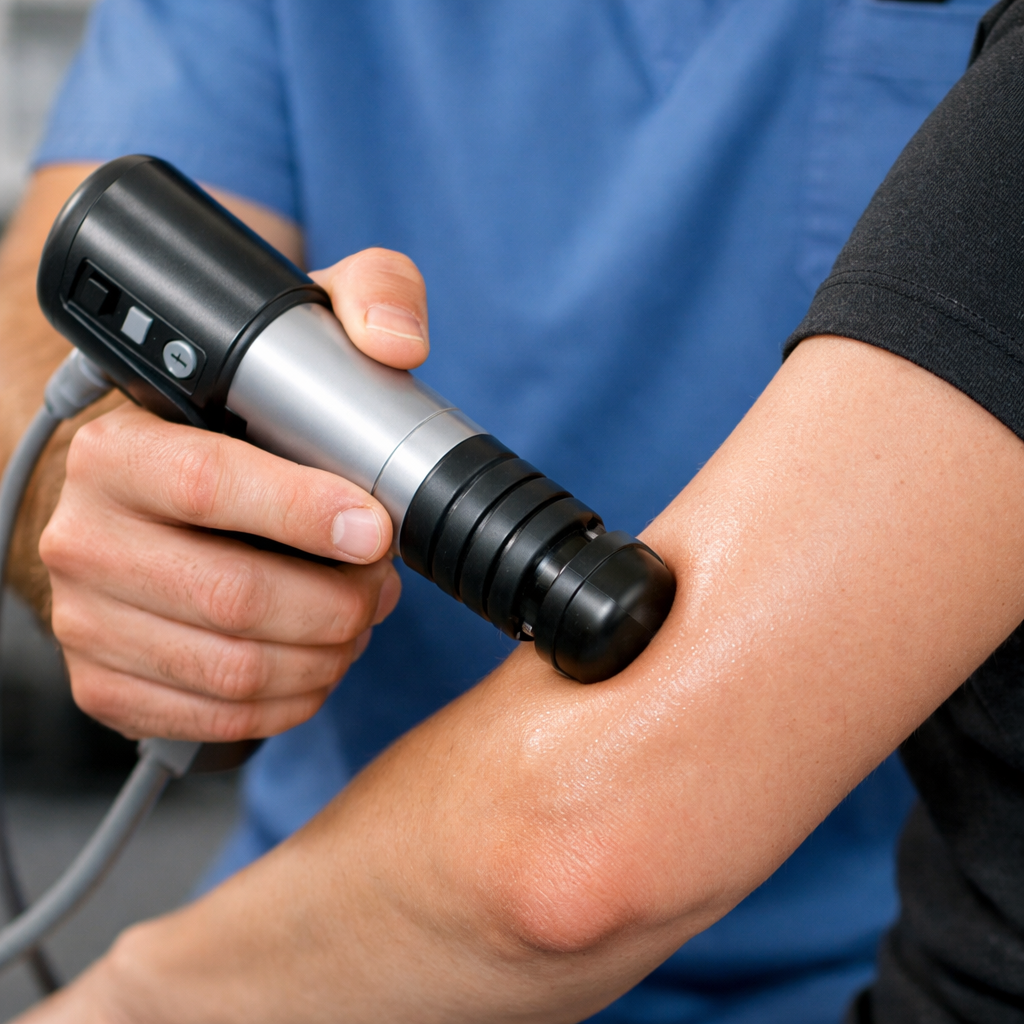
- Extracorporeal Pulse Activation Technology (EPAT). Shockwave-based therapy delivers acoustic pressure waves to the affected tendon, stimulating cellular repair and neovascularization. Research supports EPAT for lateral epicondylitis that has plateaued with exercise alone.
- Dry Needling. Targeting myofascial trigger points in the extensor muscles, dry needling can reduce pain, improve blood flow, and facilitate the muscle relaxation needed for effective strengthening.
Activity Modification and Load Management
Recovery does not require abandoning work or sport — it requires intelligent management of daily tendon load. We work with each patient to modify workplace ergonomics, adjust racquet grip size or string tension, correct golf grip pressure, and implement a counterforce strap when appropriate. For Watchung Hills athletes, we coordinate with coaches on practice volume to maintain competitive participation while respecting healing timelines.
Why This Approach Outperforms Shortcuts
Many patients arrive after trying corticosteroid injections or extended rest — approaches that may offer short-term pain relief but fail to address underlying tendon pathology. Corticosteroid injections produce worse long-term outcomes compared to structured physical therapy, and surgery is rarely necessary. Progressive rehabilitation produces better outcomes by restoring the tendon’s mechanical properties rather than masking symptoms.
Why Choose Trinity Rehab Warren?
One-on-One Care. Every session is conducted one-on-one with a licensed physical therapist — no aides, no unsupervised machine circuits. This model ensures precise exercise prescription, real-time technique correction, and the clinical attention that tendinopathies require.
Direct Access in New Jersey. Under Direct Access, you can schedule an evaluation at Trinity Rehab Warren immediately — no physician referral needed, no delays. Early intervention leads to faster recovery and better outcomes.
Advanced Technology. From EPAT shockwave therapy to dry needling, our Warren clinic provides evidence-based interventions under one roof.
Convenient for the Region. Serving Warren Township and surrounding Watchung, Green Brook, Bridgewater, and greater Somerset County, Trinity Rehab Warren is accessible from I-78, Route 22, and Route 287. Whether you are commuting from a corporate campus or picking up a student athlete from Watchung Hills, our clinic fits the demanding schedules that define this community.
Sports Med Expertise. Our physical therapists understand the biomechanical demands of tennis, golf, pickleball, and baseball — and the occupational movements that mirror them. We treat the specific way your work and recreation load your tendon, and we build a recovery plan that returns you to both.
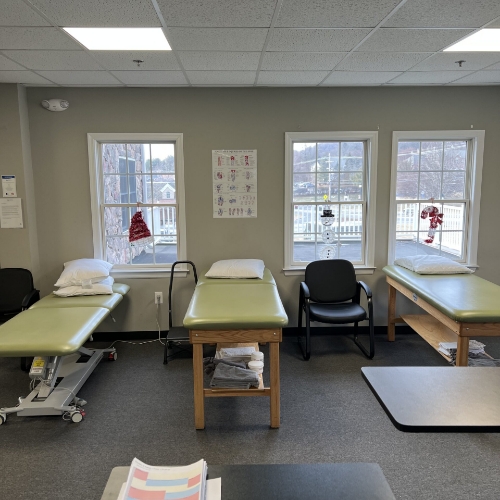
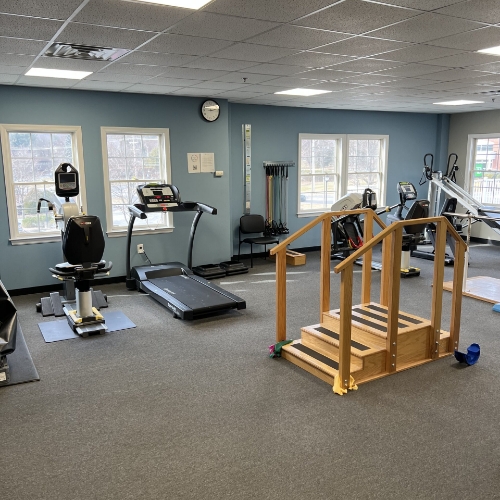
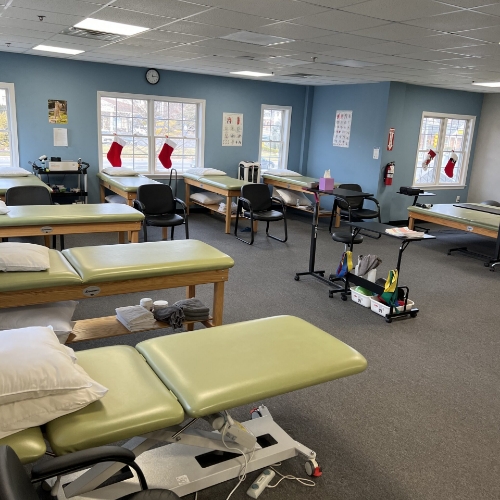
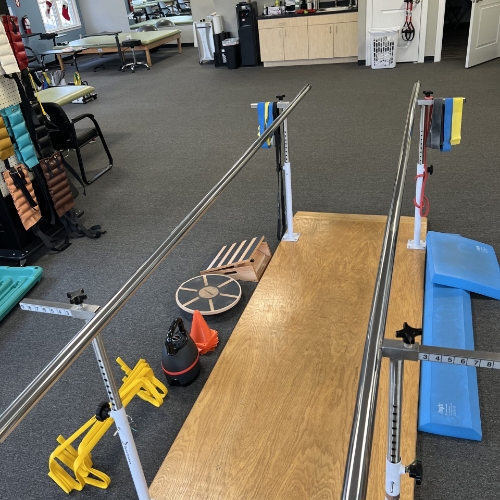
Inside Our Warren Clinic
Related Conditions & Treatments
Tennis elbow is just one of the many conditions we treat at Trinity Rehab Warren. Explore our full range of conditions we treat or learn more about specific treatment approaches:
- Tennis Elbow Treatment Overview — Our comprehensive guide to lateral epicondylitis recovery
- Elbow, Wrist & Hand Pain Relief — Other upper extremity conditions we specialize in
- Shoulder Pain Relief — Treatment for rotator cuff, frozen shoulder, and more
- Manual Therapy — Hands-on techniques to restore joint mobility and reduce pain
- Dry Needling — Trigger point therapy for deep muscle tension and pain relief
Related Elbow Care At This Location
Elbow pain can come from different tendon and loading patterns around the joint. A related same-location page is:
Frequently Asked Questions
How long does it take to recover from tennis elbow with physical therapy?
Can I continue playing tennis or golf during treatment?
Do I need an X-ray or MRI before starting physical therapy?
Is tennis elbow common among office workers in Warren who do not play sports?
Can I visit Trinity Rehab Warren without a doctor’s referral?
Tennis elbow does not resolve through rest alone, and delaying treatment extends both the pain and the time away from the activities that define your life in Warren. Whether your symptoms started at a desk, on a court, or on a production floor, Trinity Rehab Warren has the expertise to restore your function and reduce your pain.
Schedule your evaluation today. Contact Trinity Rehab Warren to begin your personalized tennis elbow treatment program. With Direct Access in New Jersey, no referral is needed — call or visit our website to book your first appointment.