

TENNIS ELBOW TREATMENT IN EAST BRUNSWICK, NJ | TRINITY REHAB
You know the routine. Five days at your desk at Wipro or Withum, grinding through spreadsheets and emails, forearms locked over a keyboard and mouse for eight-plus hours. Then Saturday morning rolls around, and you’re at the East Brunswick Racquet Club swinging a racket like you never left the court. Or maybe you head straight to Tamarack Golf Course, white-knuckling your driver through 18 holes after a week of barely moving your arms past your desk.
By Sunday night, that nagging ache on the outside of your elbow is back. You shake it off, pop some ibuprofen, and promise yourself you’ll stretch next time. But the pain keeps showing up — when you pour your morning coffee, turn a doorknob, or grip the steering wheel on your 38-minute commute into the city.
That pain has a name: tennis elbow. And if you live in East Brunswick, you’re far from alone. At Trinity Rehab East Brunswick, we treat tennis elbow every week — in tennis players, golfers, office workers, warehouse employees, and everyone in between. The good news? Physical therapy is the most effective path to lasting recovery, and you don’t even need a referral to get started.

What Is Tennis Elbow?
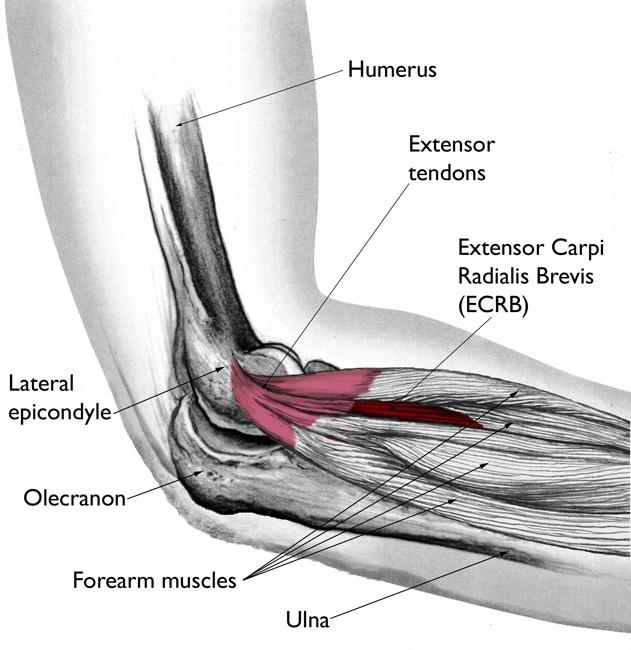
Tennis elbow — clinically known as lateral epicondylitis, lateral epicondylalgia, or lateral elbow tendinopathy — is an overuse condition affecting the tendons on the outside of your elbow. Despite the name, you don’t need to play tennis to develop it. The condition centers on the extensor carpi radialis brevis (ECRB), a forearm muscle that helps stabilize your wrist when your elbow is straight. When the ECRB tendon is subjected to repetitive movements over time, microscopic damage accumulates faster than the tissue can heal.
The result is a cycle of tendon breakdown and failed repair that produces persistent elbow pain, weakened grip strength, and difficulty with everyday tasks. Repetitive motions — gripping, twisting, lifting with a palm-facing-down position — are the primary culprits. Whether those repetitive tasks happen on a tennis court, a golf course, a warehouse floor, or an office desk, the mechanism is the same: the tendon is asked to do more than it can tolerate, and eventually it protests.
Who's at Risk in East Brunswick?
With about 51,000 residents, tech corridors, pharmaceutical operations, active sports clubs, and a family-oriented suburban lifestyle, East Brunswick creates the perfect conditions for tennis elbow. Here are patient scenarios our physical therapists at Trinity Rehab East Brunswick see regularly.
The IT Professional Who Plays on Weekends
Picture a software developer at Wipro Limited on Route 1. Eight hours a day, their right hand is glued to a mouse — clicking, scrolling, micro-gripping. The forearm muscles never fully relax. Come Saturday, they sign up for doubles at the East Brunswick Racquet Club, and those already-fatigued extensors absorb the shock of every backhand. Within weeks, the outside of the elbow starts burning. That’s lateral epicondylitis setting in.
The Pharmaceutical Worker with Repetitive Strain
Over at Strides Pharma, production and lab staff perform repetitive gripping, twisting, and lifting throughout their shifts. Opening packaging, operating equipment, pipetting samples — these repetitive movements place continuous stress on the wrist extensors and forearm muscles. Unlike a weekend tennis session, manufacturing work delivers slow, steady strain. Workers often don’t notice the problem until their grip strength has already declined.
The High School Golfer Chasing a Scholarship
East Brunswick High School’s Bears golfers regularly train at Tamarack Golf Course, hitting hundreds of balls a week during spring and summer clinics. Combine an imperfect grip with a developing body still building tendon tolerance, and you’ve got a recipe for lateral elbow pain. These young athletes need careful treatment that addresses the root cause — often poor load management and swing mechanics — rather than just chasing symptoms.
And Then There's Everyone Else
Tennis elbow doesn’t discriminate. UPS and FedEx warehouse workers near the Turnpike corridor deal with constant gripping and lifting. EB Pickleball Club members often develop symptoms within weeks of picking up a paddle. Weekend gardeners at Giamarese Farm & Orchards spend hours gripping tools. Even parents hauling groceries out of Brunswick Square Mall can aggravate the condition.
How Physical Therapy Treats Tennis Elbow at Trinity Rehab East Brunswick
If you’ve been told to “just rest it” or offered a quick corticosteroid injection, you’ve gotten incomplete advice. Research consistently shows that physical therapy produces better outcomes for long-term tennis elbow management. At Trinity Rehab East Brunswick, we use a phased, evidence-based approach to treat tennis elbow — getting you out of pain and back to the activities you care about.
Phase 1: Pain Relief and Load Management
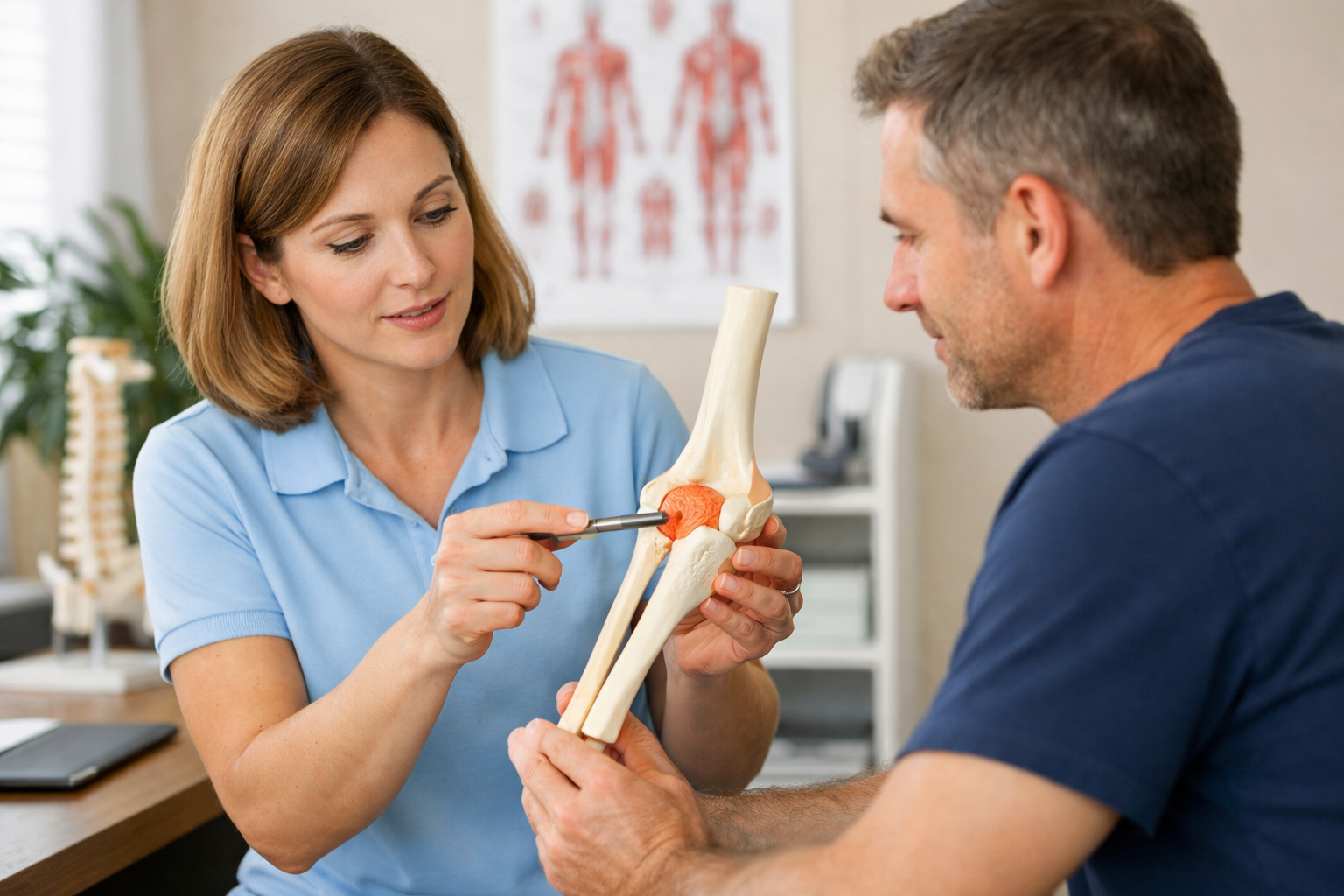
The first priority is to reduce pain and calm the irritated tendon. Your physical therapist will use manual therapy — soft tissue and joint mobilization targeting the elbow, wrist, and forearm — to reduce inflammation and restore movement. We’ll also fit you with a counterforce strap if appropriate, offloading stress from the damaged tendon during daily activities.
We’ll also discuss activity modifications: how to adjust your grip on a racket or club, set up your workstation ergonomically, and which movements to scale back. This isn’t about stopping your life — it’s about managing tendon load so healing can begin.

Phase 2: Progressive Strengthening and Eccentric Exercise
Once the acute pain settles, we introduce targeted exercises to rebuild the tendon’s capacity. Eccentric exercise — where the muscle lengthens under load — is the gold standard for tendon rehabilitation. You’ll work through wrist extension exercises, forearm pronation and supination drills, and towel twists to build resilience in the ECRB and surrounding muscles.
Every exercise starts from a controlled starting position with your shoulders relaxed and progresses gradually. We tell patients to exercise slowly and focus on form rather than speed. Grip strengthening exercises — like squeezing a tennis ball or using a hand dynamometer — help restore the functional grip strength you need for daily tasks and sport.
Phase 3: Return to Activity and Long-Term Resilience
As your tendon tolerance improves, your physical therapist will guide you through sport-specific and job-specific loading. For a tennis player, that means a gradual return to hitting. For a warehouse worker, it means simulating gripping and lifting under controlled conditions. The goal isn’t just to eliminate symptoms — it’s to build a tendon that handles everything your East Brunswick lifestyle throws at it, meeting your long-term goals for staying active.
Advanced Treatment Options
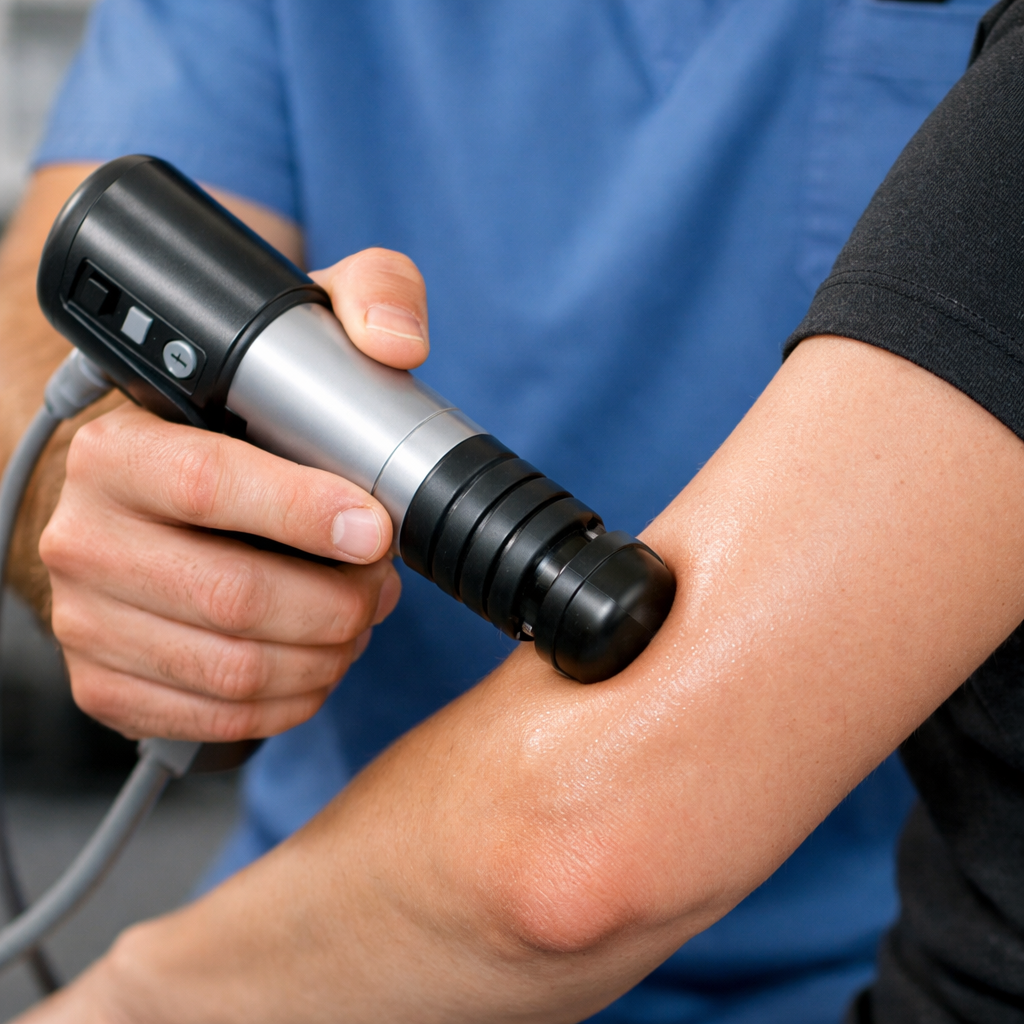
Trinity Rehab East Brunswick also offers advanced interventions for stubborn cases. EPAT (Extracorporeal Pulse Activation Technology) delivers acoustic pressure waves to the tendon, stimulating blood flow and accelerating tissue repair. Dry needling targets trigger points in the forearm and wrist extensors that contribute to pain and dysfunction. These therapies complement — rather than replace — the progressive exercise program that drives lasting recovery.
Why Choose Trinity Rehab East Brunswick?
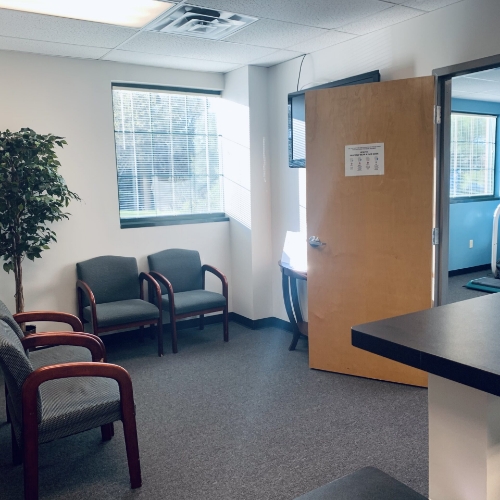
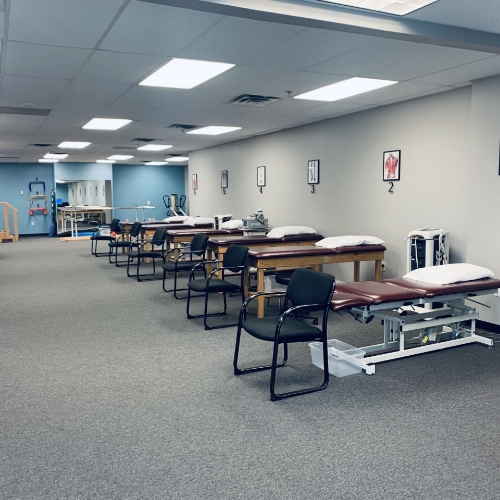
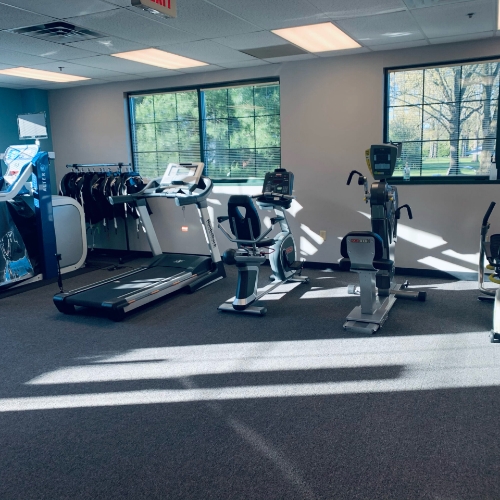
Inside Our East Brunswick Clinic
Related Conditions & Treatments
Tennis elbow is just one of the many conditions we treat at Trinity Rehab East Brunswick. Explore our full range of conditions we treat or learn more about specific treatment approaches:
- Tennis Elbow Treatment Overview — Our comprehensive guide to lateral epicondylitis recovery
- Elbow, Wrist & Hand Pain Relief — Other upper extremity conditions we specialize in
- Shoulder Pain Relief — Treatment for rotator cuff, frozen shoulder, and more
- Manual Therapy — Hands-on techniques to restore joint mobility and reduce pain
- Dry Needling — Trigger point therapy for deep muscle tension and pain relief
One-on-One Care, Every Visit
At Trinity Rehab East Brunswick, you work directly with your physical therapist for the full duration of every session. No rotating between aides, no unsupervised exercise circuits. Your therapist knows your history, tracks your progress, and adjusts your plan in real time.
Advanced Technology
Between EPAT, dry needling, and hands-on manual therapy, we offer a full spectrum of tools to accelerate your recovery. Not every clinic in Middlesex County has this technology — we invest in it because it works.
Direct Access — No Referral Needed
Under New Jersey law, you can see a physical therapist without a doctor’s referral. The moment your elbow starts bothering you, call Trinity Rehab East Brunswick and get on the schedule. Direct Access removes the biggest barrier to getting started.
Convenient East Brunswick Location
Our clinic is right along the Route 18 corridor, minutes from Brunswick Square Mall and accessible from anywhere in the Raritan Valley. Whether you’re coming from work, dropping kids at school, or heading home from Bicentennial Park, your appointment fits naturally into your day.
Sports Med Expertise
Our therapists understand the demands of racket sports, golf, pickleball, and physical labor. That sports med perspective means your treatment plan accounts for the specific movements and loads your body needs to handle — not generic stretch handouts.
East Brunswick Elbow Rehab For Gripping, Lifting, And Daily Use
Tennis elbow can make gripping, typing, lifting, gym training, and household tasks frustrating. A local plan should connect elbow pain to wrist strength, shoulder control, workload, and the specific activities that flare symptoms.
Your therapist may assess grip strength, wrist and elbow mobility, tendon sensitivity, shoulder contribution, work or sport demands, and whether symptoms suggest another condition that needs medical evaluation.
Related East Brunswick care may include shoulder impingement rehab, back pain physical therapy, and the East Brunswick clinic page.
Related Elbow Care At This Location
Elbow pain can come from different tendon and loading patterns around the joint. A related same-location page is:
Frequently Asked Questions
How long does it take to recover from tennis elbow with physical therapy?
Do I need surgery for tennis elbow?
What exercises can I do at home for tennis elbow?
Can I still play at EB Racquet Club during treatment?
Does Trinity Rehab East Brunswick accept my insurance?
If elbow pain is interfering with your work, your weekend tennis matches at EB Racquet Club, your rounds at Tamarack, or even just carrying groceries, don’t wait for it to resolve on its own — it rarely does. Trinity Rehab East Brunswick offers expert, one-on-one physical therapy to treat tennis elbow at its source and get you back to the life you enjoy.
Schedule your appointment at Trinity Rehab East Brunswick today. No referral needed. Call us or visit our website to book your first session and start your path to recovery.