

TENNIS ELBOW TREATMENT IN DOYLESTOWN, PA | TRINITY REHAB
Doylestown has always cultivated a certain duality. The borough that houses Fonthill Castle — Henry Mercer’s fantastical concrete mansion filled with handmade tiles — also maintains nine public tennis courts and six dedicated pickleball courts within its township parks. The community that sustains the Mercer Museum, the James A. Michener Art Museum, and the beloved County Theater also fields fiercely competitive Bux-Mont league teams through the Doylestown Tennis Club and runs pickleball tournaments that fill the Community Recreation Center courts on Saturday mornings. Doylestown is a place where residents appreciate a Michener exhibit in the afternoon and crush a topspin backhand before dinner. It is cultured and competitive in equal measure.
It is also, statistically, a community at peak risk for tennis elbow.
With a median age of 48.8 and an affluent, active population that skews heavily toward the 40-to-65 demographic, Doylestown sits squarely in the lateral epicondylitis danger zone. The morning match at the Doylestown Tennis Club gives way to an afternoon stroll through the galleries, which gives way to an evening spent wondering why the outside of the elbow will not stop aching. The grip that powered a serve at Central Park’s courts now struggles to turn a doorknob. The forearm that swung a golf club at Doylestown Country Club throbs while lifting a coffee mug at a Main Street cafe.
If this pattern sounds familiar, you are likely dealing with tennis elbow — and Trinity Rehab Doylestown specializes in treating it. Under Pennsylvania’s Direct Access law, you can begin physical therapy for up to 30 days without a physician referral, which means you do not have to wait for a doctor’s appointment to start your recovery.
What Is Tennis Elbow?
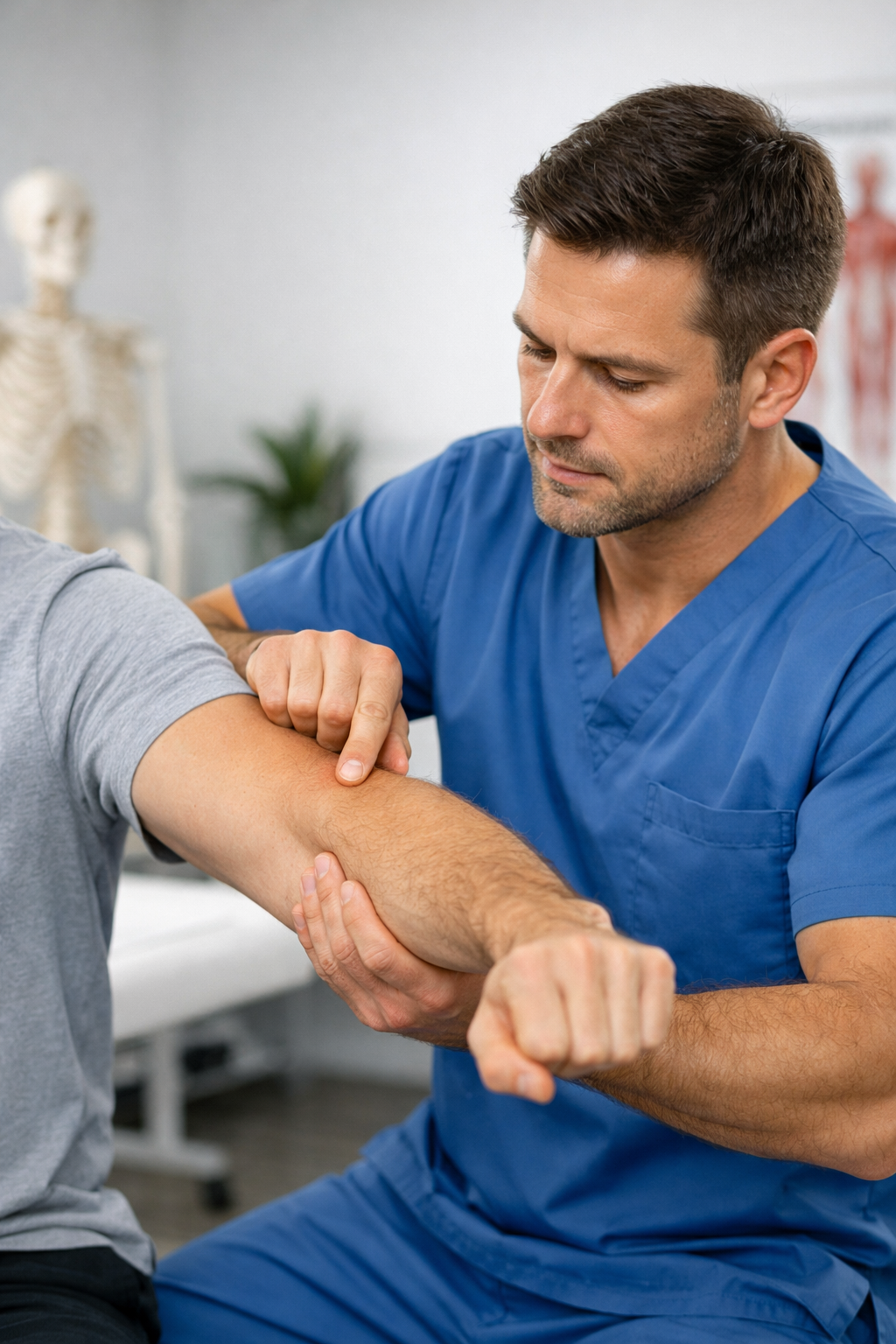
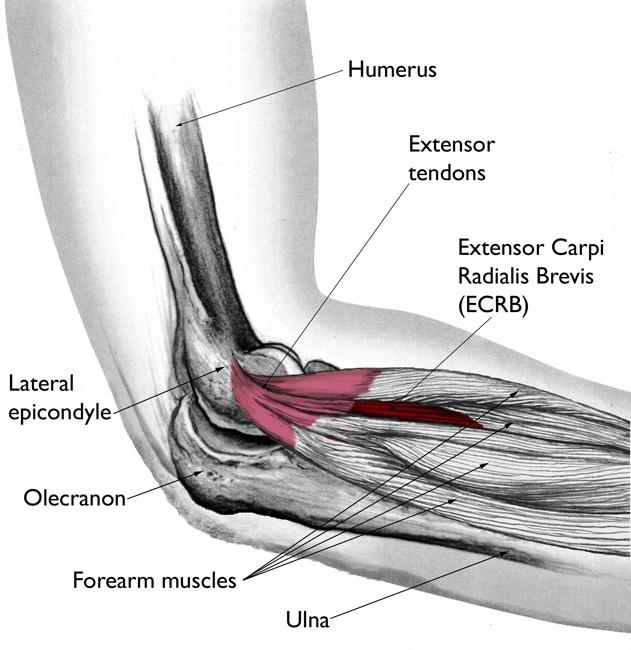
Tennis elbow — clinically referred to as lateral epicondylitis, lateral epicondylalgia, or lateral elbow tendinopathy — is a degenerative overuse condition affecting the tendons that attach to the lateral epicondyle, the bony prominence on the outside of your elbow. The primary structure involved is the extensor carpi radialis brevis (ECRB), a muscle and tendon unit responsible for stabilizing the wrist during gripping, lifting, and twisting motions. Every time you extend your wrist, grip an object, or rotate your forearm, the ECRB activates. When these repetitive movements exceed the tendon’s ability to recover, micro-damage accumulates faster than the body can repair it, resulting in pain, weakened grip strength, and progressive dysfunction.
Despite its name, tennis accounts for a small fraction of cases. Any repetitive motions or repetitive tasks that load the wrist extensors can trigger the condition — typing, using tools, lifting patients, swinging a racquet or club, gripping warehouse equipment, or carrying bags. In a community like Doylestown, where active residents layer recreational sports on top of demanding professional work, the ECRB tendon rarely gets the rest it needs.
Who Is at Risk in Doylestown?
Doylestown’s roughly 26,000 combined borough and township residents include a disproportionate share of people in the highest-risk age bracket for tennis elbow. The community’s blend of competitive racquet sports, healthcare employment, education, manufacturing, and vigorous outdoor recreation creates overlapping risk factors that our physical therapists at Trinity Rehab Doylestown encounter every week.
The Doylestown Tennis Club League Player
Richard is 54 and has played USTA leagues through the Doylestown Tennis Club for over a decade. He competes in the Bux-Mont adult league twice a week and adds open-play pickleball sessions at the Community Recreation Center on weekends. During the club’s summer tournament cycle, he played four competitive matches in five days — backhands, volleys, and overhead smashes on repeat. By midweek, the outside of his elbow burned during every stroke, and his grip strength had deteriorated so noticeably that he switched to a two-handed backhand out of desperation. At his desk the following Monday, even clicking a mouse sent pain radiating down his forearm. Richard represents the classic pattern we see in Doylestown’s older competitive athlete population: a tendon that has been quietly degrading for months, pushed past its threshold by a concentrated burst of tournament play.
The Doylestown Hospital Nurse
Susan is a 42-year-old registered nurse at Doylestown Hospital who works twelve-hour shifts on the medical-surgical floor. Her days are defined by repetitive tasks — repositioning patients, operating bed controls, pushing IV poles, charting on a computer, and gripping medical instruments. She first noticed lateral elbow pain when wringing out washcloths during patient care. Within weeks, the ache had migrated into her forearm muscles and she was wincing when lifting a water pitcher at home. Healthcare workers at Doylestown Hospital represent one of the most significant at-risk populations in this community, and the slow-burn onset means many do not seek treatment until the condition has become entrenched.
The CB West High School Tennis Player
Jake is a 16-year-old junior on the Central Bucks West boys tennis team who developed lateral elbow pain midway through his spring season. Eager to improve his ranking, he had added weekend hitting sessions at Central Park’s courts and was participating in an adult league at Heyday Athletic. The rapid spike in training volume overwhelmed his still-developing tendons. His forearm muscles began cramping during matches, and his serve velocity dropped. High school athletes at CB West — across tennis, baseball, softball, and golf — frequently push through pain during their competitive seasons. Jake’s parents brought him to Trinity Rehab Doylestown after his coach noticed him shaking out his arm between points.
Other At-Risk Groups in Doylestown
The risk extends well beyond the courts. Penn Color manufacturing workers who grip tools and handle materials through repetitive production tasks are vulnerable. Doylestown Country Club golfers absorb cumulative strain through hundreds of swings per round — every controlled grip and forceful wrist extension loads the same vulnerable tendon. Pickleball tournament players at the Community Recreation Center face the rapid wrist snaps and quick volleys that aggressively load the forearm extensors. Delaware Valley University grounds crew members spend hours gripping landscaping equipment. And Giant Food Stores warehouse and retail workers perform repetitive lifting and stocking motions that place relentless demand on the lateral elbow.
How Physical Therapy Treats Tennis Elbow at Trinity Rehab Doylestown
Physical therapy is the gold-standard treatment for tennis elbow, consistently delivering better outcomes than corticosteroid injections or a wait-and-see approach over the long term. At Trinity Rehab Doylestown, treatment follows a phase-based progression designed to reduce pain, rebuild tendon tolerance, and return you to full activity — whether that means competitive tennis, a hospital shift, or a pain-free walk through the grounds of Fonthill Castle.
Phase 1: Pain Reduction and Load Management
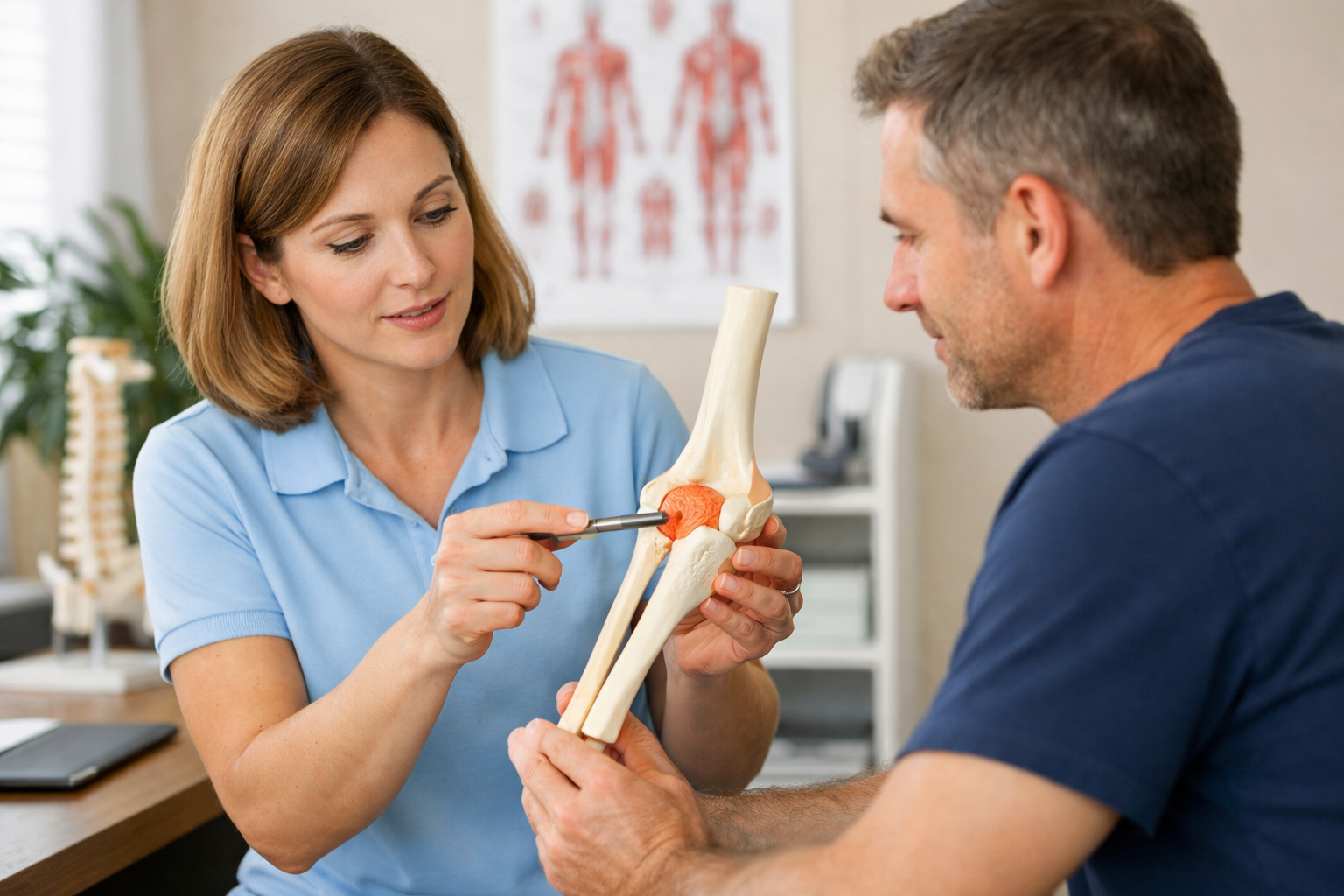
The first priority is to reduce inflammation and calm the irritated tendon. Your physical therapist will conduct a thorough evaluation of your pain levels, grip strength, range of motion, and the specific activities contributing to your symptoms. Manual therapy techniques — soft tissue mobilization and joint mobilization of the elbow, wrist, and forearm — are used to reduce pain and restore movement. Activity modifications begin immediately: we identify which daily tasks and movements aggravate your lateral elbow and teach you how to adjust your grip patterns and body mechanics to offload the damaged tendon. A counterforce strap may be recommended to redistribute force away from the ECRB. You will learn your starting position for therapeutic exercises, keeping your shoulders relaxed and wrist in a neutral alignment to avoid compensatory strain.

Phase 2: Eccentric Exercise and Tendon Rebuilding
Once acute pain subsides, the focus shifts to rebuilding the tendon’s capacity to handle load. Eccentric exercise — where the muscle lengthens under controlled tension — is the most evidence-supported method for stimulating tendon repair and remodeling. Your physical therapist will guide you through a carefully dosed program: wrist extension eccentrics, forearm pronation and supination drills, towel twists, and progressive grip strengthening exercises. The instruction is to exercise slowly, increasing resistance incrementally so the tendon adapts without flaring. We monitor tendon tolerance at every session, adjusting volume and intensity based on your response. Equipment needed is minimal — a light dumbbell, a resistance band, and a tennis ball for grip work.
Phase 3: Advanced Strengthening and Return to Activity
As tendon tolerance improves, treatment progresses to sport-specific and work-specific demands. For the Doylestown Tennis Club player, this means simulated backhand loading with the arm outward and a graduated return to racquet work. For the Country Club golfer, grip-intensive drills that replicate club control through the impact zone. For the Doylestown Hospital nurse, building endurance in repetitive gripping and lifting tasks with palm facing positions varied to develop comprehensive forearm strength. For the CB West athlete, a structured return-to-play schedule that respects the developing tendon.
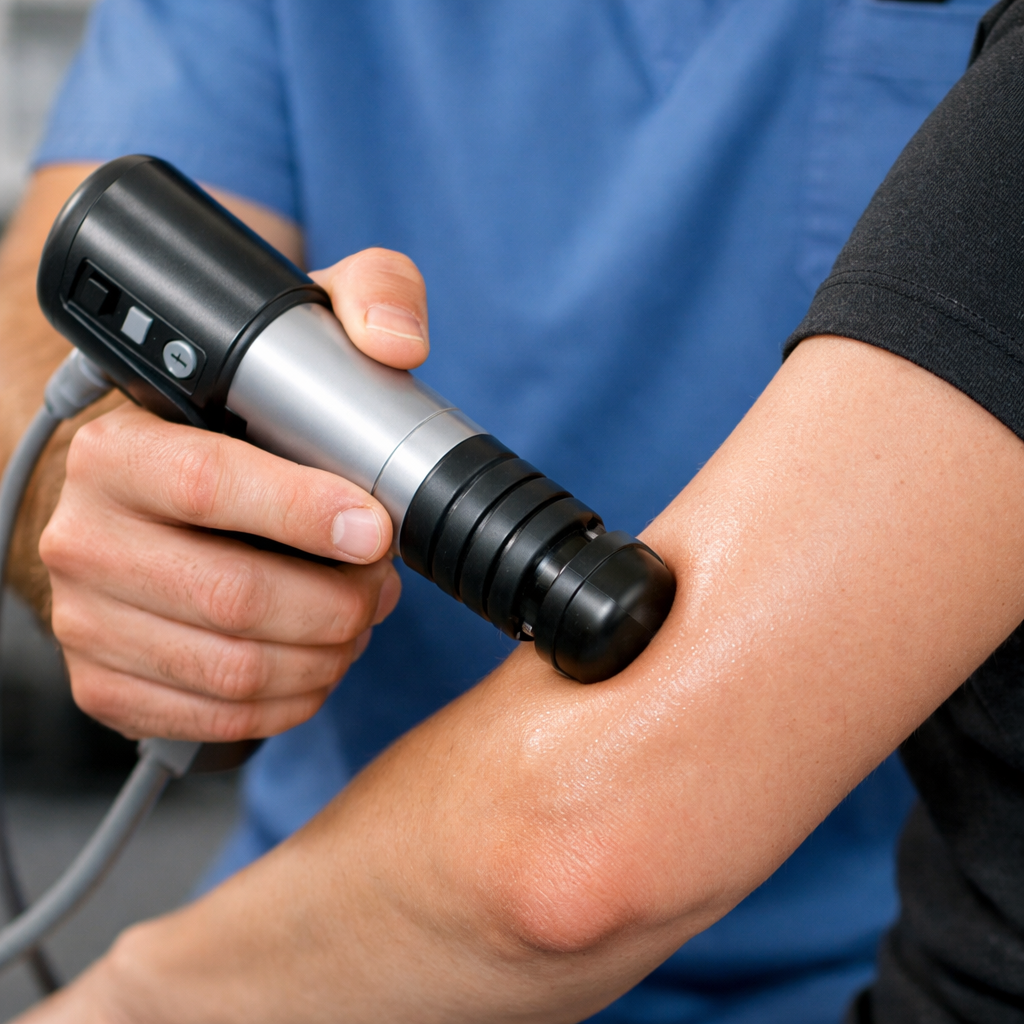
Trinity Rehab Doylestown also offers advanced modalities that accelerate recovery. EPAT shockwave therapy delivers acoustic pressure waves to the damaged tendon, stimulating blood flow, promoting cellular repair, and reducing inflammation in chronic cases of lateral elbow tendinopathy. Dry needling targets myofascial trigger points in the forearm muscles that contribute to persistent pain and restricted movement. These complement exercises and manual therapy — and for many patients, they help avoid surgery entirely.
Throughout your recovery, we keep your long term goals front and center — whether that means returning to USTA competition at the Doylestown Tennis Club, hiking Doylestown’s 30 miles of trails without elbow pain, or finishing a nursing shift at Doylestown Hospital with your grip strength intact.
Why Choose Trinity Rehab Doylestown?
One-on-one personalized care. Every session at Trinity Rehab is conducted directly with a licensed physical therapist — no aides, no unsupervised exercise circuits. This model allows your therapist to monitor movement quality, adjust your program in real time, and deliver the individualized attention that produces better outcomes for tennis elbow management.
Advanced technology. Our Doylestown clinic offers EPAT shockwave therapy, dry needling, and hands-on manual therapy — a comprehensive toolkit that most area clinics cannot match. For lateral elbow tendinopathy, this means addressing the condition from multiple angles rather than relying on strengthening alone.
Pennsylvania Direct Access — no referral required. Under Pennsylvania law, you can receive up to 30 days of physical therapy treatment without a physician referral. If your elbow hurts today, you can call Trinity Rehab Doylestown today and begin treatment this week — no waiting for a doctor’s appointment, no delays in starting your recovery.
Convenient for Bucks County residents. Trinity Rehab Doylestown serves patients from Doylestown Borough, Doylestown Township, and surrounding communities including New Britain, Chalfont, and Warrington. Flexible scheduling accommodates busy professionals, parents, and retirees alike.
Sports med expertise for Bucks County athletes. Our team treats the active Doylestown community daily — from Doylestown Tennis Club competitors and Country Club golfers to CB West high school athletes and Community Recreation Center pickleball players. We understand the specific demands that play sports like tennis, pickleball, golf, and baseball place on the lateral elbow, and we design rehab programs accordingly to help you return to the court, the course, or the field.
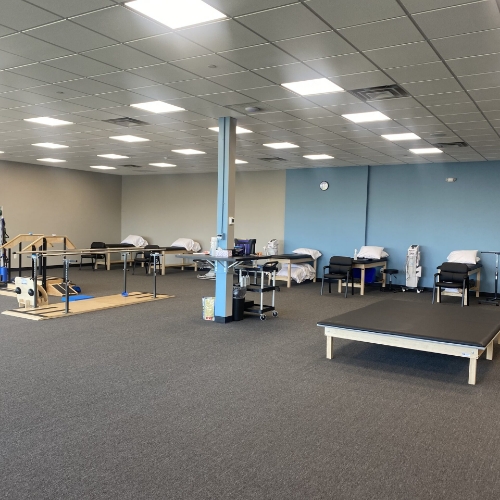
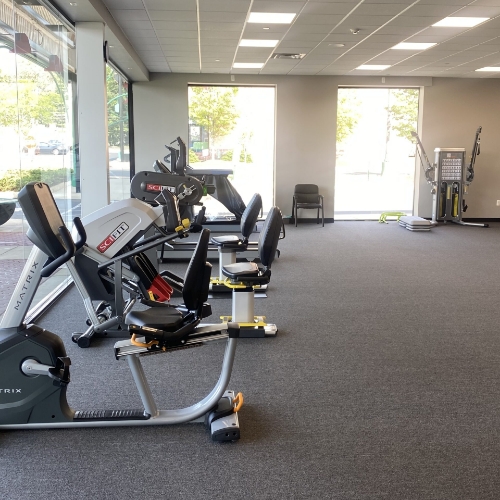
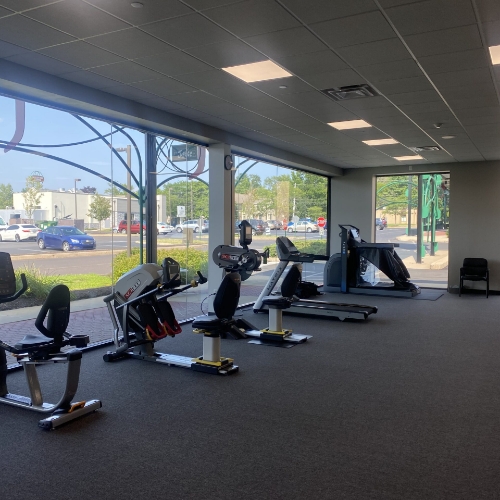
Inside Our Doylestown Clinic
Related Conditions & Treatments
Tennis elbow is just one of the many conditions we treat at Trinity Rehab Doylestown. Explore our full range of conditions we treat or learn more about specific treatment approaches:
- Tennis Elbow Treatment Overview — Our comprehensive guide to lateral epicondylitis recovery
- Elbow, Wrist & Hand Pain Relief — Other upper extremity conditions we specialize in
- Shoulder Pain Relief — Treatment for rotator cuff, frozen shoulder, and more
- Manual Therapy — Hands-on techniques to restore joint mobility and reduce pain
- Dry Needling — Trigger point therapy for deep muscle tension and pain relief
Related Elbow Care At This Location
Elbow pain can come from different tendon and loading patterns around the joint. A related same-location page is:
Frequently Asked Questions
How long does it take to recover from tennis elbow with physical therapy?
Can I continue playing tennis or pickleball during treatment?
Is surgery necessary for tennis elbow?
Do I need a referral for physical therapy in Pennsylvania?
Where is Trinity Rehab in Doylestown located?
Doylestown’s cultural richness and active character are what make this community exceptional — your elbow pain should not force you to give any of it up. Whether your symptoms started during a Bux-Mont league match at the Doylestown Tennis Club, a long shift at Doylestown Hospital, a round at the Country Club, or a high school season at CB West, Trinity Rehab Doylestown is here to help you recover. Schedule your appointment today — no physician referral needed under Pennsylvania Direct Access law. One-on-one care from your first visit to your last.