

TENNIS ELBOW TREATMENT IN CLARK, NJ | TRINITY REHAB
The Garden State Parkway cuts Clark in half. On one side, quiet residential streets where families settle for good schools and a reasonable commute. On the other, the warehouse and logistics corridor — UPS, FedEx, Amazon — where thousands of workers spend their shifts gripping scanners, hauling boxes, and loading trucks. When the shift ends, those same hands pick up golf clubs at Hyatt Hills, pickleball paddles at Esposito Park, or a cold drink on the back deck.
Clark is a township that works hard and plays hard. And all of it runs through the forearm.
That is why lateral epicondylitis — tennis elbow — is one of the most common conditions we treat at Trinity Rehab Clark. Despite the name, this is not just a tennis injury. It is a repetitive strain condition, and Clark’s mix of warehouse labor, manufacturing work, and weekend recreation creates the perfect setup for it. The tendons on the outside of your elbow take a beating from repetitive movements all day, and they do not care whether those movements happen on a conveyor belt or a pickleball court.
If you have persistent elbow pain, grip weakness, or forearm soreness that will not quit, physical therapy at Trinity Rehab Clark can get you back to full function — without surgery, without repeated corticosteroid injections, and without taking months off work.
What Is Tennis Elbow, and Why Is It So Common Here?
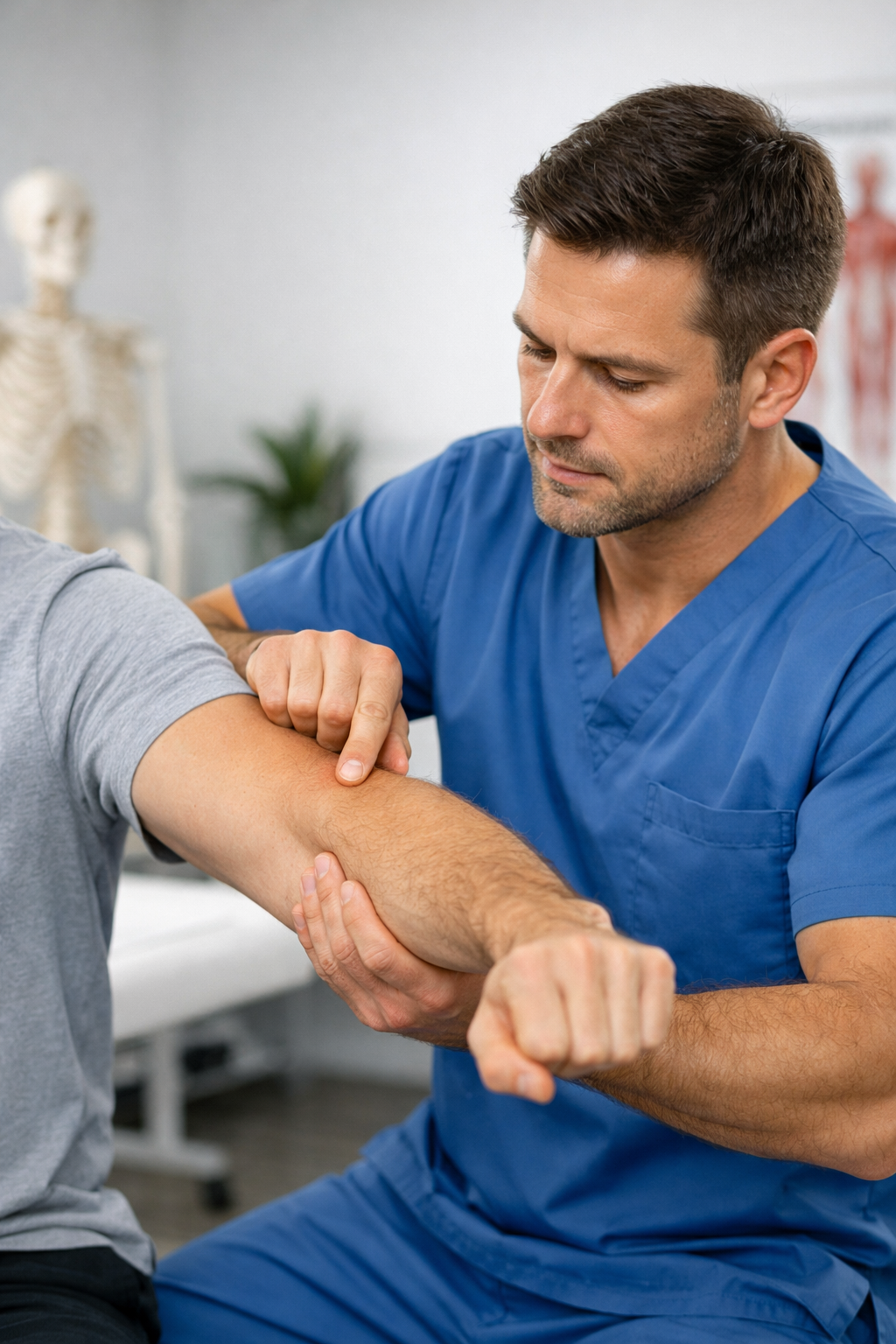
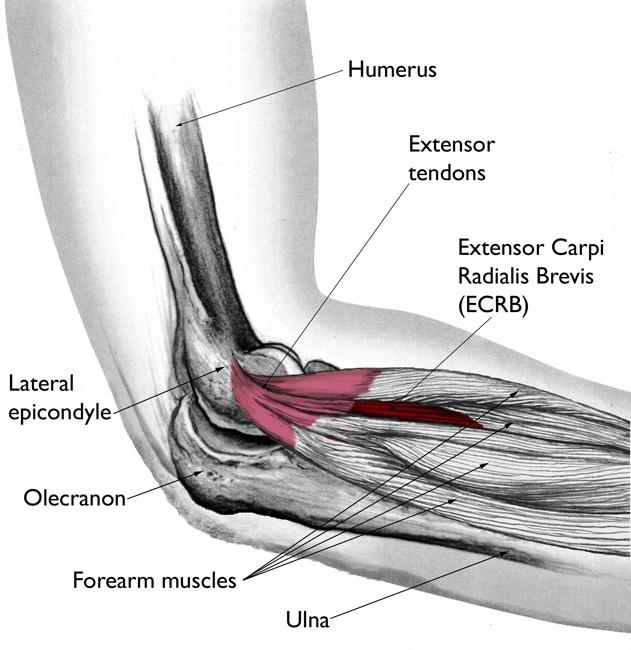
Tennis elbow is a degenerative condition of the tendons that attach to the lateral epicondyle, the bony bump on the outside of your elbow. These tendons connect to the muscles in your forearm that control wrist extension and grip. When those muscles are overloaded through repetitive tasks — gripping, twisting, lifting, pulling — the tendon fibers break down faster than the body can repair them.
The result: lateral elbow pain that flares with gripping, weakness when you try to hold a coffee mug or turn a doorknob, and a dull ache that radiates down the forearm. Some people feel sharp pain when they extend the wrist or pick up objects palm facing down. Symptoms often start mild and build over weeks until they interfere with work and daily life.
This is not inflammation in the traditional sense. The current understanding — lateral elbow tendinopathy — recognizes it as a failed healing response in the tendon. That matters because it changes how we treat tennis elbow. Approaches that only reduce inflammation will not fix a tendon that needs structured loading to heal.
Clark’s economy makes this condition practically inevitable for a portion of the workforce. Repetitive motions are built into the job descriptions of the township’s largest employers, and the active recreational culture adds volume to already stressed tissues.
Who's at Risk in Clark?
The Warehouse Worker
You work at one of the distribution centers along Clark’s logistics corridor — Amazon, UPS, FedEx. Your shift involves scanning packages, gripping box edges, lifting and stacking for hours. The repetitive grip-and-release cycle hammers the wrist extensor muscles. You start noticing lateral elbow pain a few months in. You shake it out, keep going. By the time you come to physical therapy, you have been dealing with it for weeks. You cannot afford to stop working, and you need a treatment plan that accounts for that reality.
The Pickleball Regular
You picked up pickleball last year at Esposito Park or Oak Ridge Park — Clark’s courts are busy from spring through fall. You play three or four times a week because the game is addictive and the community is great. But your paddle grip is too tight, your backhand technique loads the lateral elbow on every shot, and your forearm muscles are not conditioned for the volume. Now your elbow pain is keeping you off the court, and rest alone has not solved it.
The ALJ Crusaders Athlete
You are a baseball or softball player at Arthur L. Johnson High School. Throwing puts significant stress on the elbow, and a high school athlete ramping up for the spring season can develop lateral elbow pain from overuse — especially pitchers, catchers, and outfielders. The pain shows up during throwing and gets worse as the season progresses. You need to stay in the lineup, and your physical therapist needs to manage your training load while rebuilding tendon tolerance.
Also at Risk in Clark
Tennis elbow does not stop at these three scenarios. Wakefern Food Corp and Kerry manufacturing workers perform repetitive assembly tasks that stress the forearm. Retail workers at Target and Lowe’s lift, stock, and scan all day. CaroTrans logistics staff handle freight and physical cargo. Hyatt Hills golfers — especially those grinding at the driving range — load the lateral elbow with every swing. Even gardeners in Clark’s residential neighborhoods develop it from digging, pruning, and gripping tools season after season.
The common thread is repetitive tasks involving the hand, wrist, and forearm. If your daily routine demands sustained or repeated gripping, you are a candidate.
How We Treat Tennis Elbow at Trinity Rehab Clark
Effective tennis elbow management requires more than rest and a brace. At Trinity Rehab Clark, your physical therapist builds a treatment plan around your specific demands — whether that means returning to a warehouse floor, a pickleball court, or a high school baseball diamond.
Manual Therapy
Hands-on treatment targets the forearm muscles, wrist extensors, and surrounding soft tissue. Manual therapy reduces pain, restores movement, and prepares the tissue for loading. Techniques include soft tissue mobilization, joint mobilization, and myofascial release.

Eccentric Exercise and Progressive Loading
This is the backbone of tendon rehabilitation. Eccentric exercise — slowly lowering a weight with the wrist — stimulates the tendon to remodel and strengthen. The protocol starts light and progresses based on your tendon tolerance. You will perform exercises including:
- Wrist extension eccentrics: Hold a light weight with your forearm supported, palm facing down. Slowly lower the weight by bending the wrist. Exercise slowly and with control. Return to the starting position with the other hand. Repeat.
- Grip strengthening: Squeeze a tennis ball or therapy putty, progressing resistance as pain allows.
- Towel twists: Grip a rolled towel with both hands, shoulders relaxed, and wring it in opposite directions. This builds forearm pronation and supination strength.
- Forearm pronation/supination: Hold a hammer or weighted object and slowly rotate your arm outward and inward, building rotational control.
No special equipment needed for most of these exercises — you can stretch and strengthen at home between sessions.
Advanced Treatment Options
For cases that need more, Trinity Rehab Clark offers:
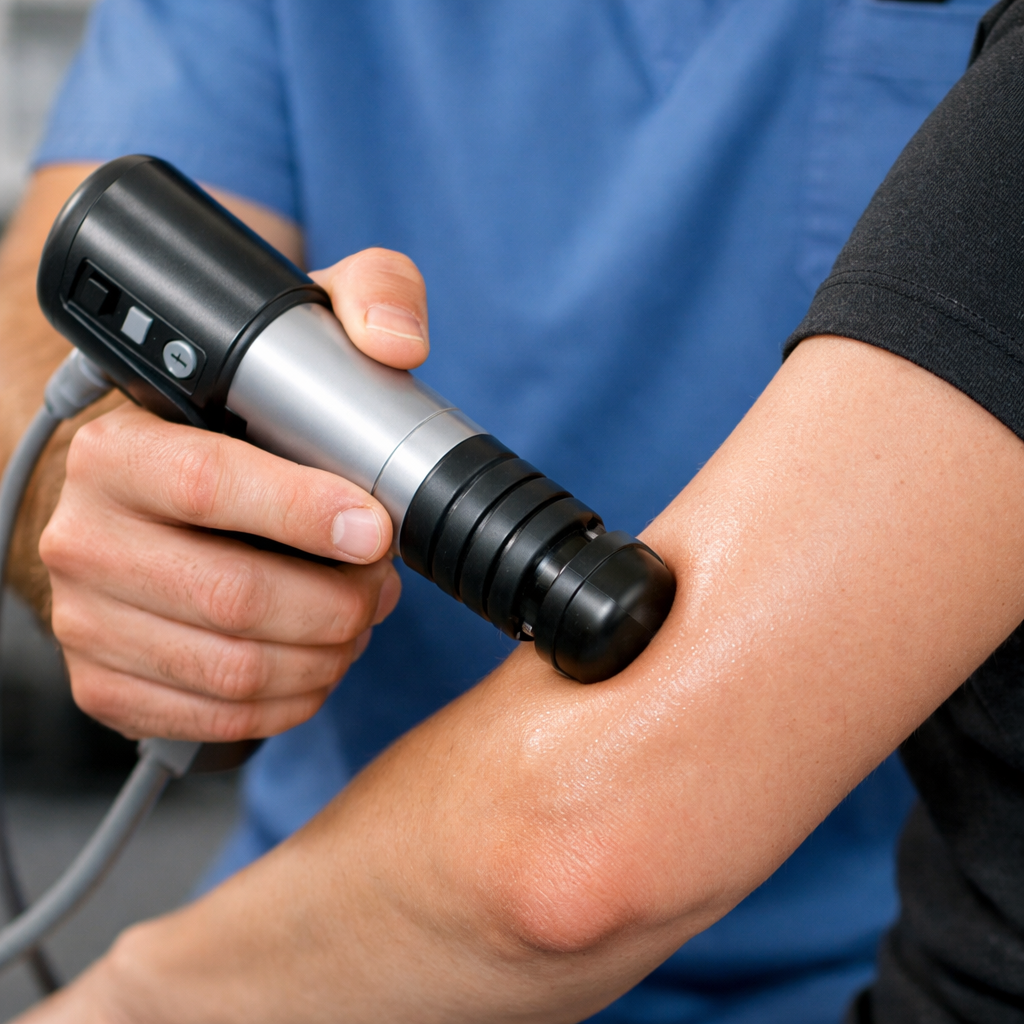
- EPAT (Extracorporeal Pulse Activation Technology): Shockwave therapy that stimulates blood flow and accelerates tendon healing. Effective for stubborn lateral elbow tendinopathy that has not responded to exercise alone.
- Dry needling: Targets trigger points in the forearm muscles to reduce pain and improve muscle function. Many patients notice significant pain relief within a few sessions.
Load Management and Activity Modifications
Your physical therapist will help you manage daily demands without derailing recovery. This might mean adjusting your grip technique for pickleball, modifying lifting mechanics at work, or using a counterforce strap to offload the tendon during activity. A warehouse worker gets different guidance than a golfer or a high school pitcher. We plan for your real life, not a textbook scenario.
Building Long Term Tendon Health
Recovery from tennis elbow is not just about eliminating pain. It is about building tendon tolerance so the condition does not come back. Your treatment plan includes progressive strengthening that prepares your forearm muscles and tendons for the specific loads they face. We set long term goals from day one and track your progress toward them.
Why Choose Trinity Rehab Clark?
One-on-one care, every visit. You work directly with your physical therapist — not a rotating cast of aides. Consistent treatment means accurate progress tracking and better outcomes.
Direct Access in New Jersey. You do not need a referral to start physical therapy in NJ. If your elbow hurts, call and schedule. Faster treatment means faster recovery.
Advanced technology. EPAT shockwave therapy and dry needling are available on-site for stubborn cases that need more than exercise alone.
Convenient location. Trinity Rehab Clark is easy to reach for residents of Clark, Rahway, Cranford, and Westfield — whether you are coming from a warehouse shift or a game at Rahway River Park.
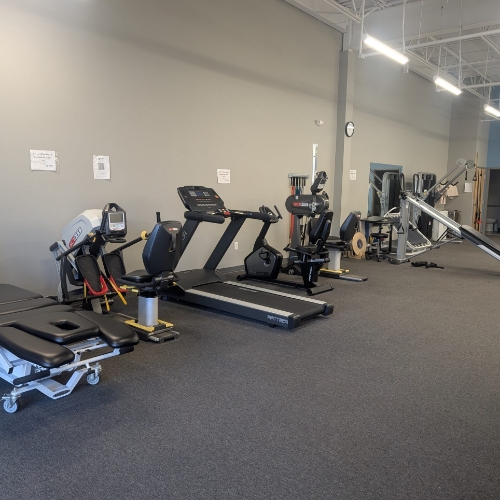
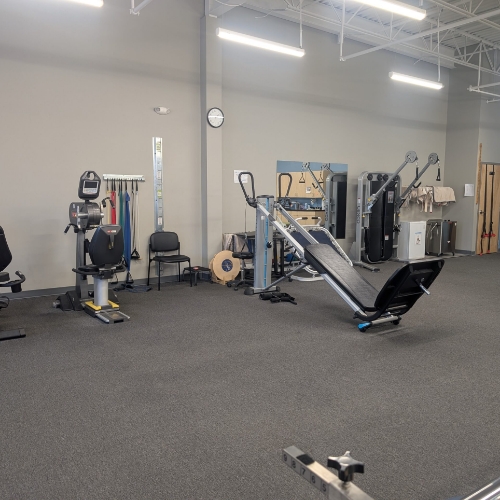
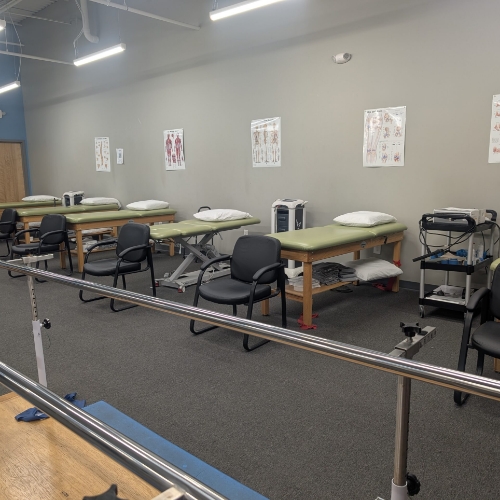
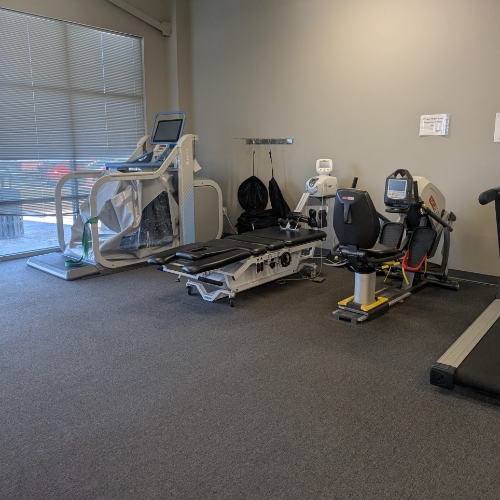
Inside Our Clark Clinic
Related Conditions & Treatments
Tennis elbow is just one of the many conditions we treat at Trinity Rehab Clark. Explore our full range of conditions we treat or learn more about specific treatment approaches:
- Tennis Elbow Treatment Overview — Our comprehensive guide to lateral epicondylitis recovery
- Elbow, Wrist & Hand Pain Relief — Other upper extremity conditions we specialize in
- Shoulder Pain Relief — Treatment for rotator cuff, frozen shoulder, and more
- Manual Therapy — Hands-on techniques to restore joint mobility and reduce pain
- Dry Needling — Trigger point therapy for deep muscle tension and pain relief
Related Elbow Care At This Location
Elbow pain can come from different tendon and loading patterns around the joint. A related same-location page is:
Frequently Asked Questions
How long does tennis elbow take to heal with physical therapy?
Can physical therapy help me avoid surgery for tennis elbow?
What is the difference between tennis elbow and golfer’s elbow?
I work in a warehouse — can I keep working during treatment?
Is pickleball really causing my elbow pain?
If elbow pain is interfering with your work, your game, or your daily routine, do not wait for it to get worse. Tennis elbow responds best to early, structured treatment. At Trinity Rehab Clark, your physical therapist will evaluate your condition and build a plan to get you back to full strength.
No referral needed. Call Trinity Rehab Clark today to schedule your evaluation.