

TENNIS ELBOW TREATMENT IN BRICK, NJ | TRINITY REHAB
Brick Township runs on grip. Whether you are launching a kayak into the Metedeconk River at dawn, white-knuckling a spinning reel as a bluefish tears line off the spool near Mantoloking Bridge, or hauling a wagon full of beach chairs down the sand path at Brick Beach, your forearm muscles rarely get a day off. This is a shore community where weekends revolve around Barnegat Bay, summer means SummerFest at Windward Beach Park, and even a Tuesday evening might involve nine holes at Forge Pond Golf Course or a competitive pickleball match at Superdome Sports Complex.
So when a sharp, burning ache settles on the outside of your elbow — the kind that flares when you grip a paddle, twist open a jar, or shake someone’s hand — it does more than hurt. It threatens the entire lifestyle that makes Brick worth living in.
That nagging pain has a name — and Trinity Rehab Brick knows how to treat tennis elbow so you can get back to the life you love.
What Is Tennis Elbow?
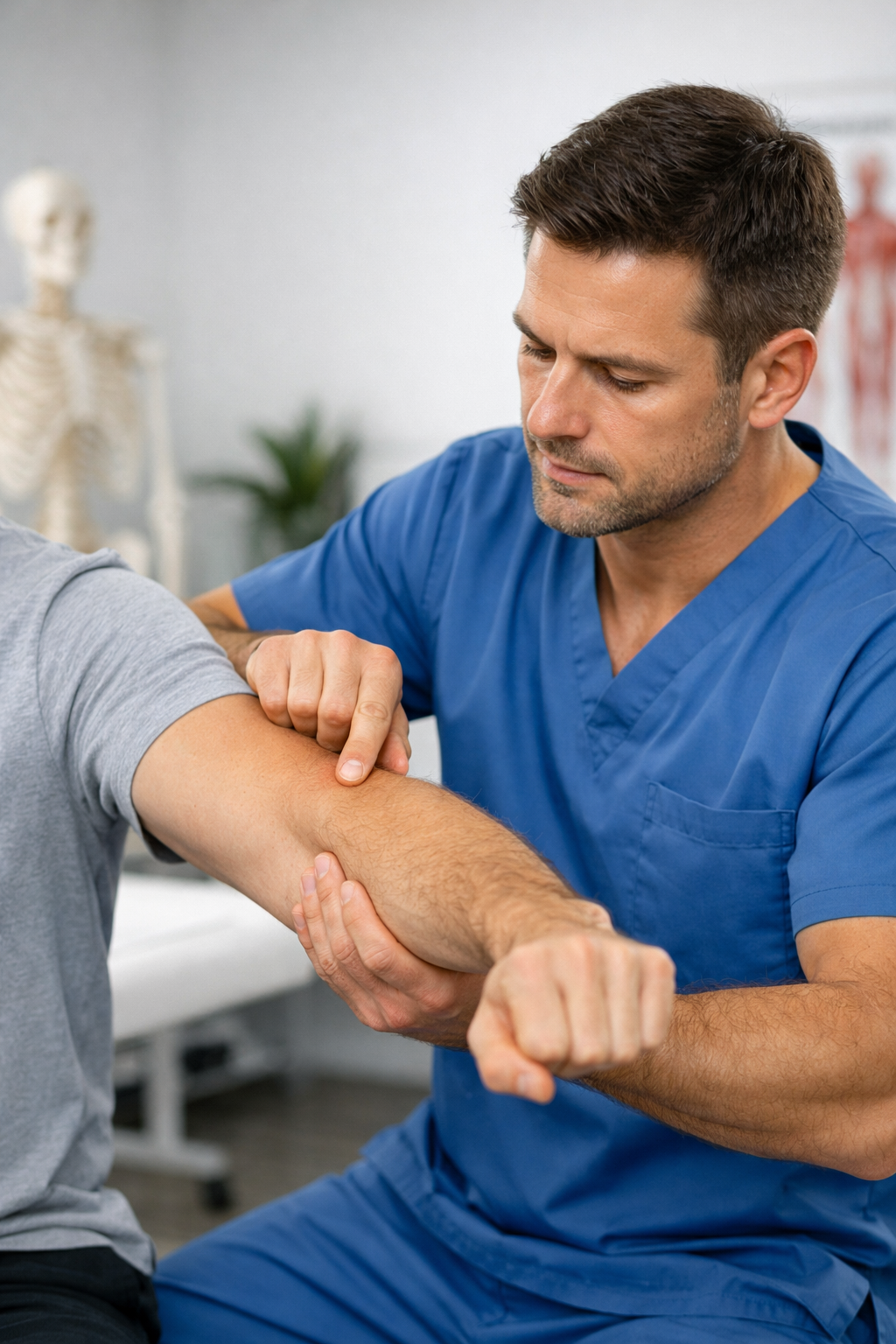
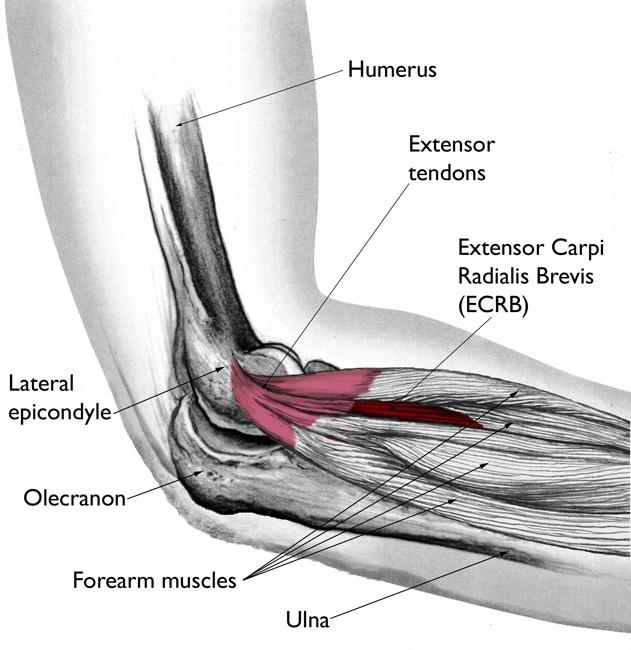
Tennis elbow — clinically known as lateral epicondylitis, lateral epicondylalgia, or lateral elbow tendinopathy — is a degenerative overuse condition affecting the tendons on the outside of your elbow at the lateral epicondyle. The tendon most commonly involved is the extensor carpi radialis brevis (ECRB), a small but critical muscle that stabilizes your wrist when your elbow is straight and your hand is gripping.
Despite its name, tennis elbow is not limited to tennis players. It develops from any pattern of repetitive movements that load the wrist extensors: repetitive motions at work, repetitive tasks around the house, or grip-heavy recreation. In Brick, the condition is just as likely to come from a weekend of paddleboarding along the barrier peninsula as it is from swinging a racket. Healthcare workers at Ocean Medical Center develop it from turning patients and gripping bed rails. Warehouse staff, teachers, and tradespeople develop it from the accumulated strain of everyday demands on the forearm and wrist.
The pain typically starts as a mild tenderness on the outside of the elbow and gradually worsens. Gripping, lifting, and twisting motions become painful. Left unaddressed, the discomfort can radiate down the forearm, weaken grip strength, and make even simple activities — pouring coffee, typing, carrying groceries — feel unreliable.
Who Gets Tennis Elbow in Brick?
With roughly 76,600 residents, a median age of 45.2, and over 20.8 percent of the population aged 65 or older, Brick is a community where people stay active for decades. An 82 percent homeownership rate means residents maintain their own properties and yards. That combination of age, activity, and hands-on living makes lateral epicondylitis remarkably common.
Here are three patients who regularly walk through the door at Trinity Rehab Brick:
The Barnegat Bay Regular
Frank is 67 and retired to Brick for the water access. He paddles a kayak out of Windward Beach Park three mornings a week, fishes Barnegat Bay most afternoons, hikes the Brick Reservoir trails in fall, and squeezes in rounds at Forge Pond Golf Course whenever he can. Six weeks ago, a dull ache appeared on the outer edge of his right elbow after a long day of fluke fishing. Now it is sharp enough that gripping a paddle makes him wince and swinging a golf club sends pain radiating into his forearm. His grip strength has declined noticeably — he fumbles dock lines and struggles to carry a cooler from the truck.
Frank has textbook lateral elbow tendinopathy from grip-intensive water sports. The repetitive gripping of paddles, rods, and reels overloaded his ECRB tendon beyond its capacity to recover.
The Healthcare Worker
Maria is 42 and works as a patient care technician at Ocean Medical Center. Her shifts involve turning patients, transferring them between beds and wheelchairs, and gripping assistive equipment for hours. She also helps coach her daughter’s softball team through Brick Township Recreation. The pain crept in slowly — first mild soreness after long shifts, then a persistent ache that made gripping a steering wheel difficult on her commute home. She rested for a week, but symptoms returned immediately when she resumed her routine.
Maria’s lateral epicondylitis stems from occupational repetitive motions compounded by recreational gripping. Without intervention, her compensatory patterns risk creating secondary problems.
The High School Athlete
Jaylen is 16 and pitches for the Brick Memorial High School Mustangs baseball team while playing fall tennis through the school’s athletic program. Between practice, games, and offseason training at Drum Point Sports Complex, he throws and swings year-round. Midway through his junior season, he developed a burning sensation on the outside of his throwing elbow. An evaluation revealed tenderness over the lateral epicondyle and pain with resisted wrist extension — hallmarks of tennis elbow.
Youth athletes like Jaylen increasingly present with overuse injuries as year-round play becomes the norm across Brick Township High School, Brick Memorial, and travel leagues like Brick American Baseball League. Early physical therapy intervention leads to better outcomes and protects the developing arm.
How Physical Therapy Treats Tennis Elbow at Trinity Rehab Brick
Tennis elbow management at Trinity Rehab Brick follows a structured, phase-based approach built around progressive tendon loading — systematically increasing demands on the injured tissue so it adapts and develops the tolerance needed for daily life.
Phase 1: Pain Reduction and Symptom Control
The initial priority is to reduce pain and calm the irritated tissue. Your physical therapist will use manual therapy techniques — soft tissue mobilization along the forearm extensors, joint mobilizations at the elbow and wrist — to restore movement and reduce inflammation. This hands-on work is paired with education on activity modifications: adjusting grip patterns, workload, and recreational habits to avoid re-aggravating the tendon.
A counterforce strap may be recommended during this phase. Worn just below the elbow, it redistributes force away from the injured tendon during gripping tasks.
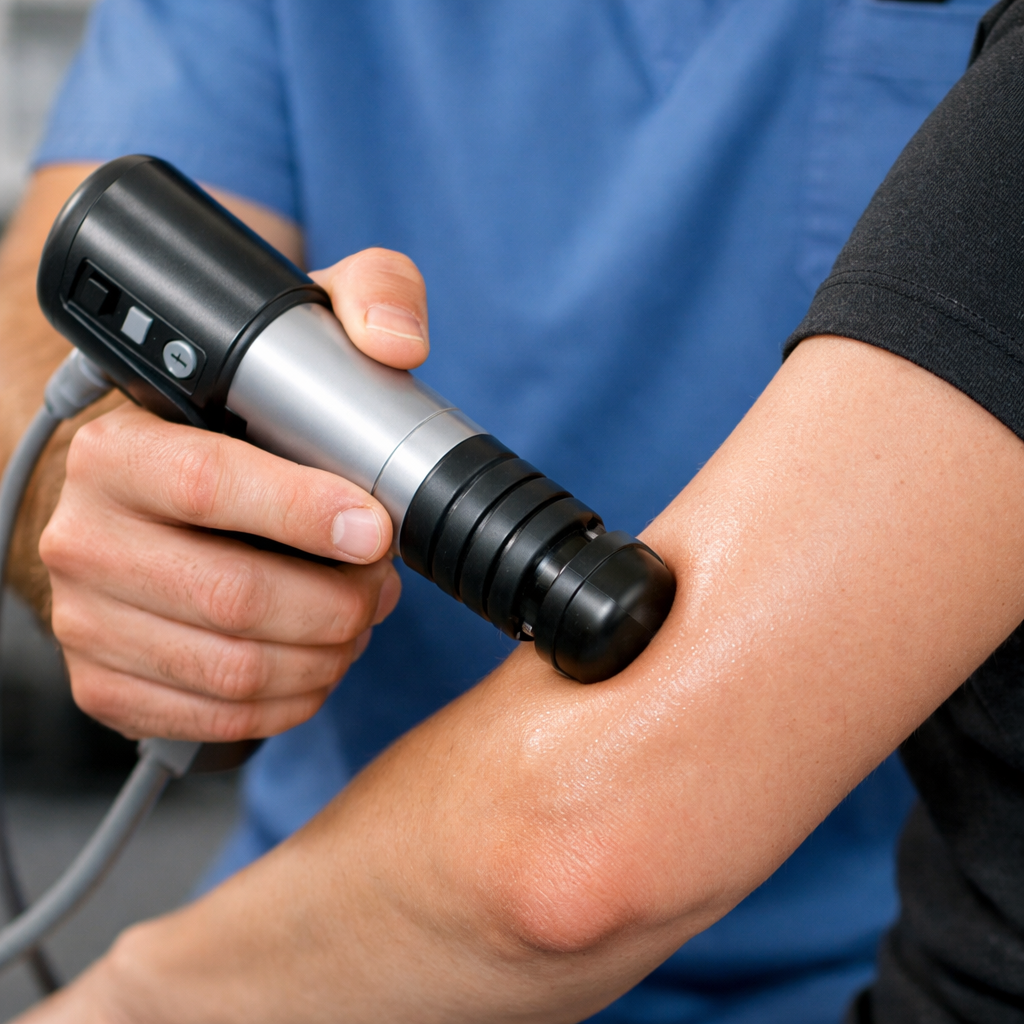
For stubborn pain, Trinity Rehab Brick offers EPAT shockwave therapy — acoustic pressure waves that stimulate blood flow and accelerate tissue repair, with strong clinical evidence for lateral elbow tendinopathy. Dry needling is another option, targeting myofascial trigger points in the forearm muscles to release tension and reduce referred pain patterns that often accompany chronic tennis elbow.

Phase 2: Progressive Loading and Strengthening
Once symptoms are under control, the focus shifts to rebuilding tendon tolerance and grip strength through targeted exercises. Eccentric exercise — where the muscle lengthens under load — is a cornerstone of tendon rehabilitation and a central component of tennis elbow treatment at Trinity Rehab.
Your physical therapist will guide you through a program that may include:
- Eccentric wrist extension exercises: From a palm facing down starting position with your forearm supported, slowly lower a light weight by bending the wrist downward. This controlled eccentric load stimulates tendon remodeling.
- Towel twists: Grip a rolled towel with both hands and wring in opposite directions. Exercise slowly, keeping shoulders relaxed.
- Forearm pronation and supination: Rotate the forearm with a weighted object — palm facing up, then palm facing down — to strengthen the muscles that stabilize the elbow.
- Grip strengthening: Progressive grip exercises using a tennis ball or therapy putty rebuild functional strength. Your starting position and resistance are tailored to your current capacity.
- Wrist extension stretches: Gentle stretching with the arm outward and elbow straight maintains tissue flexibility as strength improves.
Minimal equipment is needed — most of the home program requires only a light dumbbell, a towel, and a flat surface.
Phase 3: Return to Activity
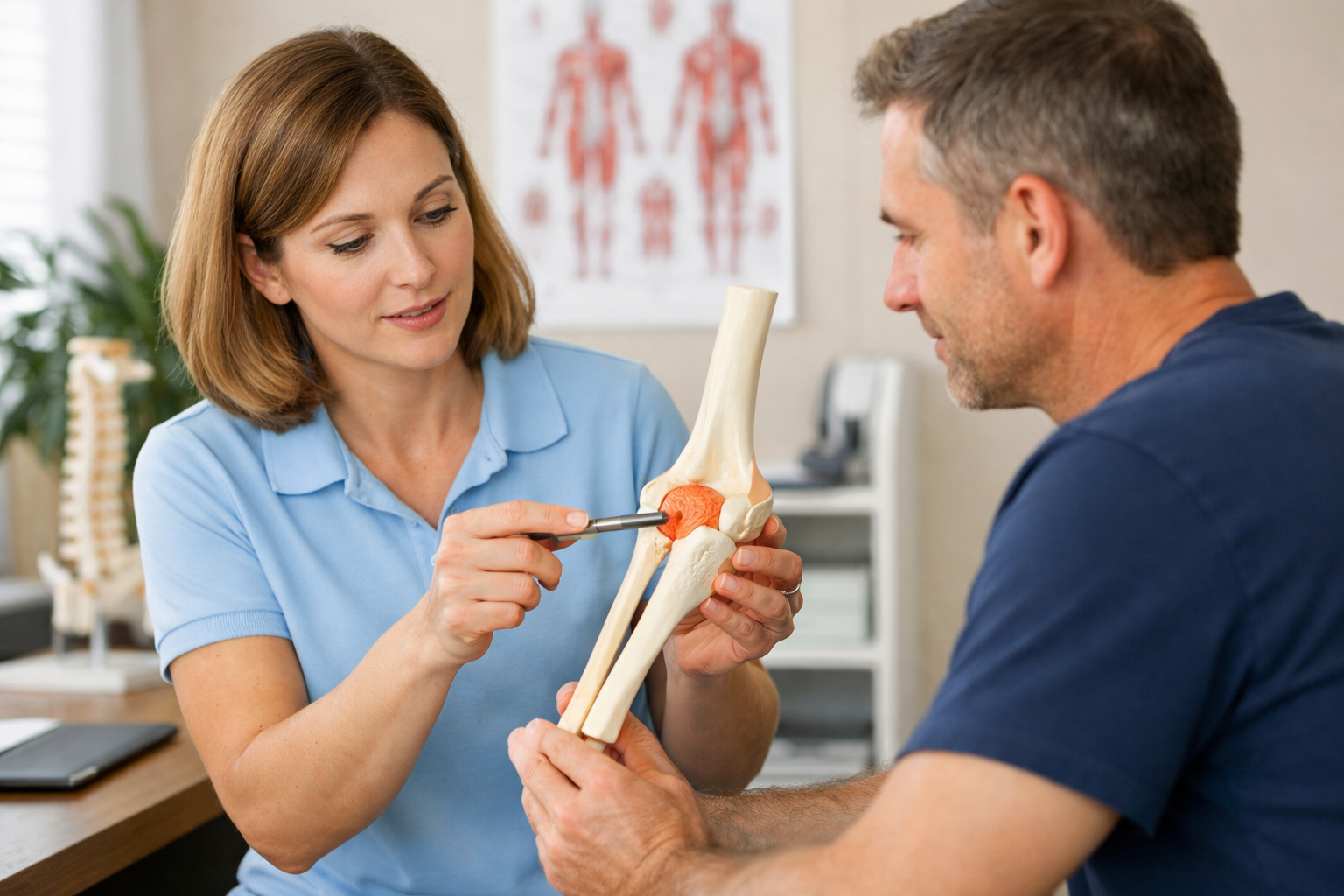
The final phase focuses on sport-specific and task-specific reconditioning. For Frank, that means graduated return to paddling and golfing at Forge Pond. For Maria, simulating the gripping demands of patient care. For Jaylen, a structured throwing program that respects his long term goals. Load management remains critical — your physical therapist will build a schedule that balances activity with recovery without exceeding the tendon’s capacity.
Why Choose Trinity Rehab Brick?
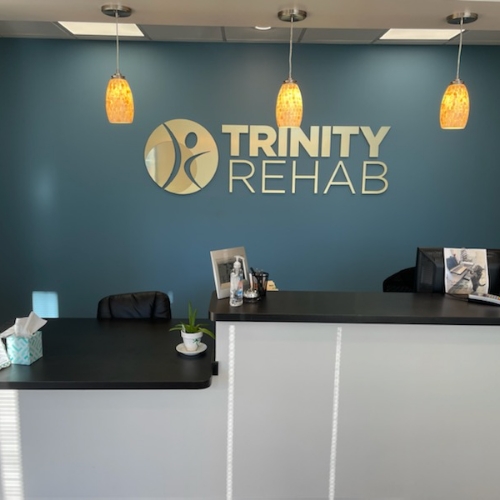
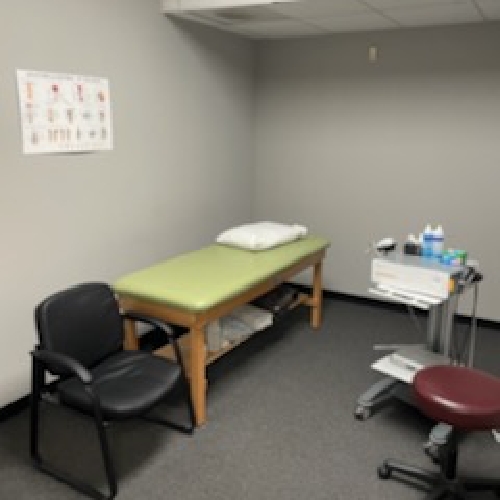
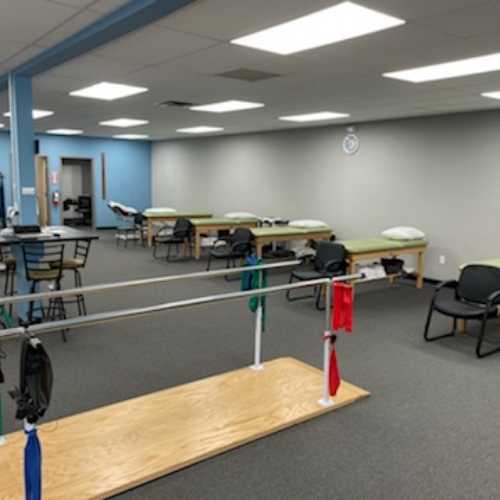
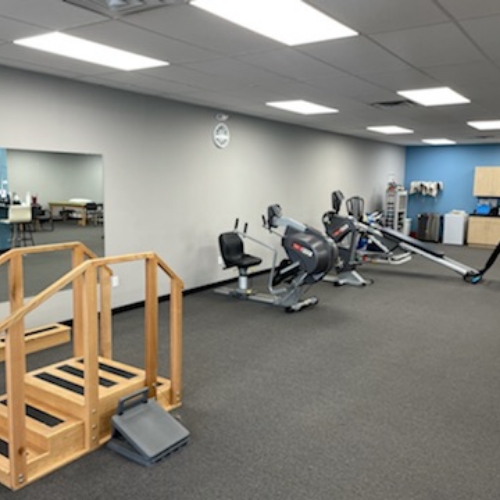
Inside Our Brick Clinic
Related Conditions & Treatments
Tennis elbow is just one of the many conditions we treat at Trinity Rehab Brick. Explore our full range of conditions we treat or learn more about specific treatment approaches:
- Tennis Elbow Treatment Overview — Our comprehensive guide to lateral epicondylitis recovery
- Elbow, Wrist & Hand Pain Relief — Other upper extremity conditions we specialize in
- Shoulder Pain Relief — Treatment for rotator cuff, frozen shoulder, and more
- Manual Therapy — Hands-on techniques to restore joint mobility and reduce pain
- Dry Needling — Trigger point therapy for deep muscle tension and pain relief
One-on-One Care, Every Visit
You work directly with your physical therapist for the duration of every session — no handoffs to aides, no rotating providers. This one-on-one model means faster progress and a therapist who truly understands how your condition is evolving.
Advanced Treatment Technology
Trinity Rehab Brick provides access to EPAT shockwave therapy, dry needling, and skilled manual therapy — a combination of tools that many clinics in Ocean County simply do not offer. These advanced options are particularly valuable for patients with chronic lateral epicondylitis who have not responded to rest, bracing, or corticosteroid injections.
Direct Access — No Referral Needed
New Jersey law allows you to see a physical therapist without a physician referral. You can schedule an evaluation at Trinity Rehab Brick the moment elbow pain starts interfering with your life — no waiting for a doctor’s appointment. Earlier intervention consistently produces better outcomes and reduces the likelihood of needing surgery.
Sports Med Expertise for an Active Community
Trinity Rehab Brick understands the demands that Barnegat Bay kayaking, Forge Pond Golf Course, Brick Township Recreation pickleball leagues, and high school athletics place on the upper extremity. Treatment is designed not just to eliminate pain but to restore the performance your shore lifestyle requires.
Convenient Location
Trinity Rehab Brick serves the broader shore community, including Point Pleasant, Mantoloking, Normandy Beach, Bay Head, and inland neighborhoods around Herbertsville Park and Lake Riviera Park.
Related Elbow Care At This Location
Elbow pain can come from different tendon and loading patterns around the joint. A related same-location page is:
Frequently Asked Questions
Can physical therapy fix tennis elbow without surgery?
How soon should I start physical therapy for tennis elbow?
Is Trinity Rehab Brick convenient for Point Pleasant and Normandy Beach residents?
What advanced treatments does Trinity Rehab Brick offer for tennis elbow?
Can I still fish and paddle while getting treatment for tennis elbow?
Do not let elbow pain keep you off the water. Whether it is paddling the Metedeconk, fishing the bay, or finishing out the season on the diamond, your arms deserve to feel strong again.
Schedule your appointment at Trinity Rehab Brick today. No referral needed.