

Osteoarthritis Treatment in Wayne, NJ
Wayne Township is one of Passaic County’s most dynamic communities — a suburban city of roughly 54,000 residents where the preserved woodlands of High Mountain Park Preserve share the landscape with St. Joseph’s Wayne Medical Center, luxury operations centers like Kering, busy warehouses at FreezPak Logistics, and the kind of community athletic infrastructure — Preakness Valley Golf Course, Wayne Community Center, two strong high schools — that keeps residents genuinely active into their later years. It is a place where people work hard, live actively, and expect to keep doing both.
Osteoarthritis can change those expectations quietly. The most common degenerative joint disease in the United States — affecting more than 32.5 million adults — osteoarthritis typically arrives without a dramatic announcement. For a Wayne resident, it might begin as stiffness walking from the car to the office, or an aching knee the morning after a round at Preakness Valley. It might be the growing reluctance to tackle the trails at High Mountain Preserve, or the realization that rising from a chair at the Wayne Community Center pickleball court is taking more effort than it used to. Left unaddressed, that early-stage stiffness progresses to pain that redefines what is possible in daily life.
Physical therapy is the most evidence-supported non-surgical intervention for osteoarthritis — endorsed as a first-line treatment by the American College of Rheumatology, the Arthritis Foundation, and the National Institute for Health and Care Excellence (NICE). At Trinity Rehab, we serve Wayne and the broader Passaic County area with individualized, expert osteoarthritis treatment that combines hands-on manual therapy, targeted strengthening, and advanced technology to achieve results that generic exercise programs cannot.
Osteoarthritis in Wayne: Who Is at Risk and Why
Osteoarthritis risk is not random. It is shaped by the combination of age, prior injury, mechanical loading patterns, occupation, and body weight — all of which have specific manifestations in Wayne’s community:
Hospital and healthcare workers at St. Joseph’s Wayne Medical Center: The medical center is one of Wayne’s largest employers. Nurses, surgical technicians, physical therapists, and support staff spend long shifts on hard floors. The cumulative impact of years of standing, pivoting, and lifting in healthcare settings is a well-documented risk factor for hip osteoarthritis and knee osteoarthritis. Many healthcare workers in their 50s and 60s notice that their joints have absorbed decades of occupational demand.
Warehouse and cold storage workers at FreezPak Logistics: Cold storage facilities like FreezPak involve repetitive heavy lifting, kneeling, and carrying in challenging temperature environments. Low ambient temperature causes muscle tightening that reduces the shock-absorbing function of the muscles around the knee and hip, while the mechanical demands of warehouse work directly accelerate cartilage wear.
Corporate and manufacturing workers: Kering, Saint-Gobain Surface Solutions, and other major Wayne employers contribute a mix of sedentary desk workers (who accumulate hip and lumbar degeneration from prolonged sitting) and manufacturing floor workers (whose repetitive manual tasks stress the upper extremity joints).
Active adults and recreational athletes: Wayne PAL’s leagues and Wayne Community Center’s broad programming keep residents active across age groups. The Patriots vs. Indians high school football rivalry is legendary in Passaic County — and the athletes who played those games in the 1980s and 1990s are now in their 40s and 50s, often with knee and hip joints bearing the legacy of old sports injuries. Previous ACL tears, meniscus injuries, and ankle fractures substantially raise the lifetime risk of post-traumatic osteoarthritis in those joints.
Hikers and outdoor enthusiasts: High Mountain Park Preserve’s 1,153 acres of trails attract serious hikers from across the region. Navigating the preserve’s significant elevation changes and varied terrain places high rotational and compressive demands on the knees and hips, accumulating joint wear over seasons of regular use.
Older adults: Wayne’s median age of 42–43 means a substantial portion of the population is at or approaching the primary risk window for osteoarthritis. The condition is significantly more common after 50, and its prevalence accelerates with each decade thereafter.
Recognizing Osteoarthritis: Signs Worth Taking Seriously
Osteoarthritis most frequently affects the knees, hips, hands, and spine. The pattern of symptoms is characteristic enough that many patients recognize themselves in the description:
- Morning stiffness lasting 20–30 minutes before the affected joint loosens up — this is one of the defining clinical features of osteoarthritis, distinguishing it from the prolonged stiffness of rheumatoid and other inflammatory arthritis forms
- A deep, aching pain at the joint that is worst during and immediately after activity, and eases with rest
- Crepitus — grinding, grating, or clicking when the joint moves — particularly noticeable when climbing or descending stairs
- Swelling that appears or worsens after demanding activity: a long hike, a round of golf, a day on the warehouse floor
- Progressive loss of range of motion: reduced knee flexion, limited hip rotation through a golf swing, stiffness when reaching overhead
- Instability or giving-way, especially on uneven terrain or on High Mountain’s demanding trails
- Difficulty with specific functional tasks: rising from a chair or car seat, bending to tie shoes, gripping a golf club or pickleball paddle
These symptoms are not inevitable consequences of aging. They are signals that your affected joint needs structured, expert support — and physical therapy provides exactly that.
Trinity Rehab’s Osteoarthritis Treatment Approach in Wayne
At Trinity Rehab, every osteoarthritis patient receives a comprehensive initial evaluation — assessing joint mobility, muscle strength, movement patterns, balance, and functional limitations across the affected areas. The treatment plan that emerges is specific to your anatomy, your history, and your goals. Here is how the core components work:
Hands-On Manual Therapy
Manual therapy is a cornerstone of effective osteoarthritis treatment and one of the clinical techniques that most clearly distinguishes Trinity Rehab’s approach:
Joint mobilization delivers graded, rhythmic passive movements to the arthritic joint. The goal is to restore the normal gliding and rolling mechanics within the joint that stiffen as cartilage roughens and inflammation develops. For a Wayne golfer with hip osteoarthritis, mobilization works to recover the hip rotation needed for a full swing. For a patient with knee arthritis, mobilization at the tibiofemoral and patellofemoral joints restores the movement arc needed for comfortable stair use.
Soft tissue mobilization targets the dense, restricted muscles and fascia surrounding a chronically painful joint. A Wayne warehouse worker who has been protecting a painful knee for six months will have developed significant tightness in the quadriceps, iliotibial band, calf, and hip flexors — all of which maintain the pain cycle independently of what is happening at the joint surface. Systematic soft tissue work addresses this layer by layer.
Passive range of motion and joint stretching: Your therapist moves the affected joint through its available arc while you are relaxed, recovering passive joint flexibility that active movement and inflammation have restricted. This restores the mechanical joint flexibility that active exercises then convert to functional strength and control.
Neuromuscular re-education: Compensatory movement patterns — the limping gait, the forward lean, the shortened stride — protect a painful joint in the short term but generate secondary injuries over time. Neuromuscular re-education identifies and corrects these patterns early, before they cause new problems in adjacent joints.
Progressive Strengthening for Long-Term Protection
Strong muscles are the most important long-term protection for an arthritic joint. Your physical therapist designs a progressive, individualized exercise program targeting the specific muscle groups most critical for your affected joints:
Quadriceps strengthening for knee osteoarthritis: The quadriceps is the most evidence-supported exercise target in knee arthritis treatment. Clinical research consistently shows that stronger quad muscles reduce bone-on-bone pressure, improve stair and walking function, and substantially delay the need for knee replacement surgery. Your program builds quad strength progressively, starting from positions that minimize joint stress and advancing as your pain and function improve.
Hip abductor and gluteal strengthening for hip osteoarthritis: Lateral hip muscles stabilize the pelvis during walking. When they weaken, the pelvis drops each step, concentrating load on the hip joint and straining the lower back. Targeted gluteal and hip abductor strengthening interrupts this cycle.
Rotator cuff and scapular stabilization for shoulder osteoarthritis: Shoulder arthritis patients benefit from rotator cuff strengthening and scapular stabilization exercises that unload the glenohumeral joint while restoring the shoulder blade control needed for pain-free overhead activity.
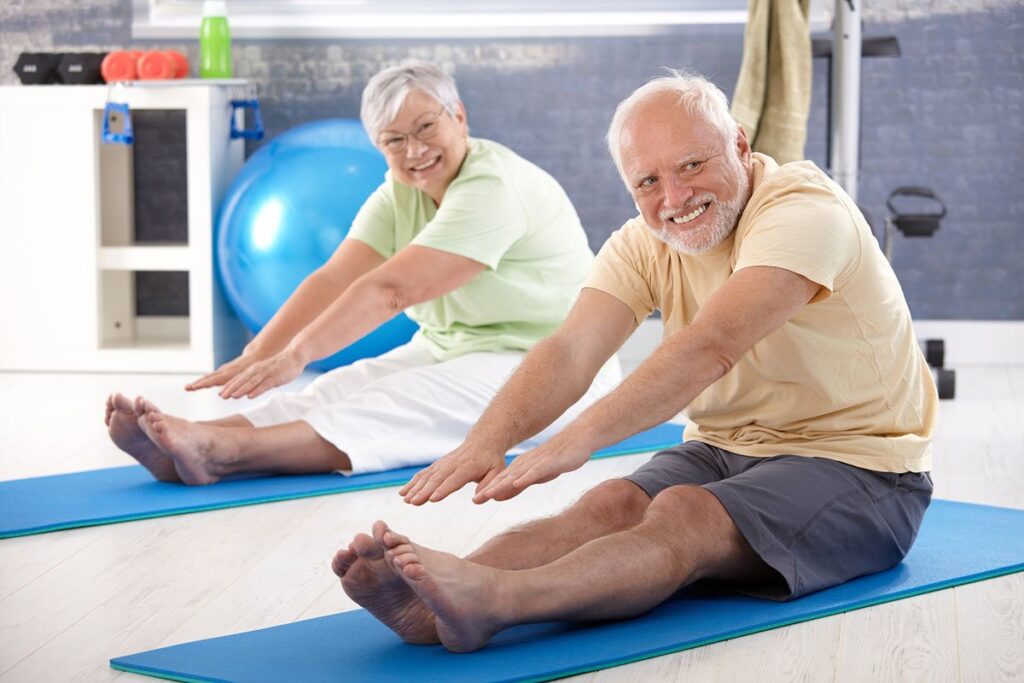
Aerobic exercise conditioning: Low-impact aerobic exercise — walking, cycling, swimming, and anti-gravity treadmill training — maintains cardiovascular fitness and joint health without aggravating arthritic joints.
Balance and proprioception training: High Mountain Preserve’s terrain demands excellent proprioception. Osteoarthritis degrades joint sensory receptors, raising fall risk. Balance training restores this system.
Grip and fine motor exercises: For hand or wrist osteoarthritis, grip strengthening preserves the hand function needed for daily independence.
AlterG Anti-Gravity Treadmill
Trinity Rehab’s AlterG Anti-Gravity Treadmill is a particularly powerful tool for Wayne patients with severe knee or hip osteoarthritis who cannot tolerate standard weight-bearing exercise. Using pressurized air to reduce effective body weight by up to 80%, the AlterG allows pain-free walking and aerobic conditioning at whatever load the affected joint can handle. Clinical studies demonstrate 20–30% pain reduction and improved endurance for arthritis patients using anti-gravity treadmill training.
For Wayne hikers wanting to return to High Mountain Preserve, the AlterG builds the endurance and joint tolerance needed before returning to the trail.
EPAT Shockwave Therapy
EPAT delivers high-energy acoustic pressure waves into damaged soft tissues around arthritic joints. For Wayne patients dealing with patellar tendinopathy, Achilles tendinopathy, plantar fasciitis, or gluteal tendinopathy — common soft tissue conditions that coexist with knee and hip osteoarthritis — EPAT stimulates collagen production and natural tissue repair. Research demonstrates 60–80% pain relief for these associated conditions. Patients who have plateaued with conventional physical therapy often experience meaningful new progress after incorporating EPAT.
Dry Needling
Dry needling addresses the myofascial trigger points that reliably accumulate in muscles surrounding chronically arthritic joints. For Wayne patients, dry needling of the quadriceps, glutes, iliotibial band, and calf often produces rapid improvements in muscle flexibility and pain that make subsequent strengthening exercises significantly more productive.
Transcutaneous Electrical Nerve Stimulation (TENS)
Transcutaneous electrical nerve stimulation uses surface electrodes to deliver low-voltage electrical current to interrupt pain signal transmission. TENS is a non-invasive pain management technique effective during flares and teachable for home use between sessions.
Pain Management and Lifestyle Integration
Your Trinity Rehab physical therapist builds a comprehensive self-management framework for daily life in Wayne:
- Heat before activity to improve joint flexibility; cold after to reduce pain and inflammation
- Activity modification: keeping High Mountain trails, Preakness Valley, and Wayne Community Center pickleball accessible through smarter mechanics
- Topical NSAIDs applied to the affected joint with fewer systemic side effects than oral medications
- Weight management: every 10% reduction in body weight reduces knee pain by up to 50%
- Home exercise program three to four times weekly to sustain clinical gains
- Dietary supplements: glucosamine and chondroitin are sometimes used in osteoarthritis management, though evidence remains limited
Why Wayne Patients Choose Trinity Rehab
At Trinity Rehab, the one-on-one treatment model is non-negotiable. Every session is delivered by your licensed physical therapist — not an aide. Your therapist observes every movement, identifies subtle compensations, and adjusts your program in real time.
Our expertise spans the full arthritis spectrum: early-stage management, geriatric physical therapy for Wayne’s older adults, and post-surgical rehabilitation after knee replacement or hip replacement. We accept most major insurance plans and verify benefits upfront.
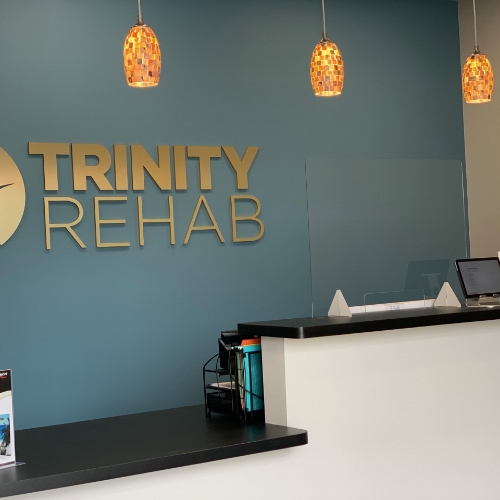
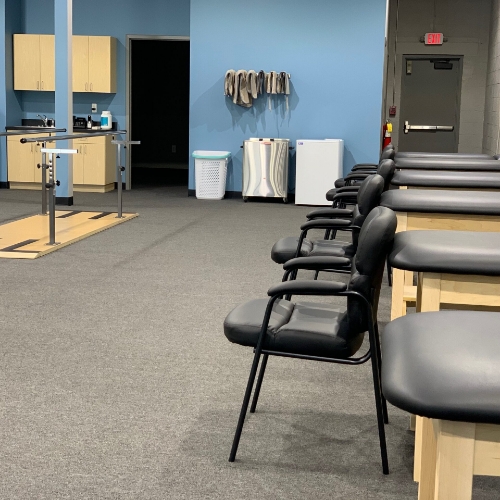
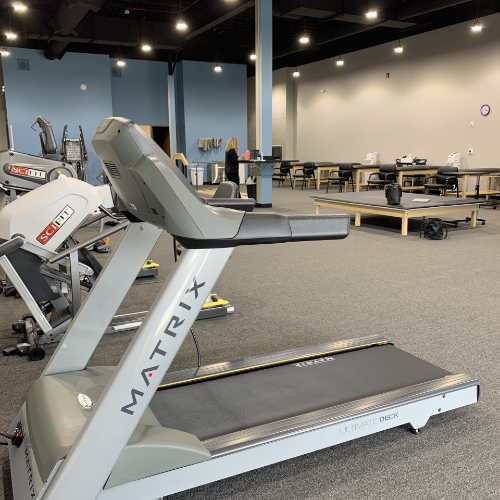
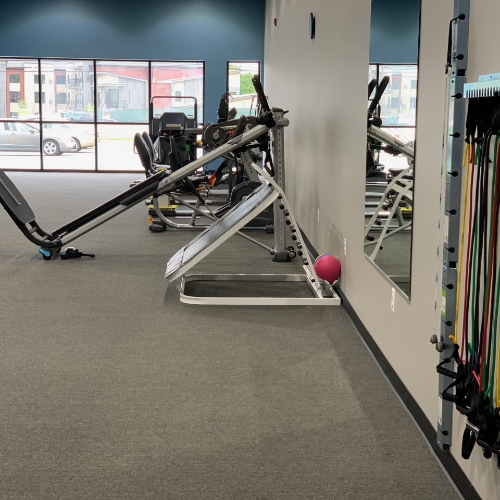
Inside Our Wayne Clinic
Related Conditions & Treatments
Osteoarthritis is just one of the many conditions we treat at Trinity Rehab Wayne. Explore our full range of conditions we treat or learn more about specific treatment approaches:
Frequently Asked Questions
Do I need a doctor's referral to start osteoarthritis physical therapy in Wayne, NJ?
What is the difference between knee arthritis and hip osteoarthritis?
Can I still hike at High Mountain Preserve if I have knee osteoarthritis?
How does joint replacement surgery fit in?
Is physical therapy covered by insurance for osteoarthritis?
Getting Back to Your Wayne Life
The trails of High Mountain Preserve, the fairways at Preakness Valley, the pickleball courts at Wayne Community Center, the walk from parking to the Wayne Community Center pool — these are the specifics of your life, not abstractions. Osteoarthritis does not have to take them from you.
Physical therapy at Trinity Rehab gives you a proven, non-surgical path to meaningful knee pain relief, restored joint flexibility, and the physical confidence to stay fully present in everything Wayne offers. Whether you are managing early-stage osteoarthritis, working through back pain alongside joint issues, or preparing for or recovering from hip and knee surgery — we are ready to help.
Your Next Steps
- Request an appointment online or call the Trinity Rehab location nearest Wayne.
- Complete a brief intake form — streamlined and simple.
- Meet your physical therapist for a comprehensive evaluation and begin your personalized treatment plan.
Same-week appointments are frequently available. New Jersey Direct Access — no referral needed, no waiting. Call today.
Sources: Centers for Disease Control and Prevention. Osteoarthritis. https://www.cdc.gov/arthritis/osteoarthritis/ | Journal of Orthopaedic & Sports Physical Therapy. https://www.jospt.org/ | Frontiers in Physiology. Physical therapy as a promising treatment for osteoarthritis. https://pmc.ncbi.nlm.nih.gov/articles/PMC9614272/