
PLANTAR FASCIITIS TREATMENT IN NEWTOWN, PA
Tyler State Park sits just minutes from Newtown’s neighborhoods, with 25-plus miles of trails winding through 1,711 acres of Bucks County woodland. The Newtown Trail connects directly to Silver Lake Park. Council Rock Indians athletes train on fields and tracks throughout the township. EPAM, SAP, and Keller Williams employees fill office parks along Newtown’s corporate corridors. And the Bucks County Roadrunners log their group runs through the borough’s colonial streets and park paths year-round.
Newtown is an active community, and plantar fasciitis is one of the most common ways that active lifestyle catches up with people. You might recognize it: the heel pain that hits the moment you step out of bed, the arch stiffness that follows you to the kitchen, the soreness that spikes after a long run through Tyler State Park or a full day of standing at a corporate event.
The good news is that plantar fasciitis, even when it has been present for months, responds well to a targeted physical therapy approach. Trinity Rehab’s therapists help Newtown residents understand exactly what is driving their heel pain and build a recovery plan around getting back to everything they do here.
THE MECHANICS OF PLANTAR FASCIITIS
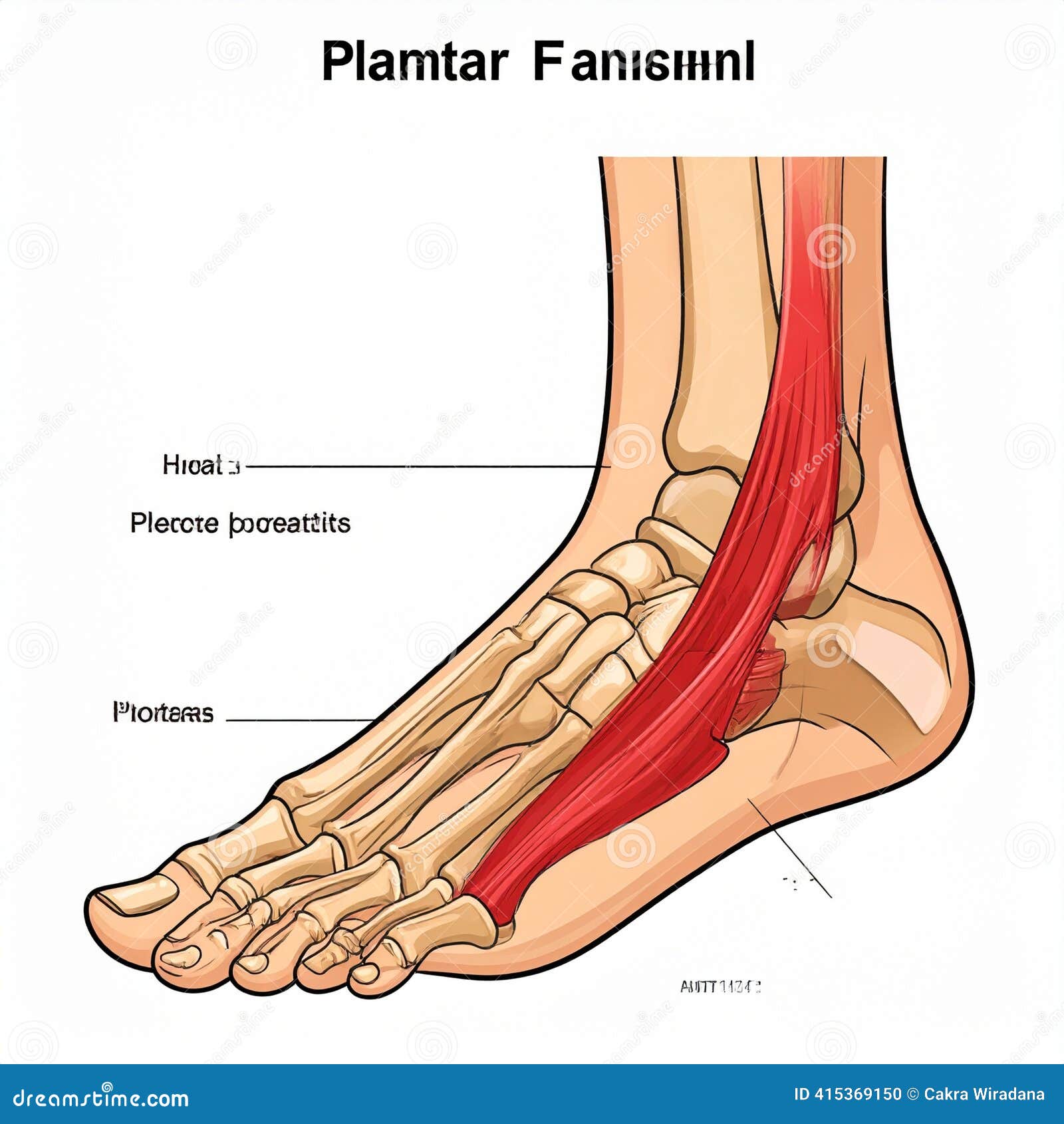
The plantar fascia is a dense fibrous band that runs along the sole of your foot, connecting the calcaneus (heel bone) to the metatarsal heads at the ball of the foot. It serves as the arch’s primary passive support and plays a key role in the foot’s spring-like energy mechanics — absorbing ground reaction forces on heel strike and releasing stored energy on push-off through the windlass mechanism.
When cumulative loading exceeds the tissue’s repair capacity, micro-tears accumulate at the calcaneal attachment. The resulting inflammation triggers pain, and as the cycle continues without intervention, the fascia progresses from acute irritation to chronic degeneration — a condition sometimes described as plantar fasciopathy. Without treatment, this cycle can persist indefinitely.
The American Academy of Orthopaedic Surgeons reports that about 2 million Americans seek treatment for plantar fasciitis annually. While it most commonly affects adults aged 40 to 60, the condition is prevalent across the adult age spectrum wherever running, prolonged standing, and active lifestyle demands are high — all of which describe Newtown well.
RELATED CONDITIONS & TREATMENTS
Plantar fasciitis is just one of the many conditions we treat at Trinity Rehab Newtown. Explore our full range of conditions we treat or learn more about specific treatment approaches:
WHY PLANTAR FASCIITIS IS COMMON IN NEWTOWN
The combination of active recreation, competitive athletics, and professional lifestyle in Newtown creates multiple well-defined pathways to plantar fasciitis.
Tyler State Park and the Newtown Trail are arguably the biggest drivers. Tyler’s trail network covers diverse terrain — from groomed bridle paths to rooted woodland singletrack — and the 3.7-mile Newtown Trail itself is used daily by runners, cyclists, and walkers year-round. The natural variation in surface and elevation that makes these trails scenic is also biomechanically demanding. Repetitive impact on varied terrain stresses the plantar fascia with every footfall, and when weekly mileage climbs quickly — as it tends to in spring and fall — the tissue doesn’t always keep pace.
Bucks County Roadrunners members follow a similar pattern. Training runs through Newtown and on the connecting trail network build the kind of volume that, without adequate recovery and footwear, accumulates into plantar fasciitis. The club is active year-round, which means there is rarely a true off-season for the tissue to fully recover between training cycles.
Council Rock High School North Indians compete across an extensive athletic calendar — baseball (including Little League World Series history through CRNAA), soccer, lacrosse, cross-country, track and field, and basketball. Young athletes whose bodies are still developing but whose training loads are those of competitive athletes face particular overuse risk. Council Rock North cross-country runners who train on Tyler State Park’s trails add trail-specific loading demands on top of the high-volume cross-country mileage base.
Technology and professional services workers at EPAM Systems, SAP, and Apple Leisure Group’s Newtown offices often develop a different pattern. Extended desk work stiffens the calf-Achilles-fascial chain, and the transition from prolonged sitting to brisk walking — walking to lunch, commuting, or a long afternoon on their feet at a work event — creates the kind of abrupt loading mismatch that plantar fasciitis thrives on.
St. Mary Medical Center and Jefferson Bucks Hospital staff nearby face the sustained standing demands common across all healthcare environments. Nurses and clinical staff who spend full shifts on hard institutional floors are at elevated risk, and the condition often builds over months before reaching the threshold of clinical presentation.
Disc golfers at Tyler State Park’s 18-hole course walk 18 holes of hilly woodland terrain — often in casual footwear without significant arch support or cushioning. Disc golf’s walking demands are comparable to traditional golf in terms of total distance covered on uneven ground.
RECOGNIZING THE PATTERN
Plantar fasciitis has a symptom signature that most patients recognize immediately once it’s described to them:
The defining feature is sharp, stabbing heel pain with the first steps of the morning. The fascia shortens and stiffens overnight; the initial footfall creates an abrupt, intense stretch at the calcaneal attachment. Many Newtown patients describe it as stepping directly onto a sharp stone or nail — an immediate, involuntary reaction that sets the tone for the morning.
The pain typically diminishes within 10 to 20 minutes of movement as the tissue warms. This temporary relief is part of why patients sometimes wait to seek treatment — the pain seems manageable mid-morning, then returns after the next rest period.
Other characteristic signs include:
- The same stiffening-and-pain cycle after sitting at a desk, driving, or resting
- Tenderness when pressing on the inner (medial) base of the heel
- Arch stiffness that persists through the morning even after the sharp heel pain eases
- Pain that peaks an hour or two after completing a Tyler State Park run — not during the run itself
- Gradual gait compensation: shortened stride, slight limp, or weight-shifting to protect the heel
A Council Rock North parent and Bucks County Roadrunners member described the progression: “I’d finish my Saturday morning run feeling okay, then be stiff and hobbling by the afternoon. Sunday morning was the worst. I started stretching before I even put my feet down — I knew the first step was going to hurt.” That predictable morning pattern and post-run delayed soreness is characteristic plantar fasciitis, and it responds well to physical therapy.
PHYSICAL THERAPY RECOVERY: FROM PAIN TO FULL FUNCTION
PHASE 1: BREAKING THE PAIN CYCLE
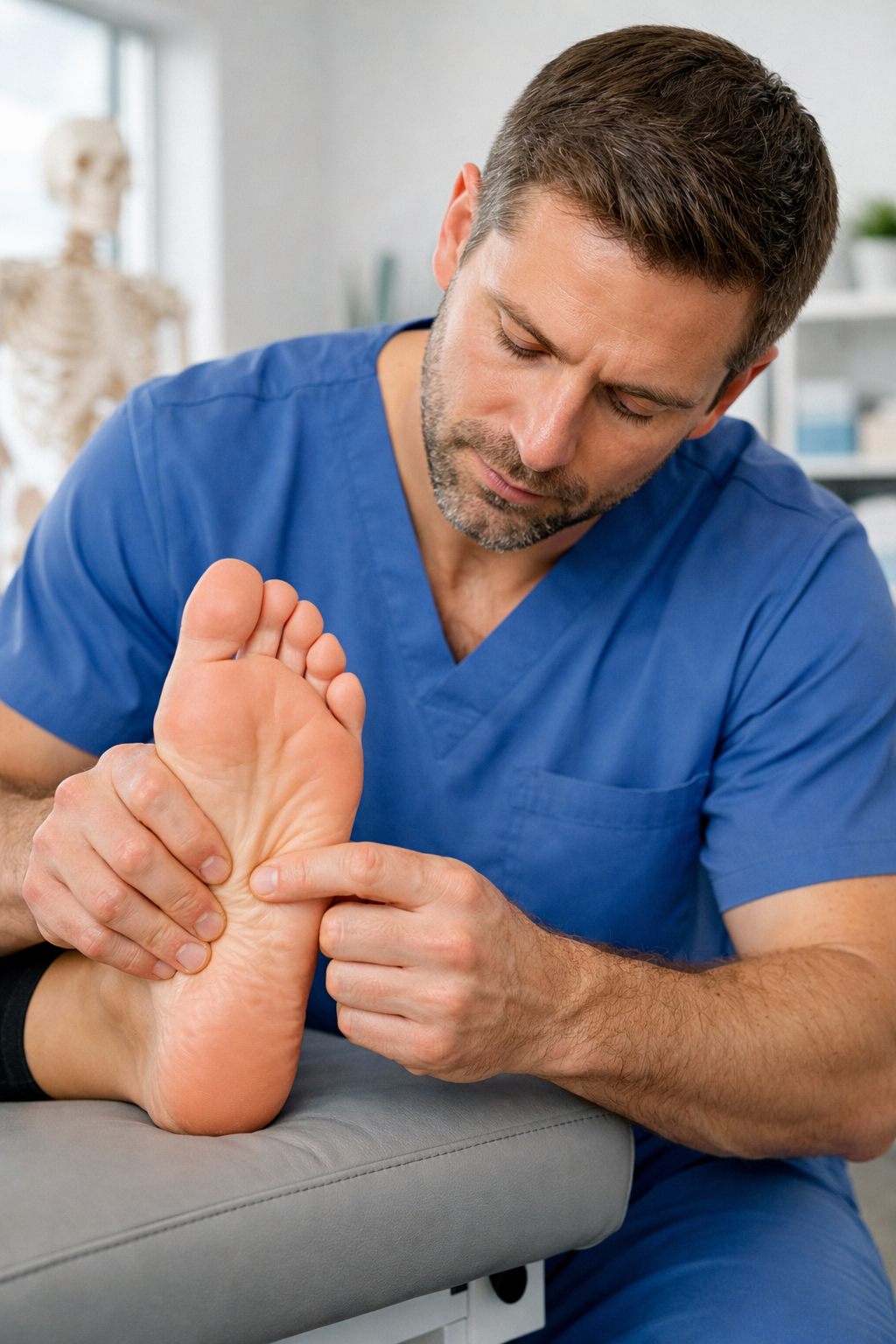
The first treatment goal is reducing fascial irritability so the tissue can begin healing under controlled conditions. Trinity Rehab addresses this through a combination of hands-on care and structured stretching.
Manual therapy is the cornerstone. Ankle and subtalar joint mobilization restores the dorsiflexion range of motion that tight calves and stiffened fascial tissue progressively restrict. When the ankle cannot move through its full arc, every step compensates by transferring excess strain to the plantar fascia. Research published in the Journal of Orthopaedic & Sports Physical Therapy demonstrates that joint mobilization combined with stretching produces significantly better pain and function outcomes than stretching alone.
Instrument-assisted soft tissue mobilization (IASTM) addresses the adhesions and scar tissue that accumulate with chronic fascial irritation, stimulating controlled tissue remodeling. Myofascial release to the gastrocnemius, soleus, and foot intrinsic trigger points reduces the resting fascial tension that keeps the tissue in a state of chronic irritation.
Stretching protocol: The plantar fascia-specific stretch performed before the first step of the morning — pulling the toes into dorsiflexion and holding for 30 seconds — has robust clinical support for reducing first-step pain. Individualized calf stretching addressing the gastrocnemius and soleus separately provides the upstream mobility that directly protects the fascia throughout the day.
Therapeutic modalities including ultrasound and kinesiology taping may be used during this phase to support tissue healing and manage load between sessions.

PHASE 2: BUILDING RESILIENCE
Once pain is controlled, the treatment focus shifts to developing the structural capacity that was either inadequate before your injury or that atrophied during the pain-guarding period.
Eccentric calf raises — the controlled, slow-lowering movement off the edge of a step — are the most evidence-supported exercise for plantar fasciitis. They build tensile strength throughout the calf-Achilles-fascial unit, systematically increasing the tissue’s tolerance for the demands of trail running and prolonged standing. Intrinsic foot strengthening develops the small muscles that provide the arch’s internal support, reducing the load carried by the plantar fascia on every step. Single-leg balance and proprioception training corrects the neuromuscular deficits that develop when pain has altered gait mechanics over time.
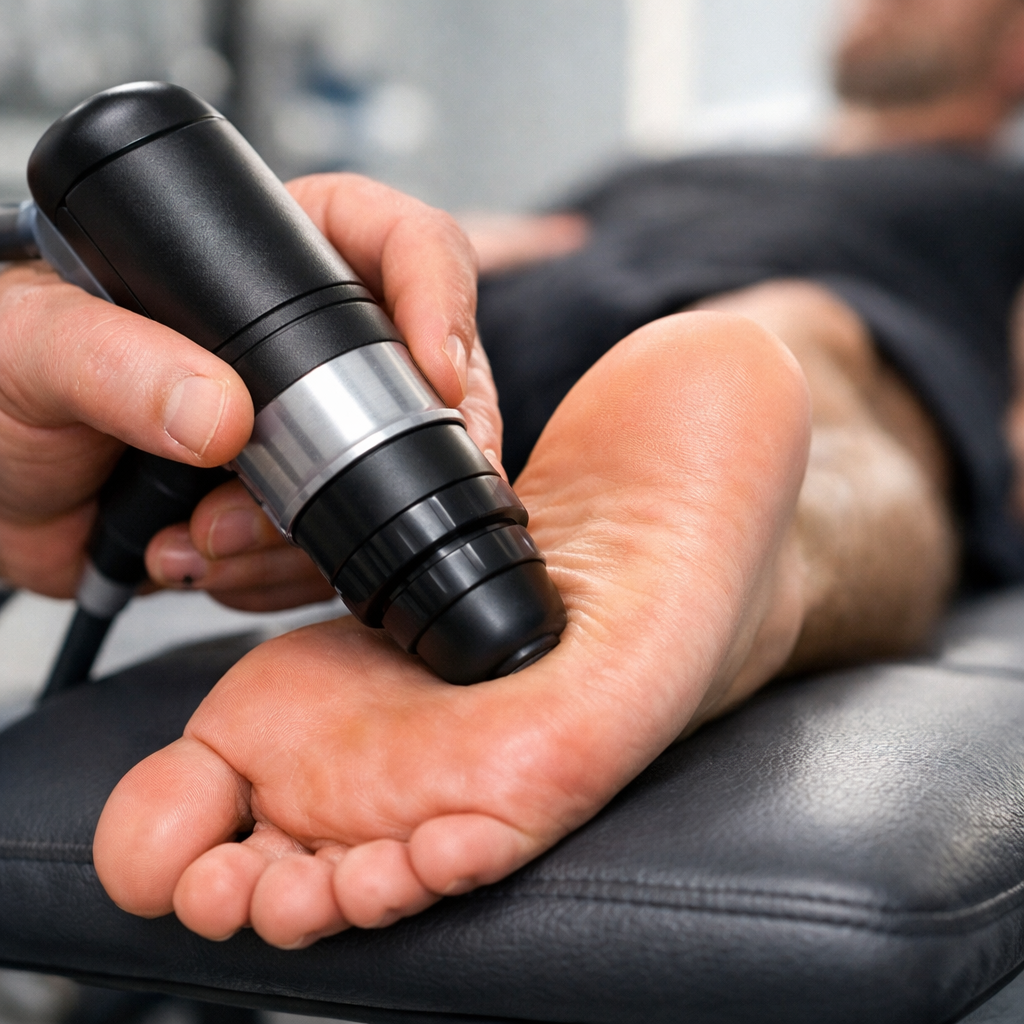
For Newtown patients with persistent or chronic presentations, Trinity Rehab offers EPAT shockwave therapy — acoustic pressure waves that stimulate blood flow and cellular regeneration in damaged fascial tissue. The Mayo Clinic identifies EPAT as an effective option for chronic cases that have not responded to conservative care. Dry needling addresses the calf trigger points that maintain fascial tension between loading events — particularly relevant for runners whose gastrocnemius and soleus carry chronic tightness.
PHASE 3: RETURN TO TYLER STATE PARK AND BEYOND
The transition back to full activity needs to be systematic — not a simple resumption once the pain disappears. Your therapist will build a return-to-running program calibrated to your pre-injury mileage and the specific trail surfaces you use. For Tyler State Park trail runners, this accounts for the elevated loading demands of varied terrain versus flat road running. For Council Rock athletes, it’s integrated with the demands of your competitive schedule and sport.
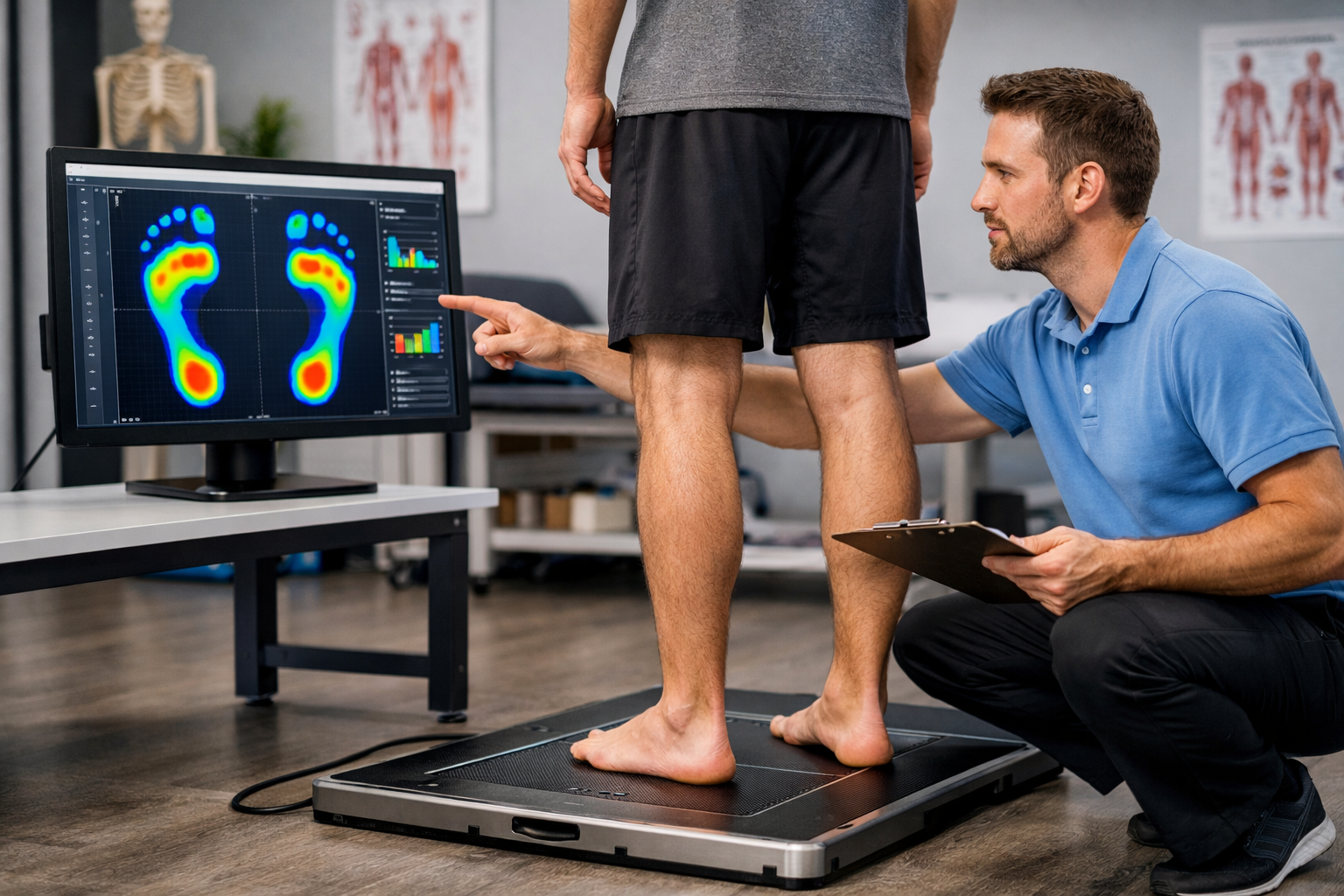
Footwear assessment is standard: your therapist evaluates what you’re currently running and training in, identifies any biomechanical issues like overpronation or flat arches, and makes specific recommendations including whether custom or OTC orthotics are warranted.
PREVENTION FOR NEWTOWN’S ACTIVE POPULATION
- Trail footwear matters. For Tyler State Park and Newtown Trail runs, use trail-specific shoes with cushioning, arch support, and outsole grip appropriate to the terrain. Flat road racers and minimalist shoes are high-risk choices for mixed-terrain trails.
- Don’t skip recovery between Bucks County Roadrunners runs. Back-to-back training days without adequate recovery give micro-tears no opportunity to resolve. Build recovery days into your weekly training structure.
- Warm up before Council Rock practices. A 2-minute plantar fascia stretch and calf mobilization before court or field sessions dramatically reduces first-load tissue stress — particularly important for young athletes whose training volumes are high.
- Support your feet at EPAM and SAP. Long office days with periodic bouts of significant walking benefit from footwear with genuine arch support — not just stylish athletic shoes.
- Replace trail shoes every 300 to 500 miles. Midsole compression occurs invisibly; the outsole tread is not a reliable indicator of remaining cushioning. Track your mileage.
WHY NEWTOWN PATIENTS CHOOSE TRINITY REHAB
At Trinity Rehab, your care is delivered one-on-one with your licensed physical therapist from evaluation through discharge. This isn’t a clinic where your initial assessment is followed by sessions with technicians or supervised open gym time — your therapist is with you, observing your movement, making real-time adjustments, and ensuring you progress at a pace that builds rather than undermines healing.
We accept most major insurance, require no physician referral (Pennsylvania allows direct access), and offer scheduling designed to accommodate Newtown’s professional population. Our treatment approach follows the latest guidelines from the American Physical Therapy Association. We also address the full biomechanical chain — if your plantar fasciitis has generated compensatory back pain or sciatica, those are part of the picture we treat. For our full scope of care, see our foot and ankle conditions and what we treat pages.
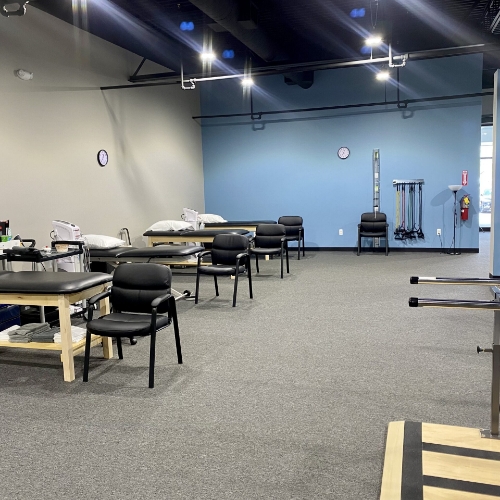
Inside Our Newtown Clinic
FREQUENTLY ASKED QUESTIONS
Where can I get plantar fasciitis treatment near Newtown, PA?
I’m a trail runner — will I have to stop running completely?
How long until I can get back to Tyler State Park trails?
My teenager plays Council Rock sports. Can plantar fasciitis affect young athletes?
Does insurance cover physical therapy for plantar fasciitis?
TAKE THE NEXT STEP
Tyler State Park’s trails are waiting. The Newtown Trail is waiting. Your training schedule — and everything that follows from it — doesn’t have to stay on hold because of heel pain.
Request your appointment at Trinity Rehab today and take the first concrete step toward a pain-free recovery.
Sources: JOSPT Clinical Practice Guidelines for Heel Pain/Plantar Fasciitis, 2023 | Mayo Clinic — Plantar Fasciitis | APTA Clinical Practice Guidelines | American Academy of Orthopaedic Surgeons
What Our Patients Say