Knee Pain Treatment in Cherry Hill, NJ: Physical Therapy That Goes Beyond the Generic
Cherry Hill is a town in motion. Cooper River Park draws walkers, cyclists, and rowers on weekday mornings. Cherry Hill Soccer Club and FC teams fill the township’s parks through every season. The East Cougars and West Lions compete across more than a dozen varsity sports in front of packed Camden County bleachers. And thousands of Cherry Hill residents commute to Philadelphia and surrounding employment centers in healthcare, financial services, and corporate offices — spending long hours on their feet or at sedentary desks before coming home and trying to stay active.
Knee pain disrupts all of that. It’s the thing that slows a TD Bank employee down on the stairs, keeps a Cougar soccer parent off the sideline trail at Cooper River, or turns a simple errand into a calculated event. At Trinity Rehab in Cherry Hill, we address knee pain the way it deserves to be addressed: with a thorough evaluation, a treatment plan built for your life, and one-on-one care that doesn’t stop until you’re back to doing what you came in hoping to do again.
Who Gets Knee Pain in Cherry Hill — and Why
Cherry Hill’s population of roughly 78,000 skews toward the patterns that generate knee problems. With a median age of 43 and nearly one in five residents over 65, osteoarthritis is common — the gradual breakdown of cartilage that causes stiffness after sitting, aching on stairs, and the grinding sensation on longer walks through the township’s trails.
But the activity level here is genuinely high. Cooper River Park’s 346 acres attract consistent recreational traffic — joggers, cyclists, and kayakers whose knees absorb repetitive impact and rotational load. XL Sports World, Sofive Soccer, Cherry Hill Health & Racquet Club, and Edge Fitness all see regular participation from active adults who push their bodies and sometimes push past the warning signs.
Youth sports intensity adds another layer. Cherry Hill East and West field competitive teams in soccer, football, lacrosse, field hockey, basketball, and wrestling. The pattern of knee injuries in these age groups — ACL tears from planting and pivoting, patellar tendonitis in jumpers, IT band syndrome in cross-country runners — is predictable, and early intervention makes a significant difference in recovery trajectory.
Cherry Hill’s healthcare sector — Jefferson Cherry Hill Hospital, Virtua Health, FOX Rehabilitation, and a dense network of medical offices — also produces occupational knee stress: nurses, medical technicians, and support staff who spend long shifts on their feet, kneeling for procedures, or navigating long hallways carrying equipment.
Conditions we commonly treat for Cherry Hill patients:
- Knee osteoarthritis — especially in residents 50+ who want to stay active in Cooper River Park and beyond
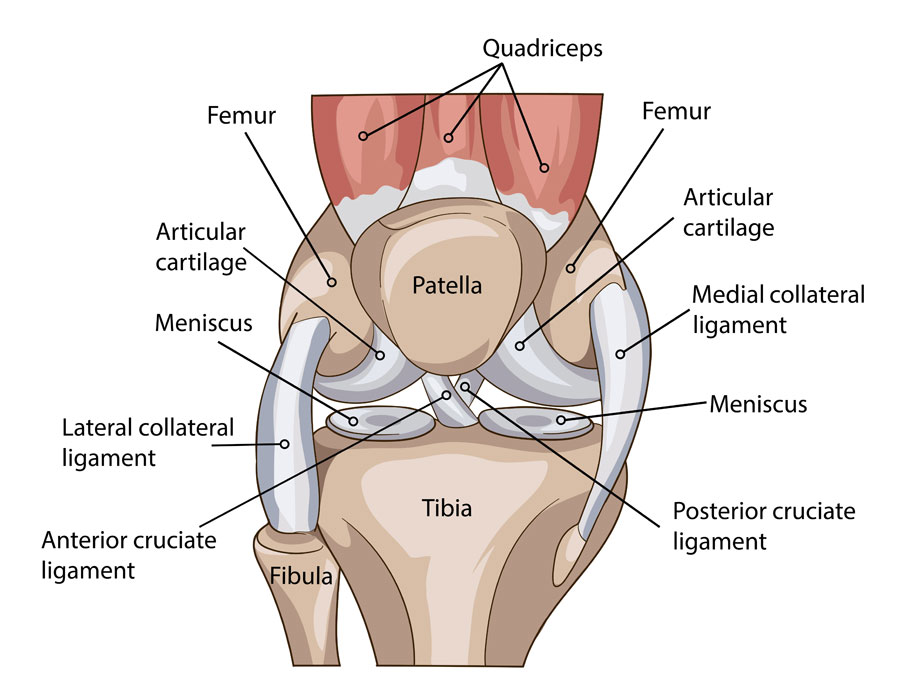
- ACL and MCL sprains and tears in Cherry Hill East and West athletes
- Patellofemoral syndrome (runner’s knee) from cycling and jogging at Cooper River
- IT band syndrome in recreational runners and field sport athletes
- Meniscus tears — both acute sports injuries and degenerative tears in active older adults
- Post-surgical rehabilitation after knee replacement or ACL reconstruction
- Work-related knee strain in healthcare workers and retail employees
How We Treat Knee Pain at Trinity Rehab Cherry Hill
Manual Therapy: Hands-On, Session One
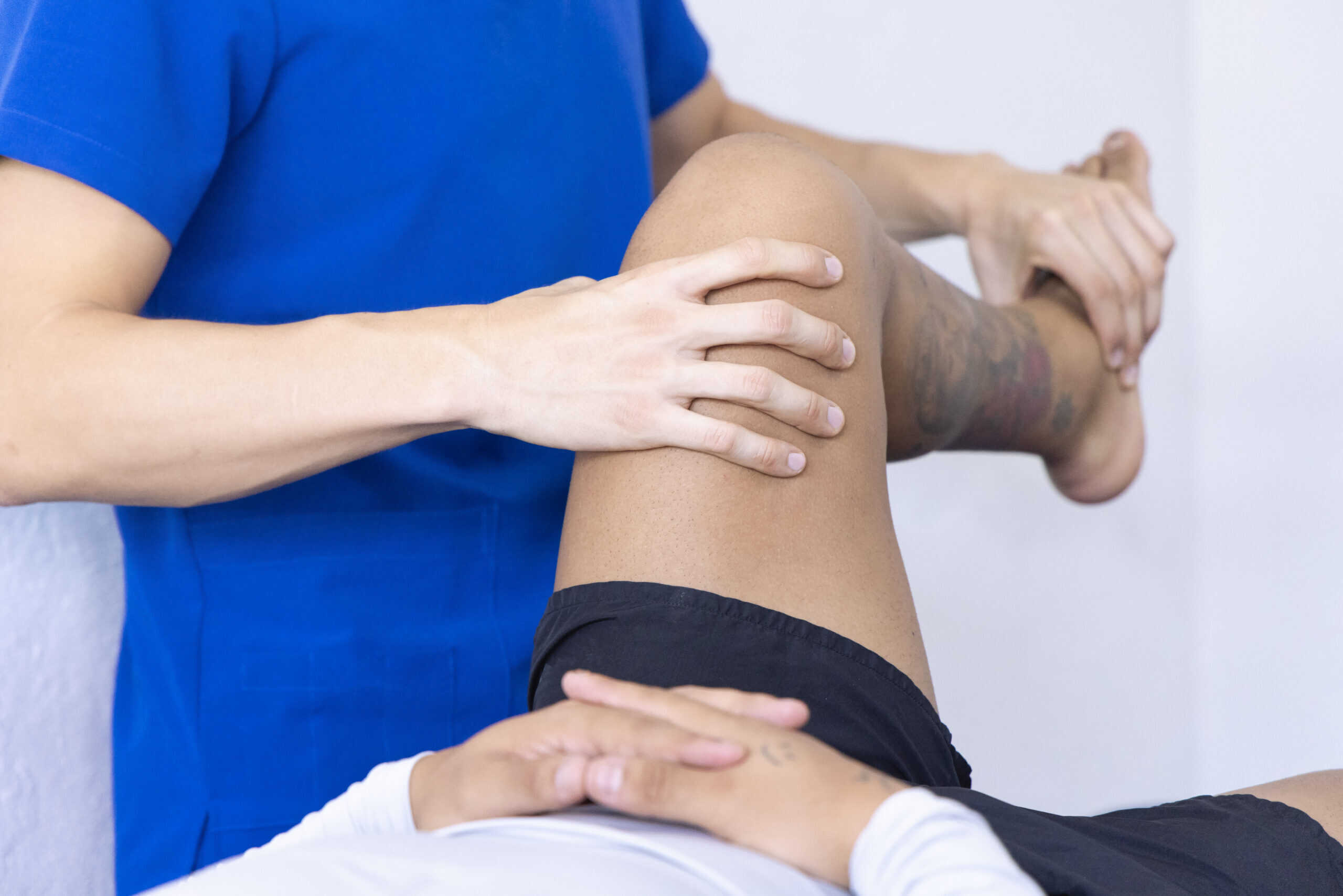
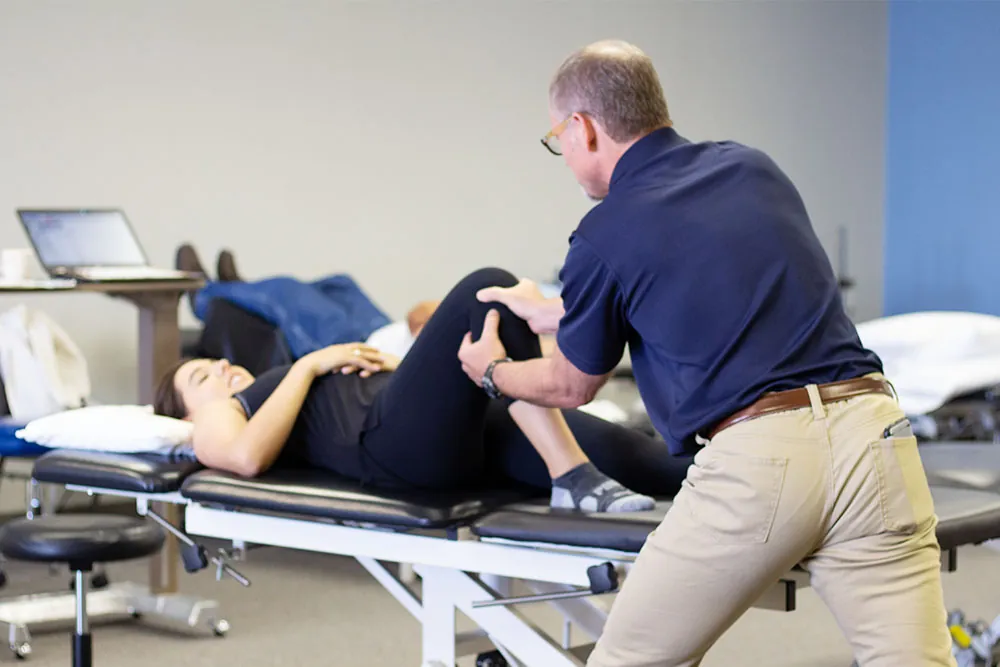
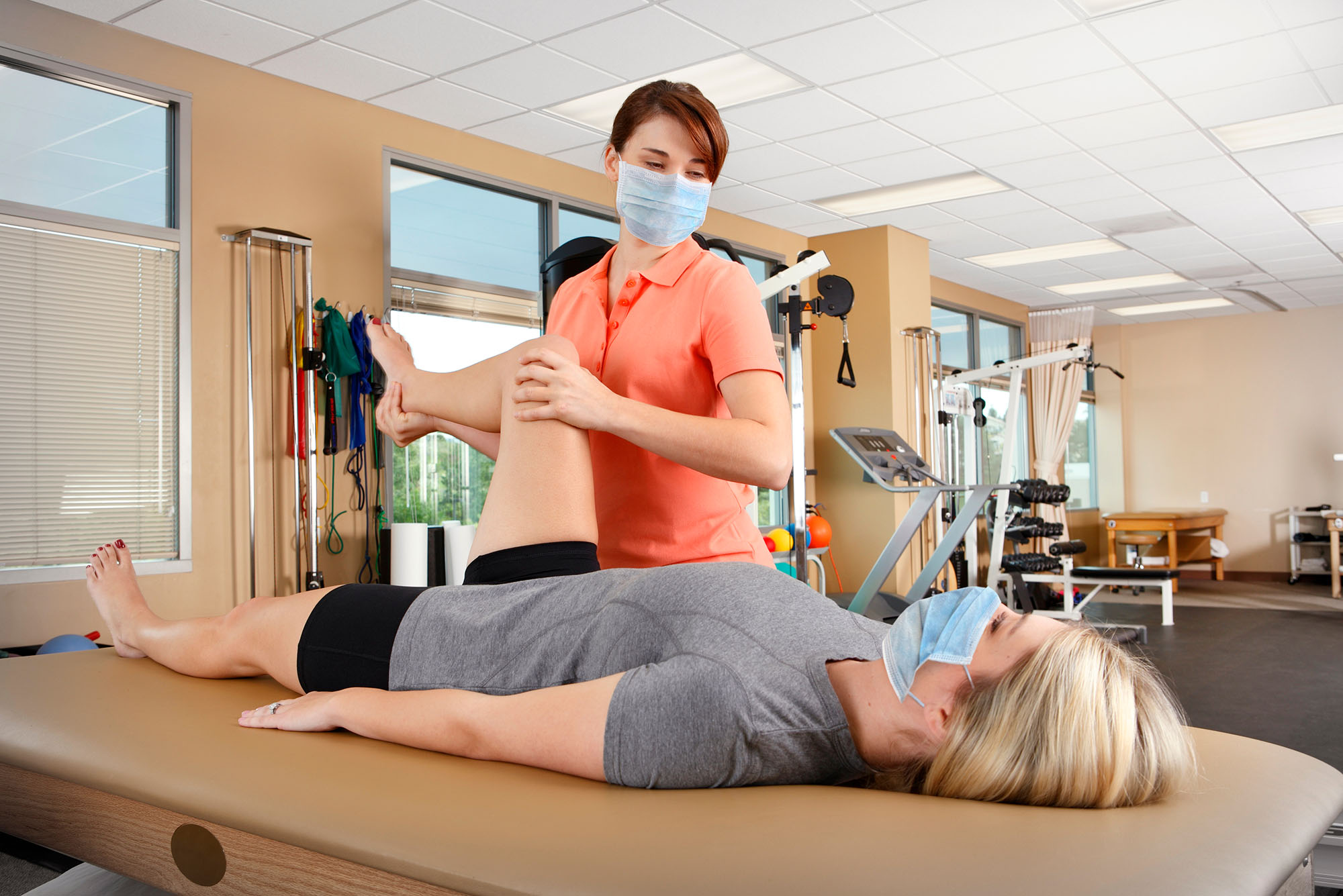
Every Cherry Hill patient begins with a one-on-one evaluation. Your therapist assesses joint mobility, strength, movement mechanics, and pain behavior under load — then builds a treatment plan specifically for you. Manual therapy is typically introduced in the first session: joint mobilization to restore normal mechanics, soft tissue techniques to release tight tissue around the patella and IT band, and hands-on work that reduces pain and prepares the knee for exercise.
This matters because no two knees fail the same way. A Cherry Hill soccer player with a medial collateral sprain needs a different manual therapy approach than a Cherry Hill Executive with osteoarthritis who wants to stay active at the racquet club. The evaluation drives every decision.
Targeted Strengthening: The Foundation of Lasting Recovery
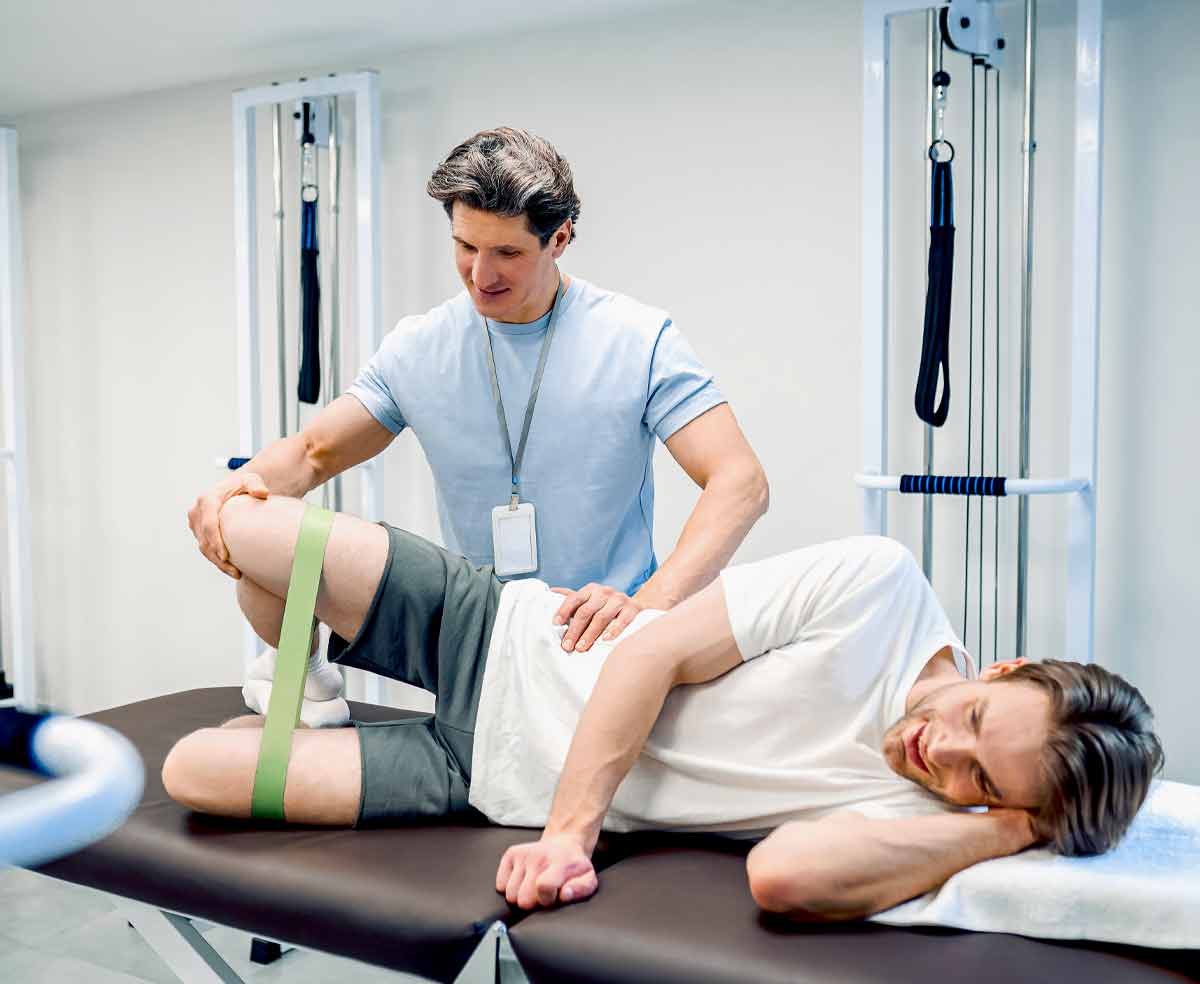
Weakness in the quadriceps, glutes, hip abductors, and hamstrings is the most consistent finding in knee pain patients regardless of condition. These muscle groups — when properly strengthened — act as shock absorbers that protect cartilage, stabilize the joint during cutting and pivoting, and reduce the mechanical load that wears down the knee over time.
Research in Current Reviews in Musculoskeletal Medicine confirms that combined hip and knee strengthening significantly reduces pain and improves functional capacity in both the short and long term. Your therapist will progress your program carefully — always challenging you toward improvement without exceeding what your healing tissue can handle.
EPAT Shockwave Therapy
For patients with chronic tendon pain — patellar tendonitis in teen athletes, IT band syndrome in Cooper River joggers, or stubborn soft tissue conditions in active adults — EPAT (Extracorporeal Pulse Activation Technology) delivers focused acoustic pulses that stimulate blood flow and accelerate the body’s natural healing response. EPAT is particularly effective for conditions that haven’t responded fully to exercise therapy alone.
Dry Needling for Persistent Muscle Pain
Dry needling targets the trigger points in tight muscle bands — quadriceps, IT band, hamstrings, hip flexors — that generate referred pain around the knee and limit range of motion. By releasing these points with thin sterile needles, therapists reduce pain quickly and improve the patient’s ability to engage productively in exercise therapy. For many Cherry Hill patients dealing with prolonged muscle tightness alongside their knee condition, dry needling accelerates the overall recovery curve.
AlterG Anti-Gravity Treadmill
For post-surgical recovery, knee replacement rehabilitation, or patients in significant pain that limits weight-bearing, the AlterG treadmill enables walking and movement with reduced joint load. Cherry Hill patients recovering from total knee replacement at Jefferson Cherry Hill Hospital or Capital Health use the AlterG to rebuild walking mechanics before they’re ready for full weight-bearing — maintaining function and cardiovascular fitness during a phase when traditional exercise isn’t possible.
Neuromuscular Training and Return to Sport
After injury or chronic pain, the reflexes that keep the knee stable during rapid movement can become unreliable. Balance training, proprioception drills, and sport-specific movement retraining address these deficits directly — preparing Cherry Hill athletes to return to the field confidently and reducing re-injury risk. Your therapist will design progression milestones based on your actual performance, not just time on a calendar.
Meniscus Tears: Surgery Isn’t Always the Answer
Many Cherry Hill patients arrive with a meniscus tear diagnosis expecting surgical intervention. The evidence tells a more nuanced story. Research increasingly supports non-operative management for degenerative meniscus tears in middle-aged and older adults, and many acute tears also respond well to physical therapy. By reducing swelling, restoring range of motion, and strengthening the muscles that unload the torn tissue, physical therapy can eliminate the need for surgery in a significant proportion of patients. Your Trinity Rehab therapist will coordinate with your orthopedic provider at Jefferson or Virtua when needed — so you always have a clear picture of your options.
Long-Term Knee Health: What Cherry Hill Residents Need to Know
Getting better in physical therapy is only half the equation. The other half is staying better. Key habits your therapist will help you build:
- Weight management — Each pound of body weight translates to three to four pounds of knee stress during walking. This isn’t about aesthetics; it’s biomechanics, and it’s one of the most impactful controllable factors in long-term knee health.
- Activity-appropriate footwear — Whether you’re cycling at Cooper River or walking the retail corridors, proper footwear significantly reduces forces transmitted to the knee.
- Consistent home exercise — The strengthening program you build in PT isn’t just for recovery. Continuing quad, glute, and hip work after discharge is what prevents the knee from declining again.
- Early intervention for flare-ups — Don’t wait three months to act on new pain. A quick check-in can reset a flare before it becomes a setback.
Why Cherry Hill Patients Choose Trinity Rehab
One-on-one with your therapist every session — no aides, no group circuits, no being left to do exercises on your own. You work directly with a licensed PT for every minute of every visit.
Direct access, no referral required — New Jersey law lets you begin physical therapy without waiting for a doctor’s appointment. Request an appointment today.
Advanced technology not offered at most local clinics — EPAT shockwave therapy, dry needling, and the AlterG treadmill are integrated into treatment plans when they add genuine clinical value.
Most major insurance plans accepted — Our team handles verification before your first visit.
Learn more about all conditions we treat or read our full knee pain guide.
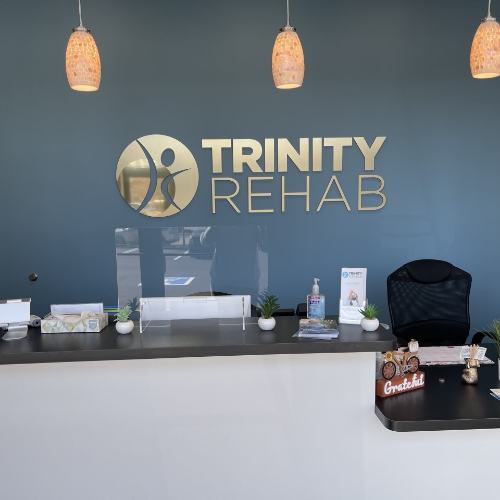
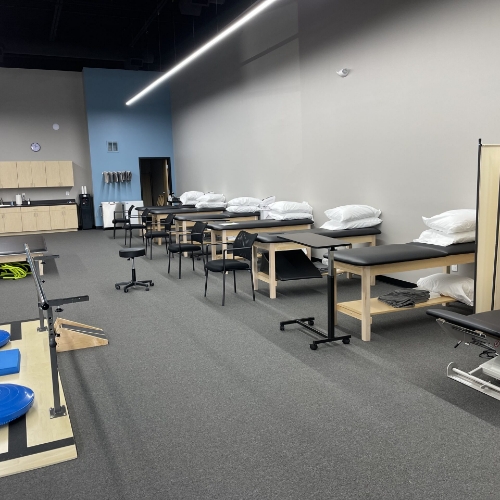
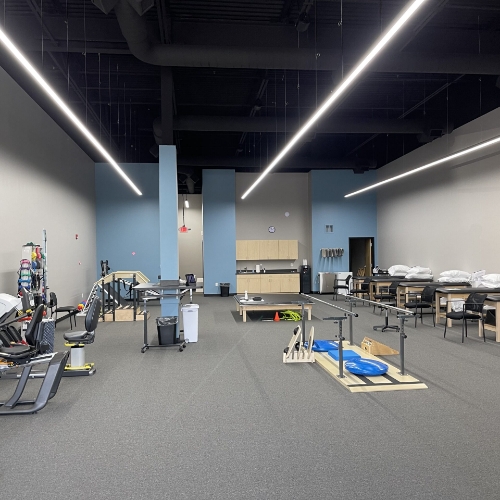
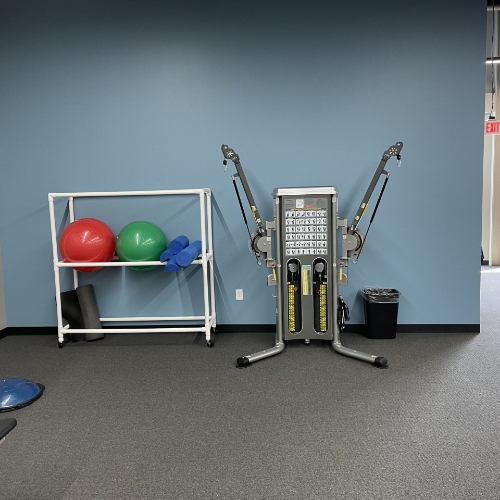
Inside Our Cherry Hill Clinic
Related Conditions & Treatments
Knee pain is just one of the many conditions we treat at Trinity Rehab. Explore our full range of conditions we treat or learn more about specific treatment approaches:
Cherry Hill Knee Rehab For Stairs, Walking, And Daily Confidence
Knee pain can make stairs, walking, exercise, work, and getting in and out of a car more difficult. Cherry Hill rehab should identify whether strength, mobility, balance, swelling, or movement mechanics are driving the issue.
Your therapist may assess knee motion, quad and hip strength, walking mechanics, balance, and activity tolerance. The plan can progress from symptom control to stronger, more confident movement.
Related care includes ACL rehab, meniscus tear rehab, and the Cherry Hill physical therapy clinic page.
Frequently Asked Questions — Knee Pain in Cherry Hill, NJ
Cherry Hill Knee Rehab For Stairs, Walking, And Daily Confidence
Knee pain can make stairs, walking, exercise, work, and getting in and out of a car more difficult. Cherry Hill rehab should identify whether strength, mobility, balance, swelling, or movement mechanics are driving the issue.
Your therapist may assess knee motion, quad and hip strength, walking mechanics, balance, and activity tolerance. The plan can progress from symptom control to stronger, more confident movement.
Related care includes ACL rehab, meniscus tear rehab, and the Cherry Hill physical therapy clinic page.
Can physical therapy help me avoid knee replacement surgery?
I've been told I have ?bone on bone? arthritis. Is it too late for physical therapy?
My son plays for Cherry Hill East soccer. He's been limping after practice — when should we bring him in?
Do I need a doctor's referral to see Trinity Rehab in Cherry Hill?
How many sessions does knee PT typically require?
Reclaim Your Active Life in Cherry Hill
Whether you want to get back to Cooper River Park without pain, return to the pickleball courts at the Health & Racquet Club, or simply navigate stairs without gripping the railing, Trinity Rehab in Cherry Hill is ready to help. One-on-one care. No referral needed. Real results.
Schedule Your Knee Pain Evaluation Today
Related resources: Knee Pain Treatment Hub | Hip & Knee Pain Relief | Sciatica Treatment | EPAT Therapy | Sports Injuries
What Our Patients Say



Sign up for free health tips and tricks